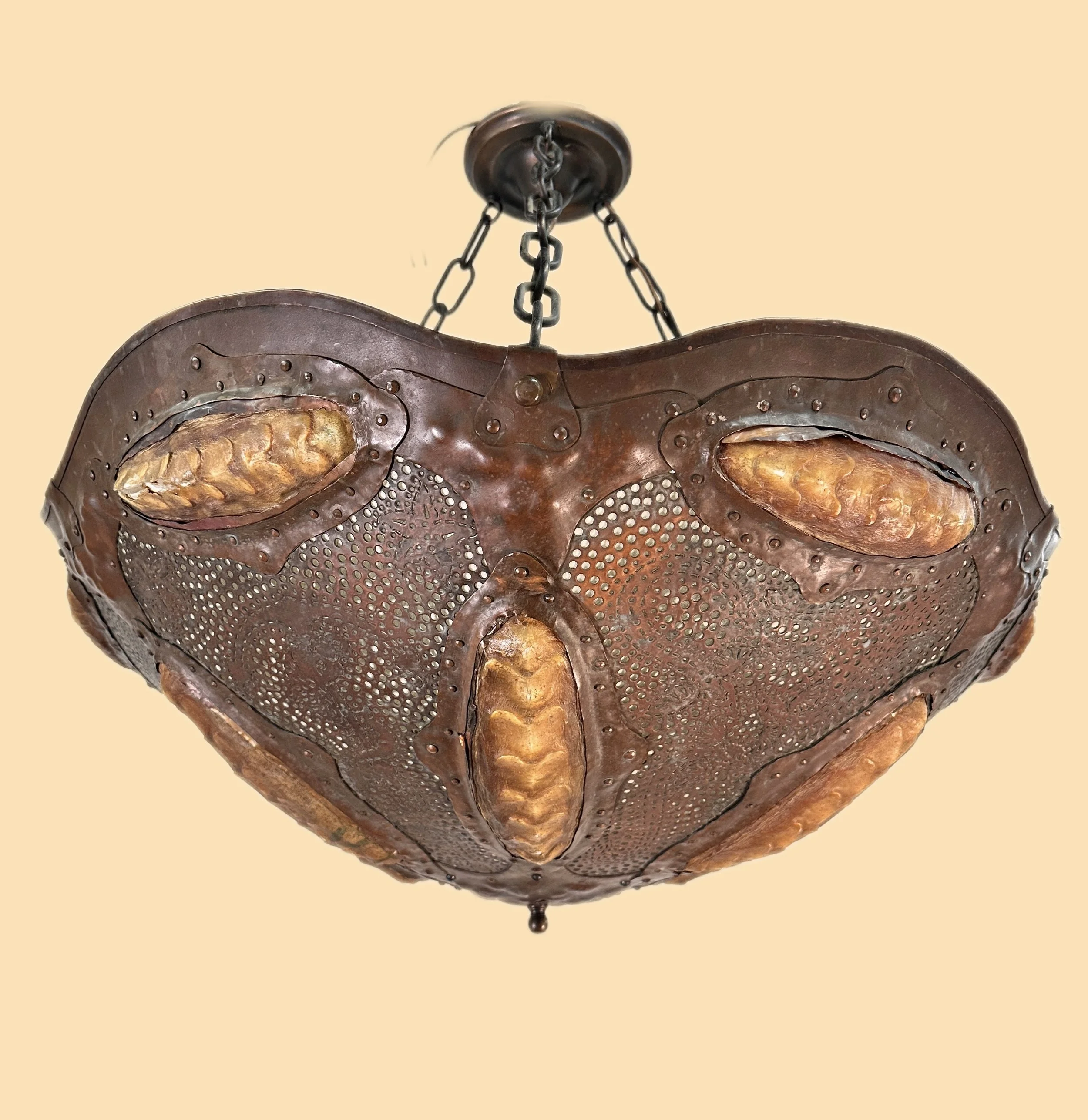
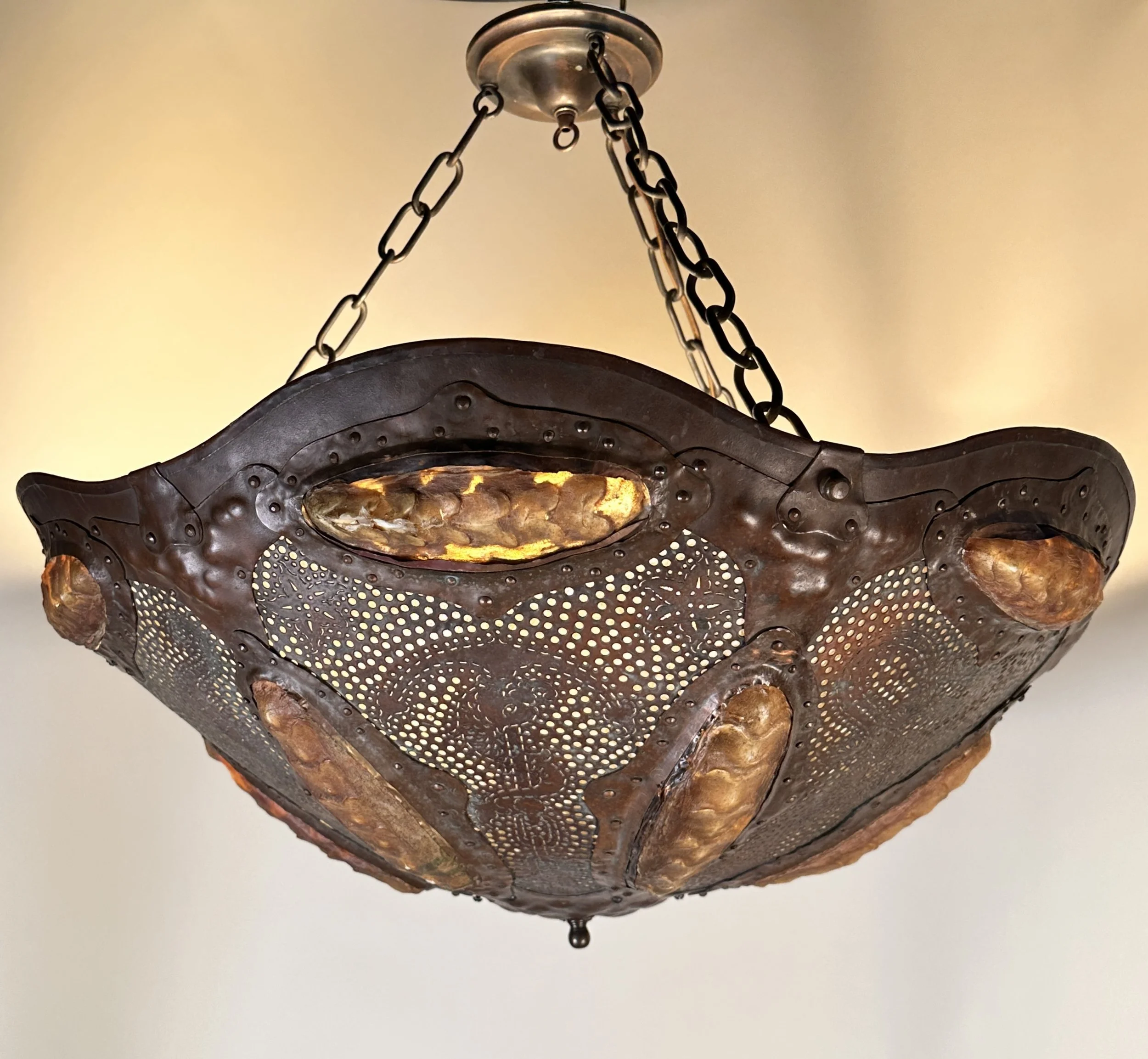
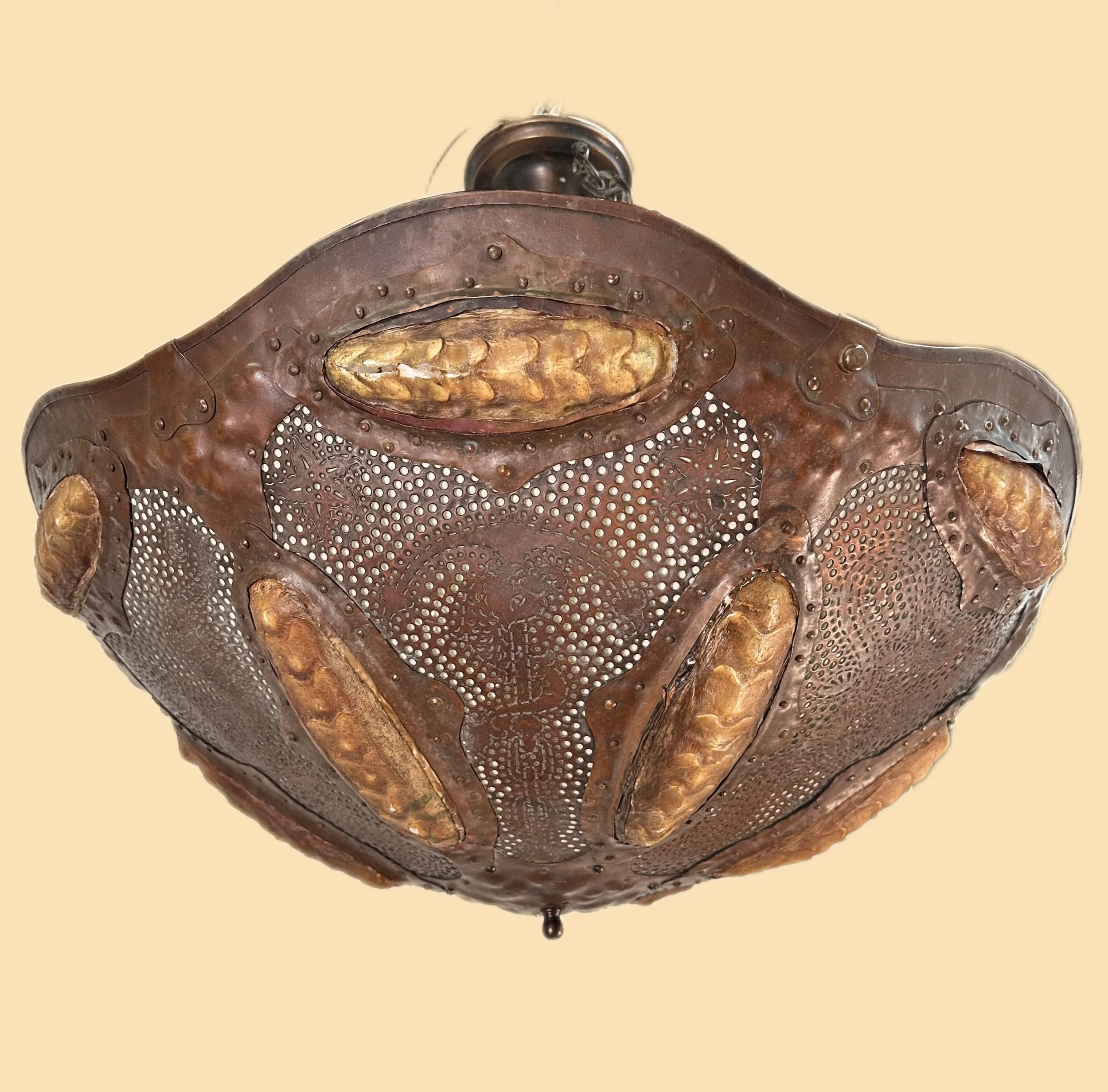
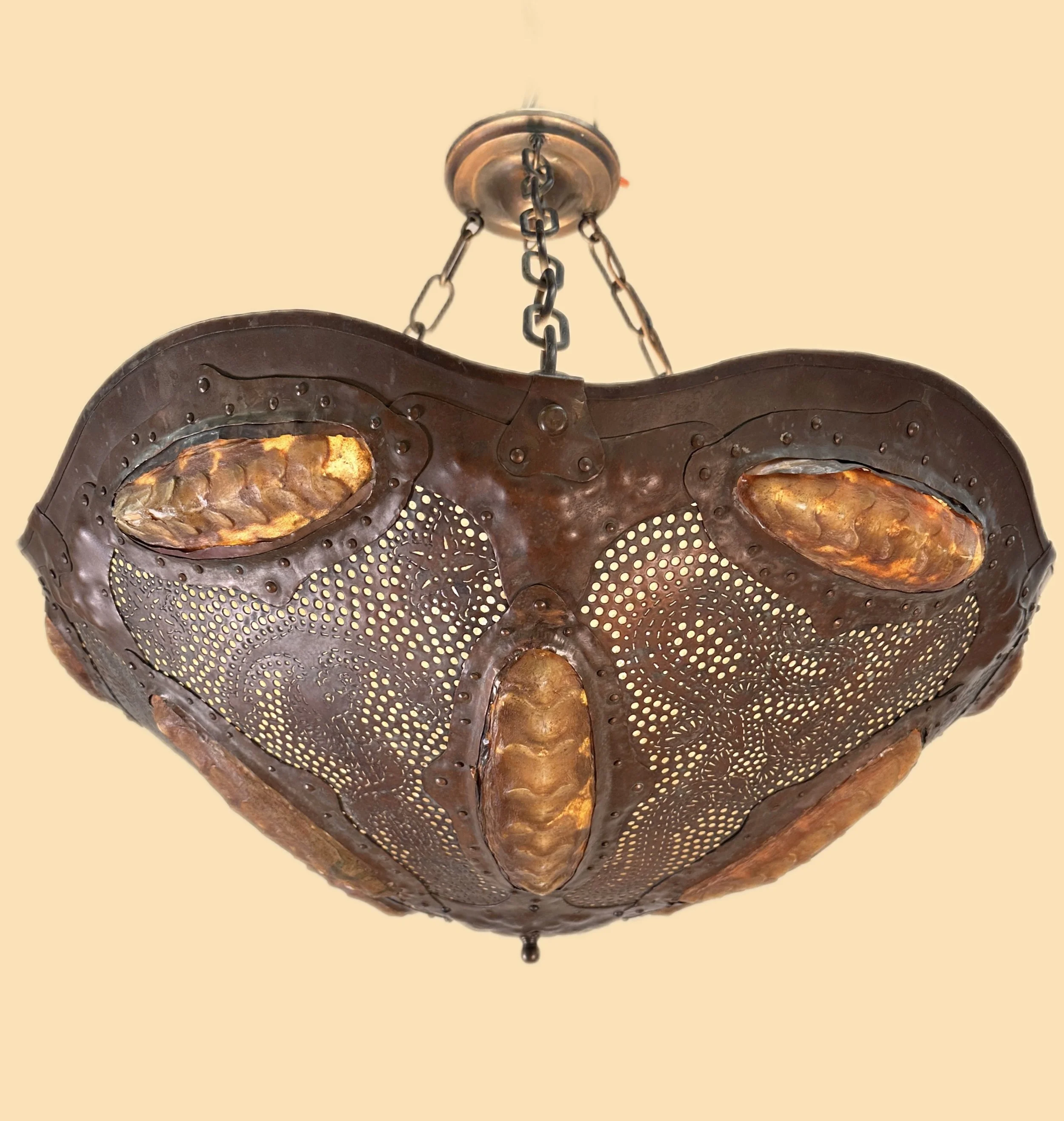
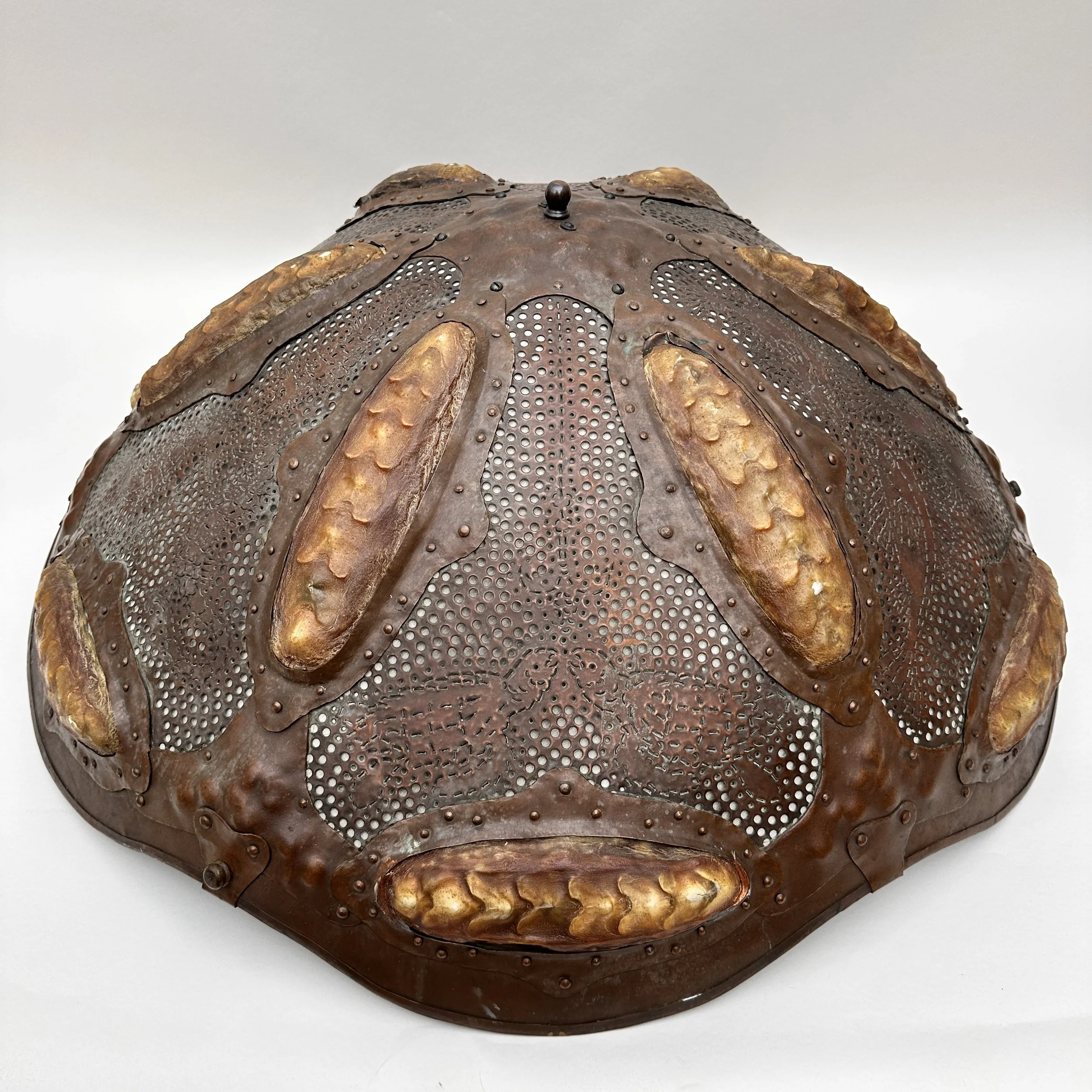
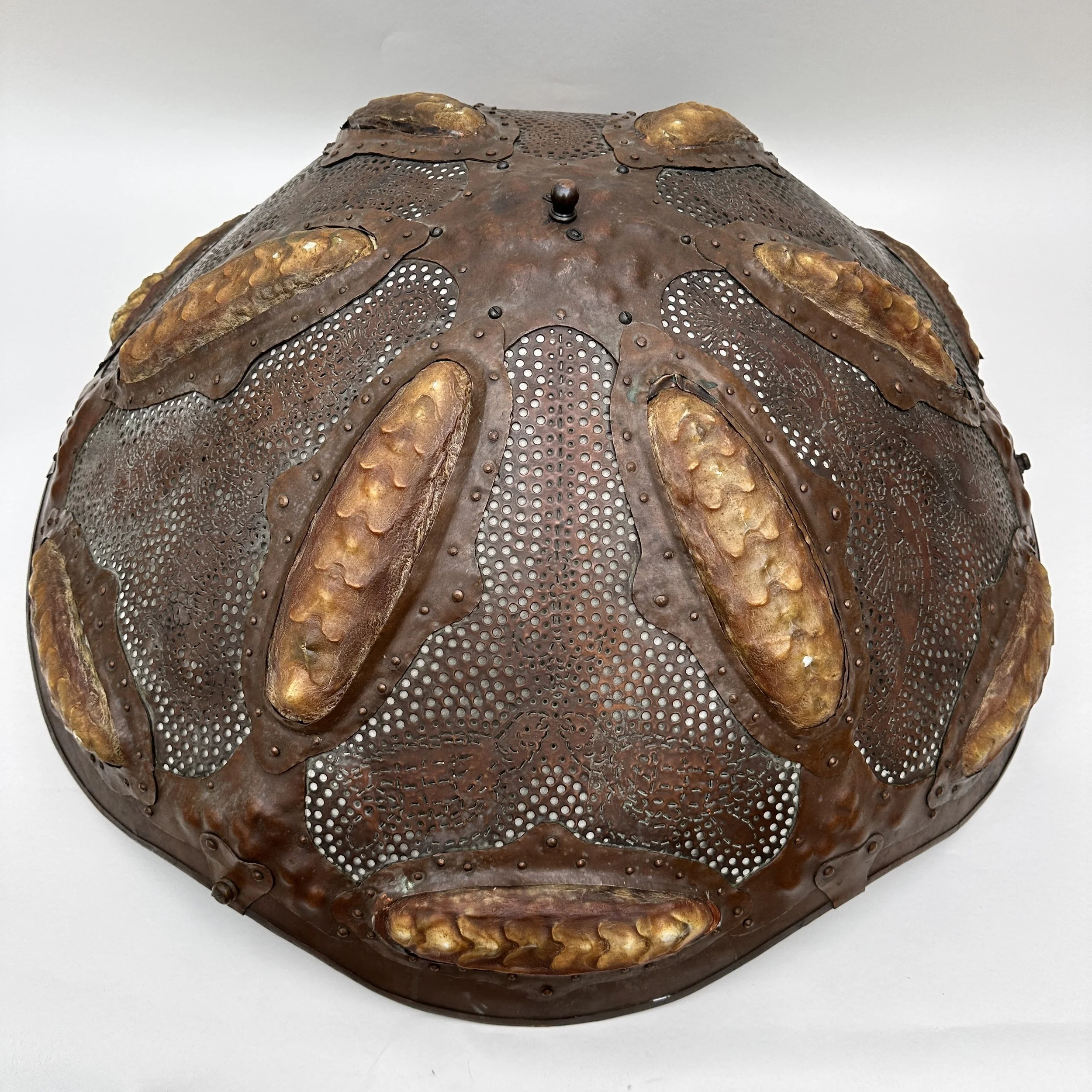
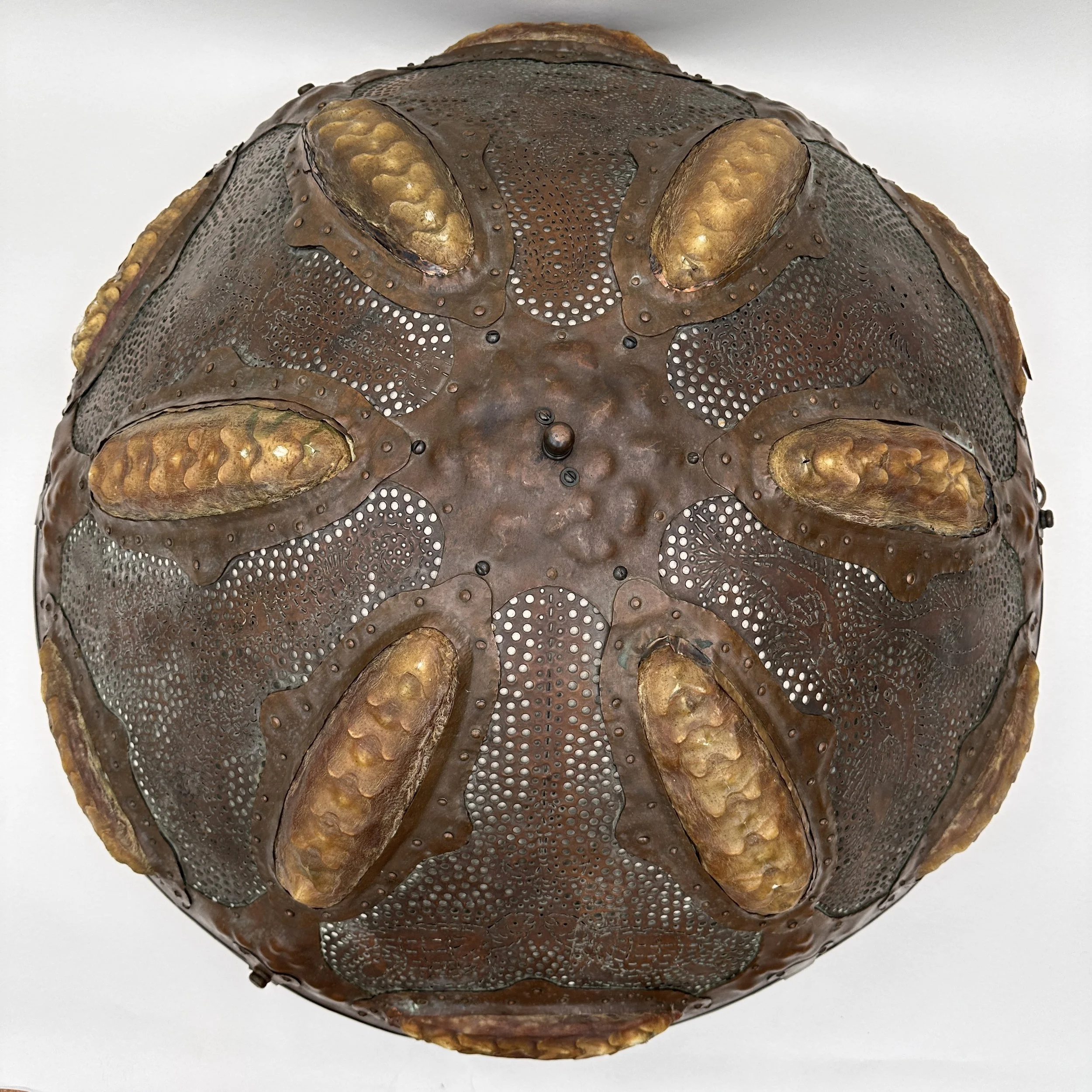
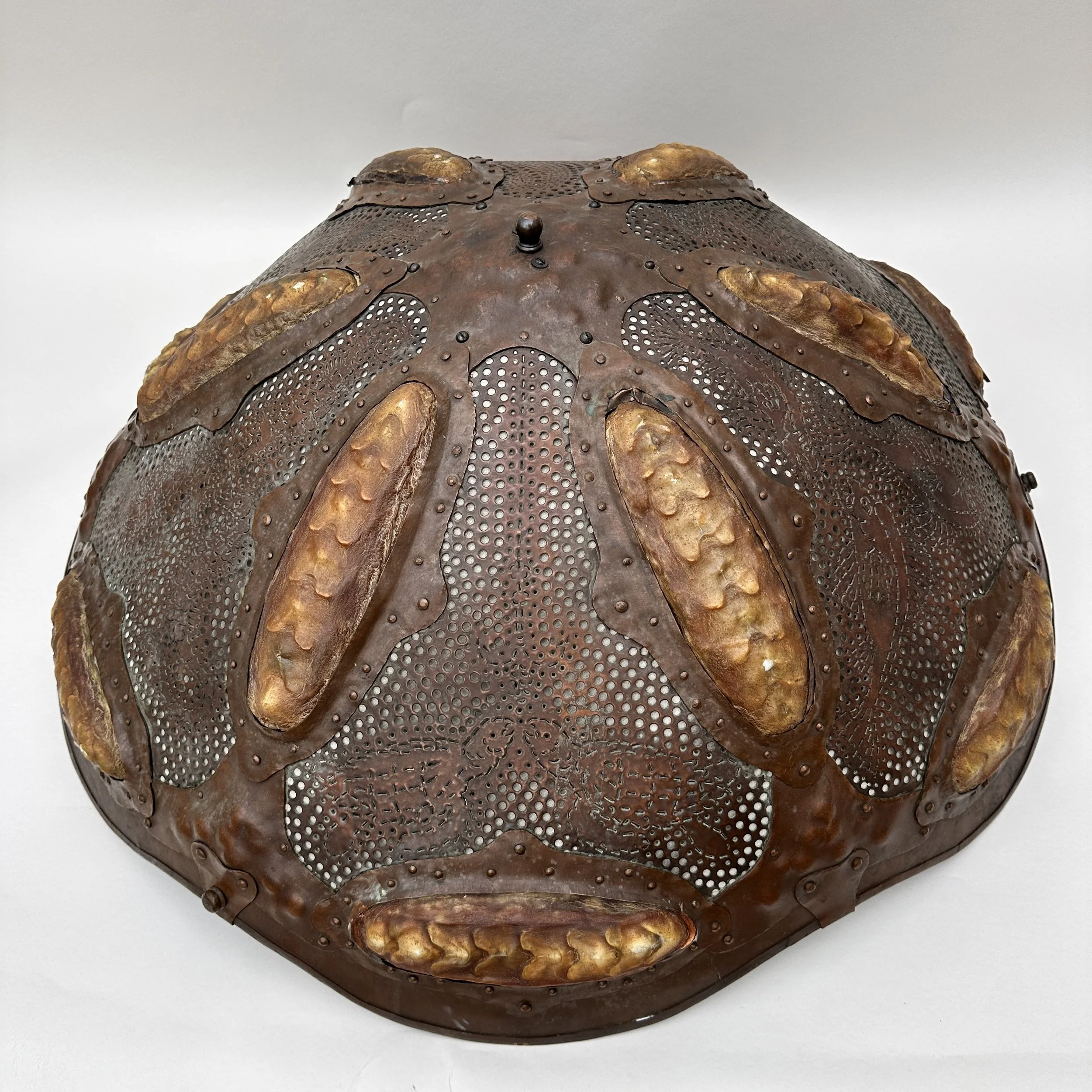
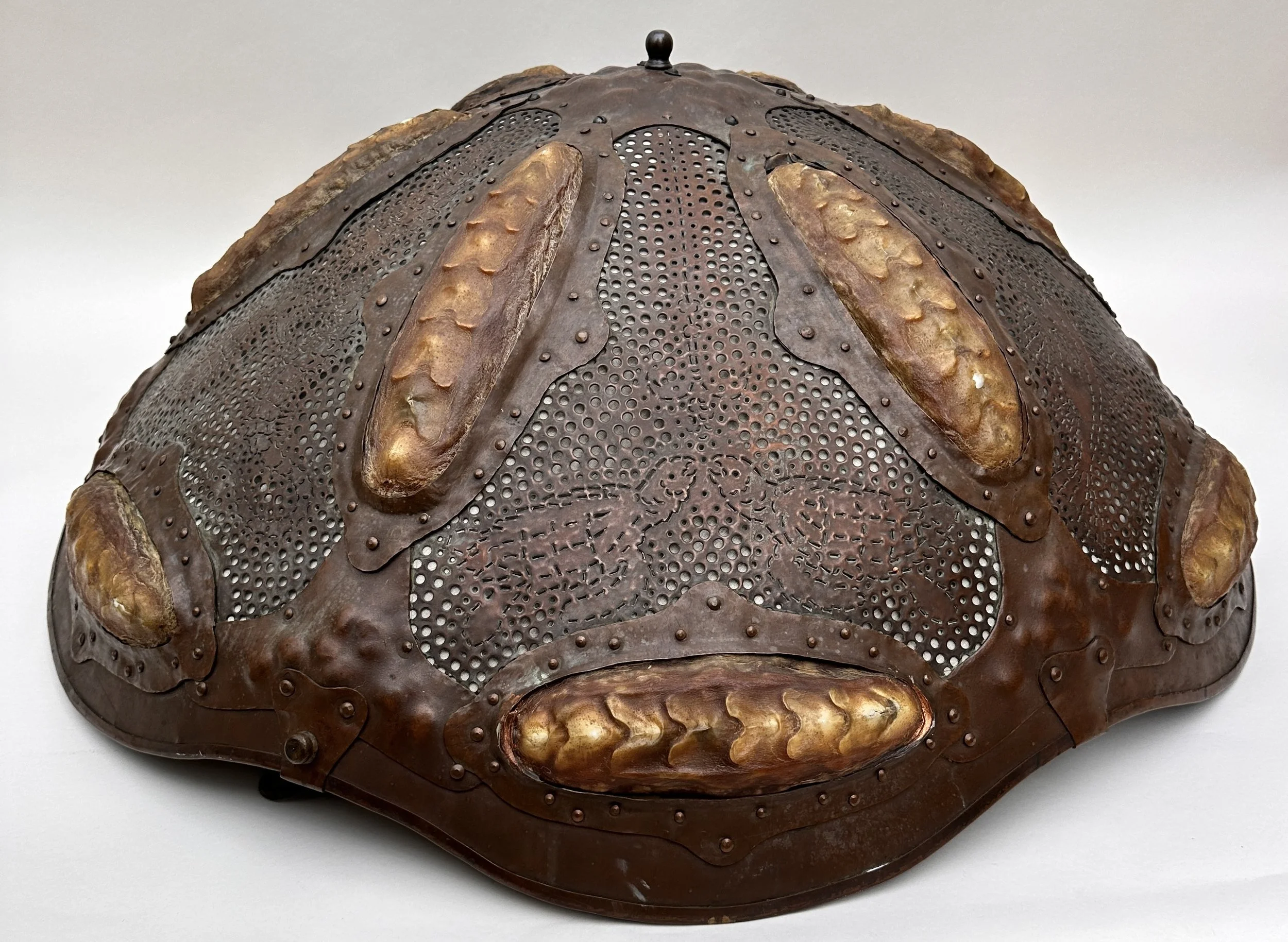
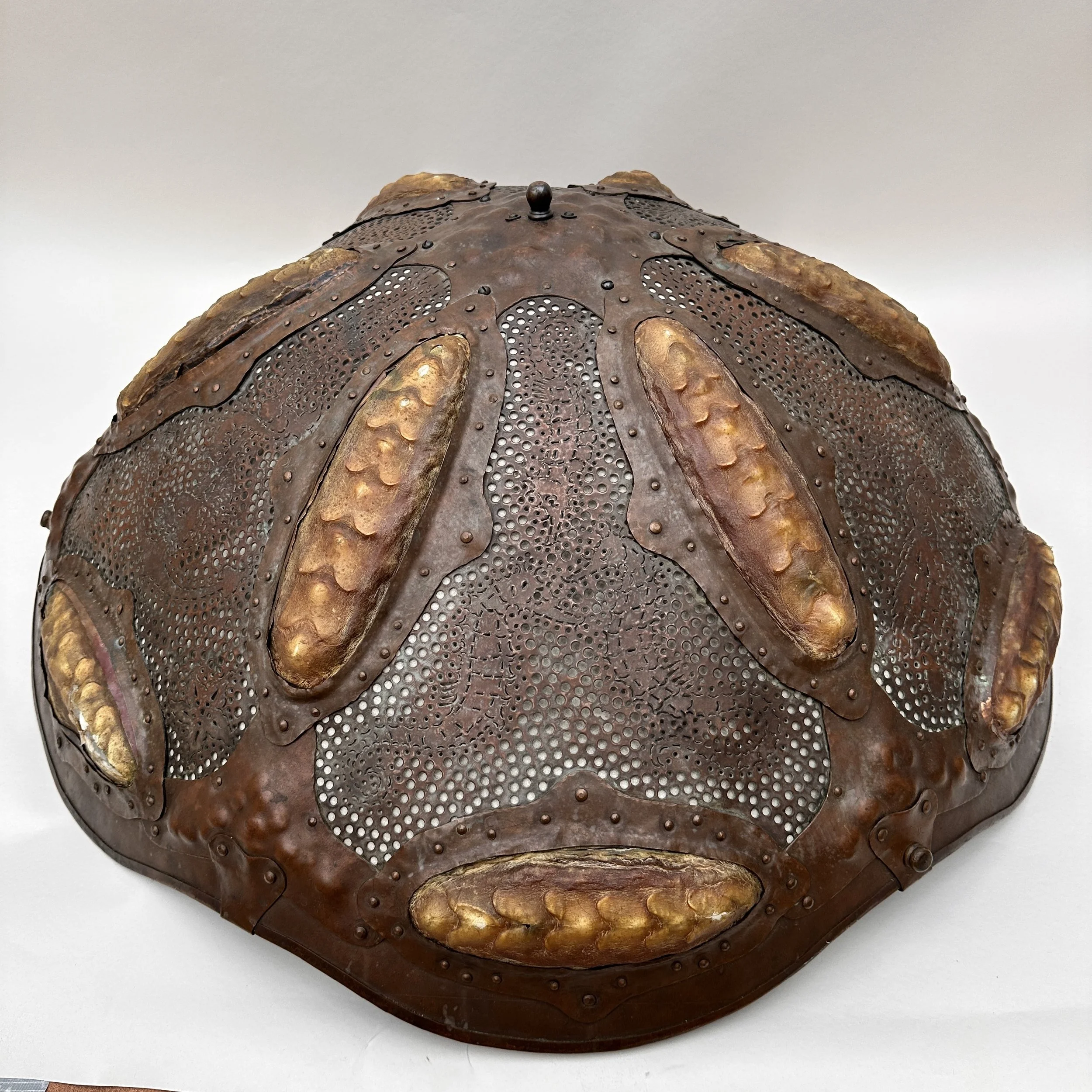
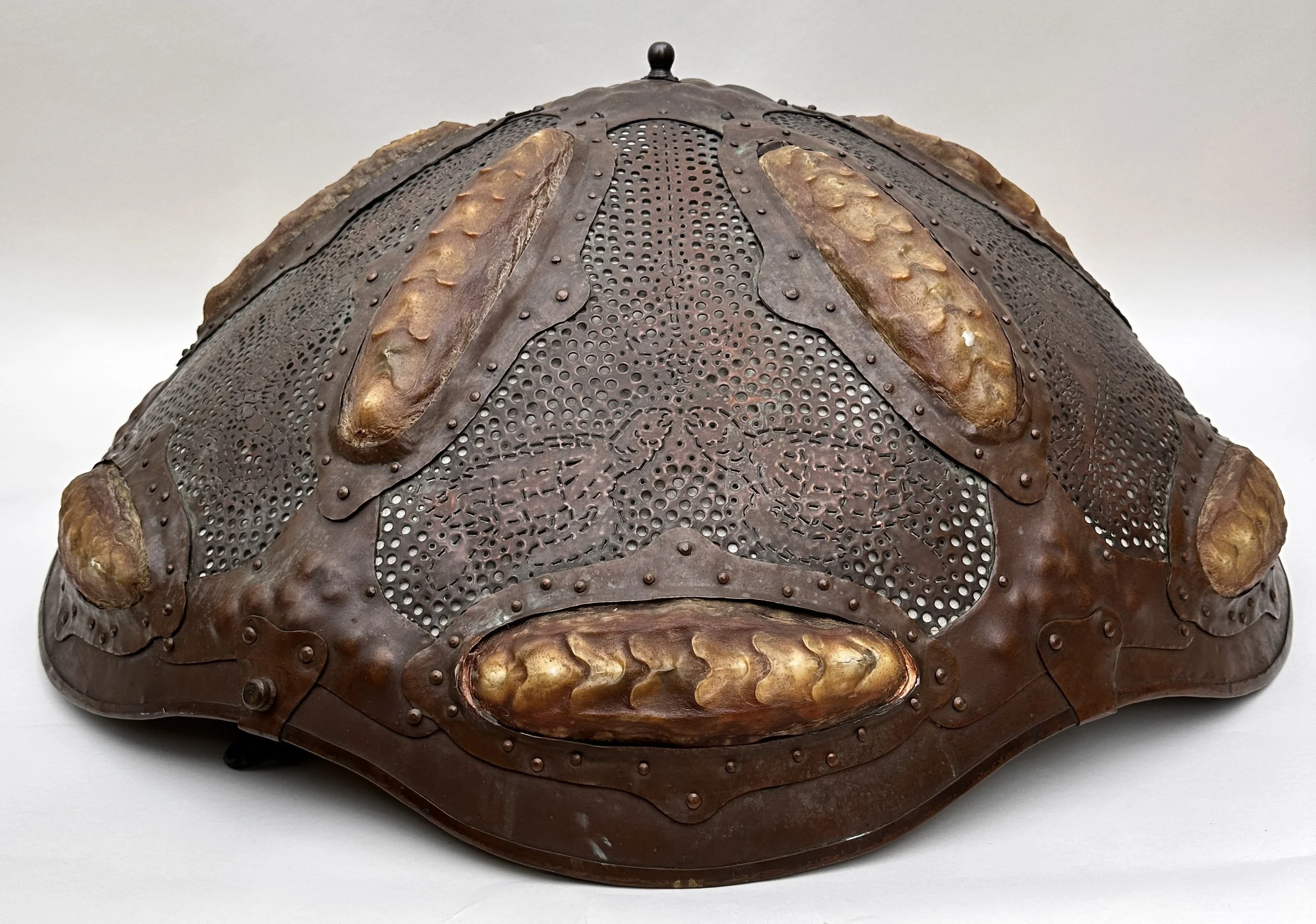
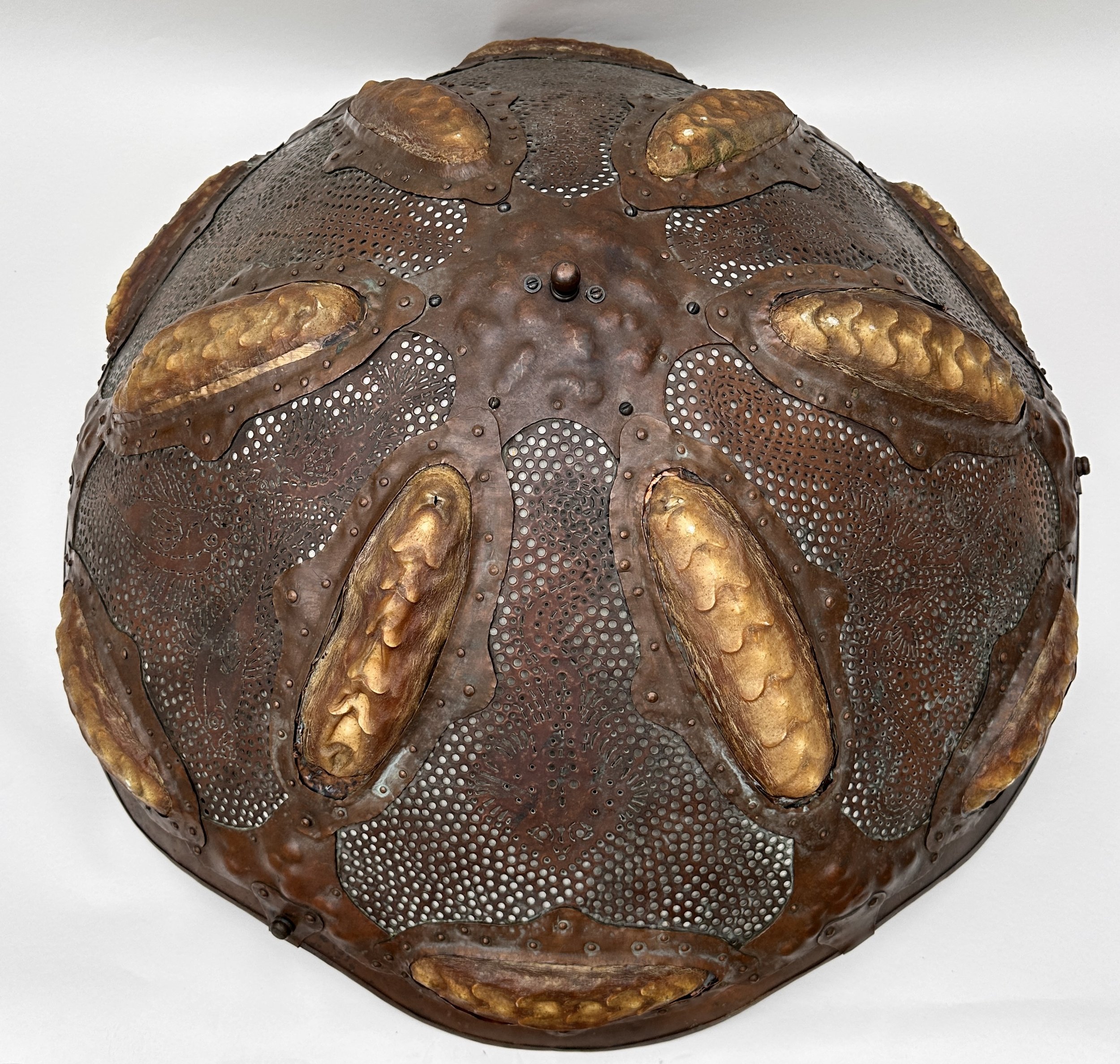
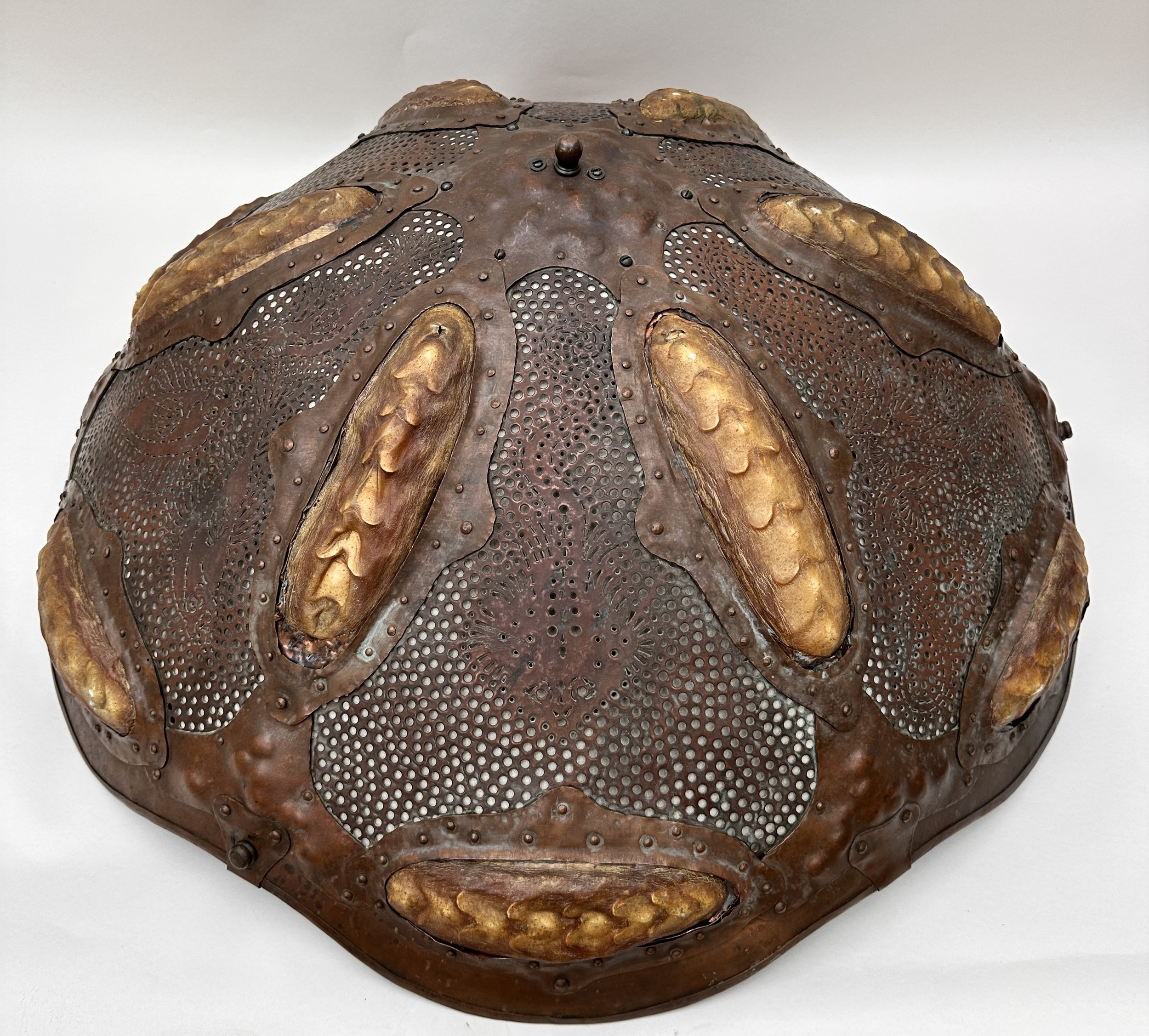
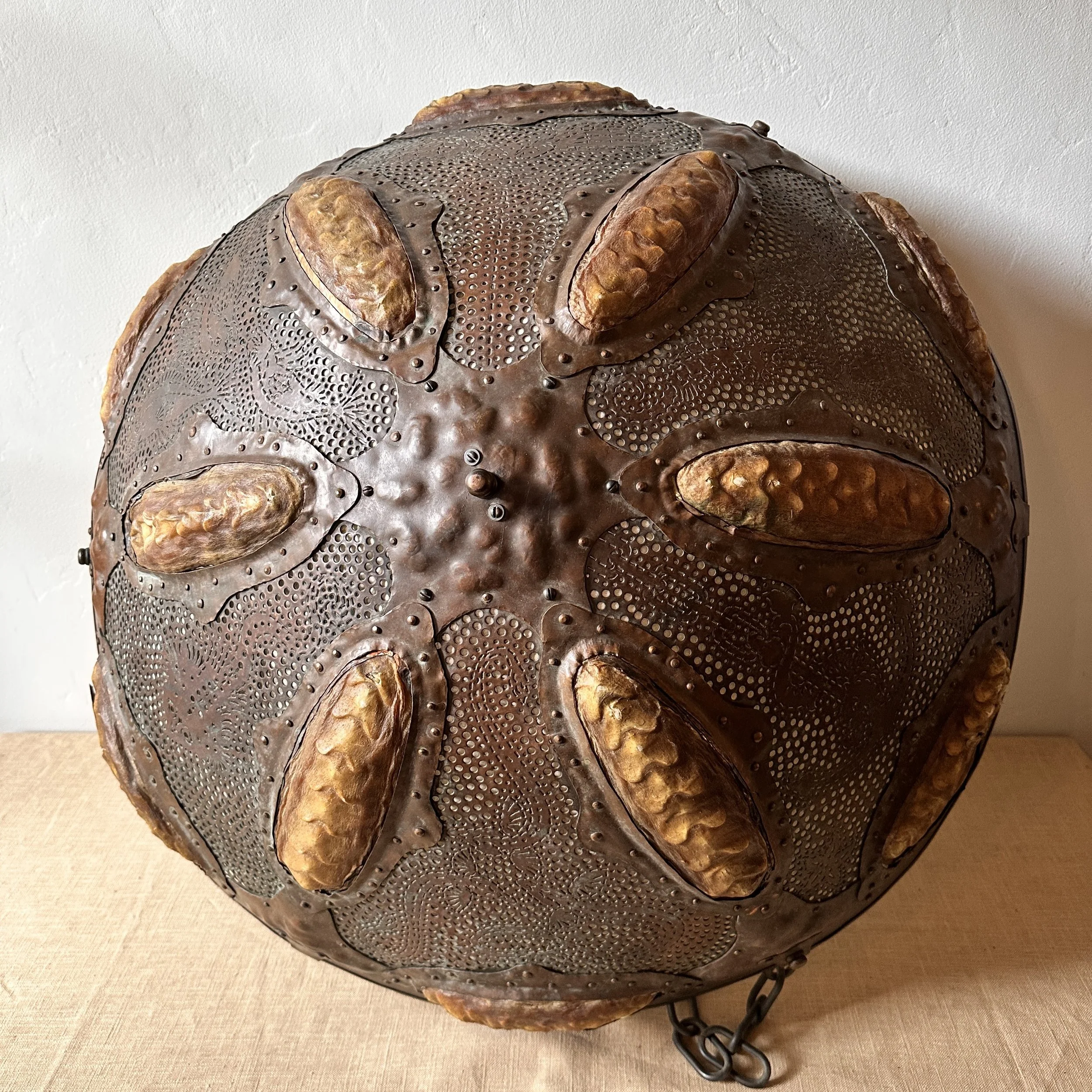
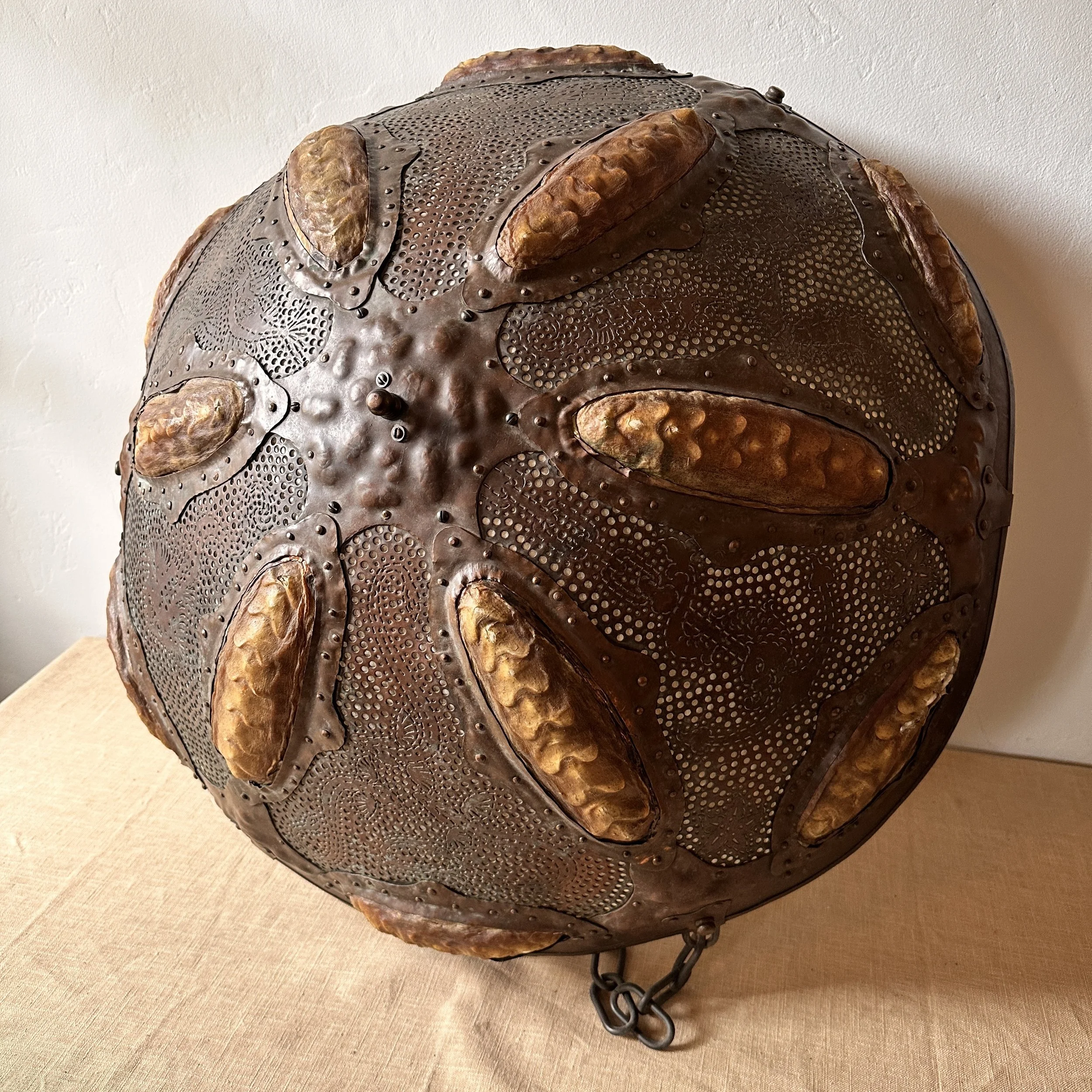
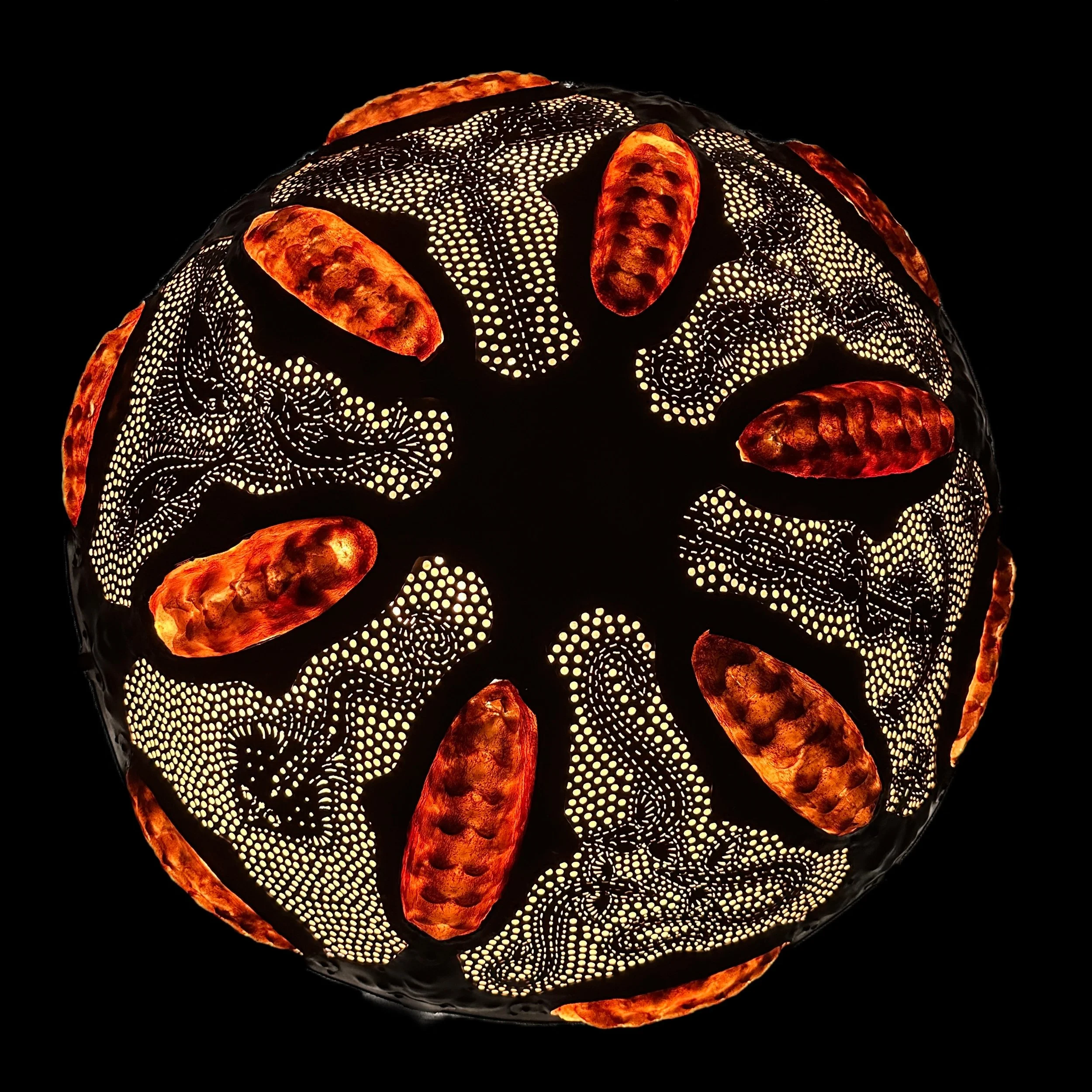
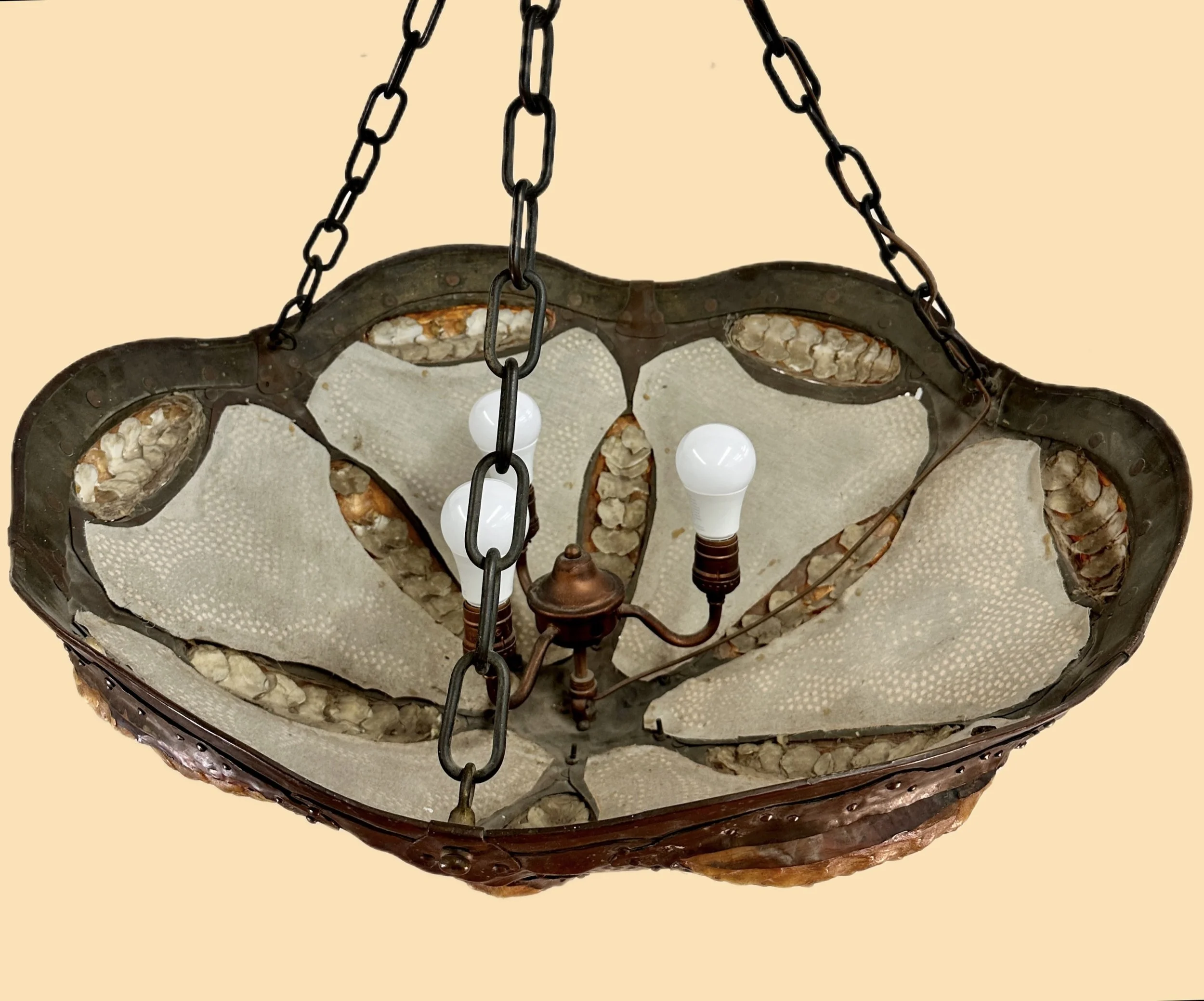
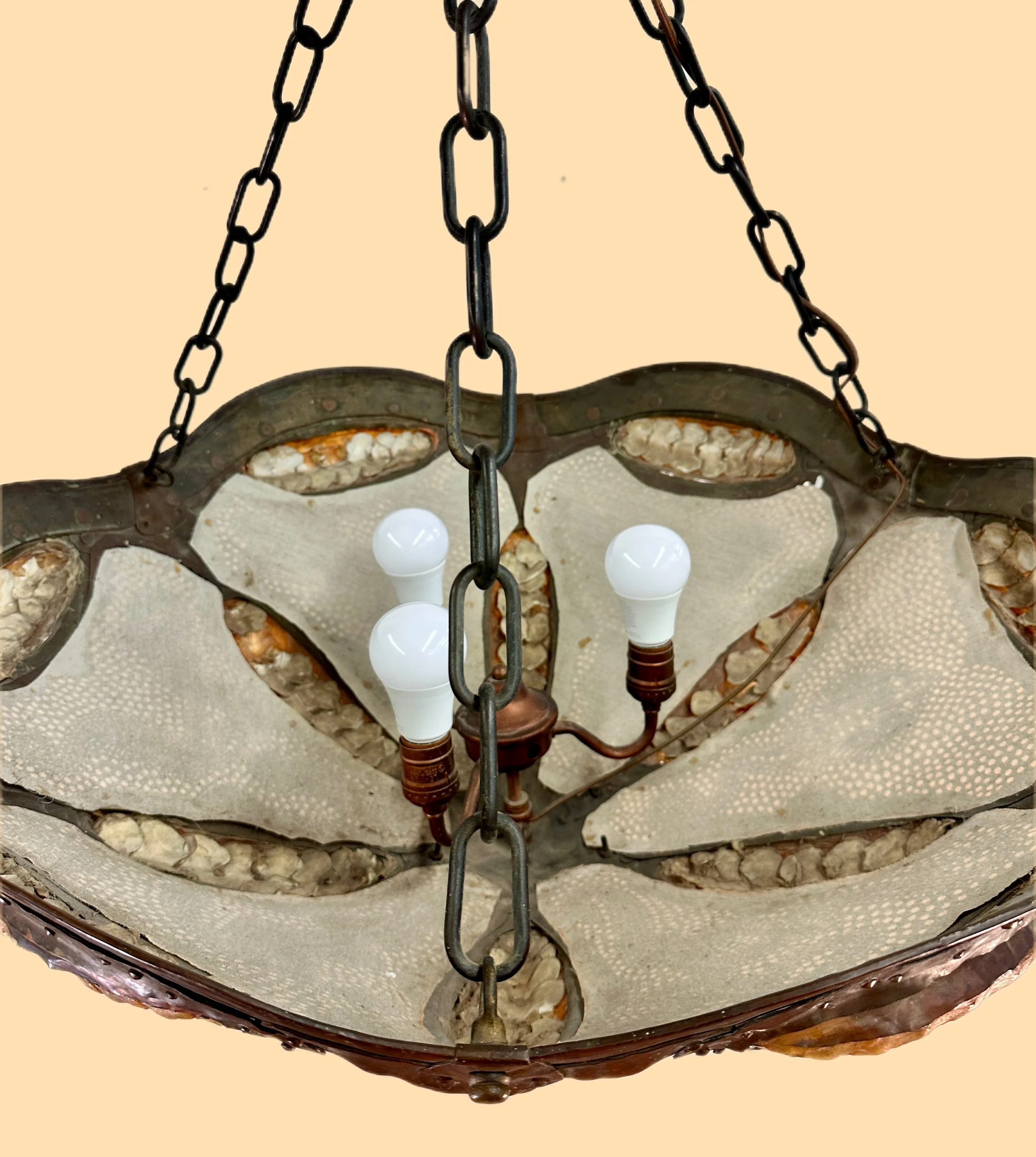
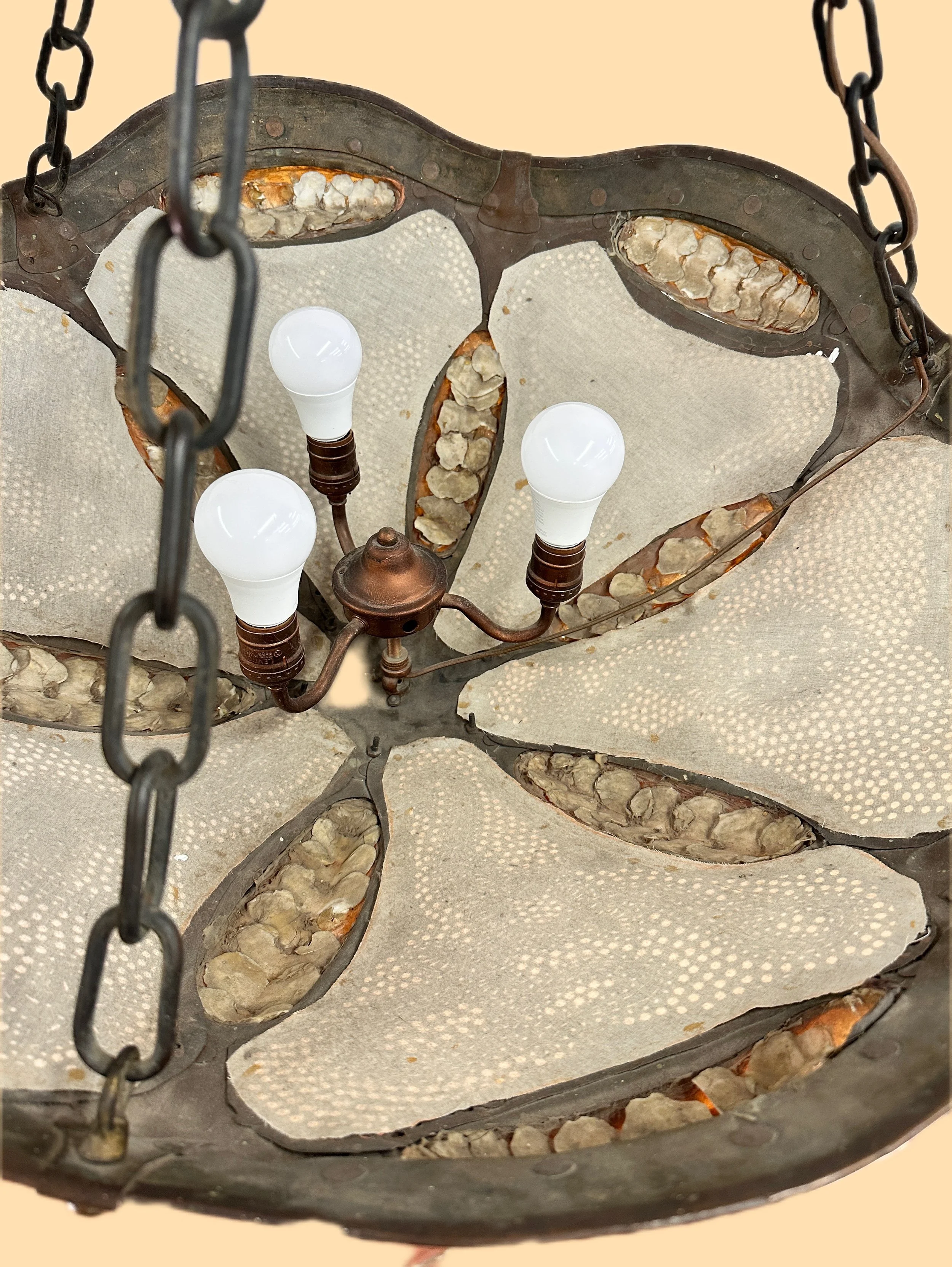
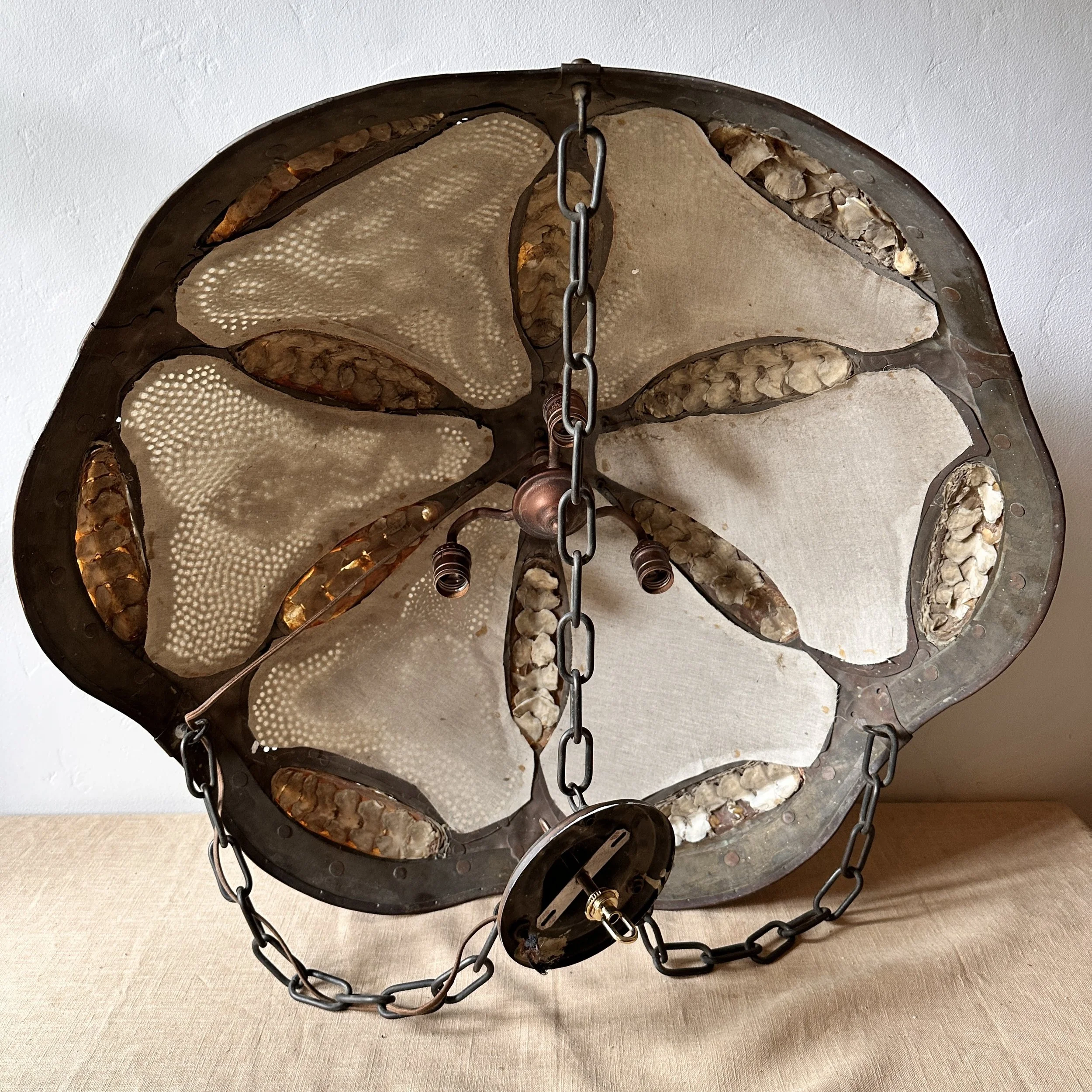
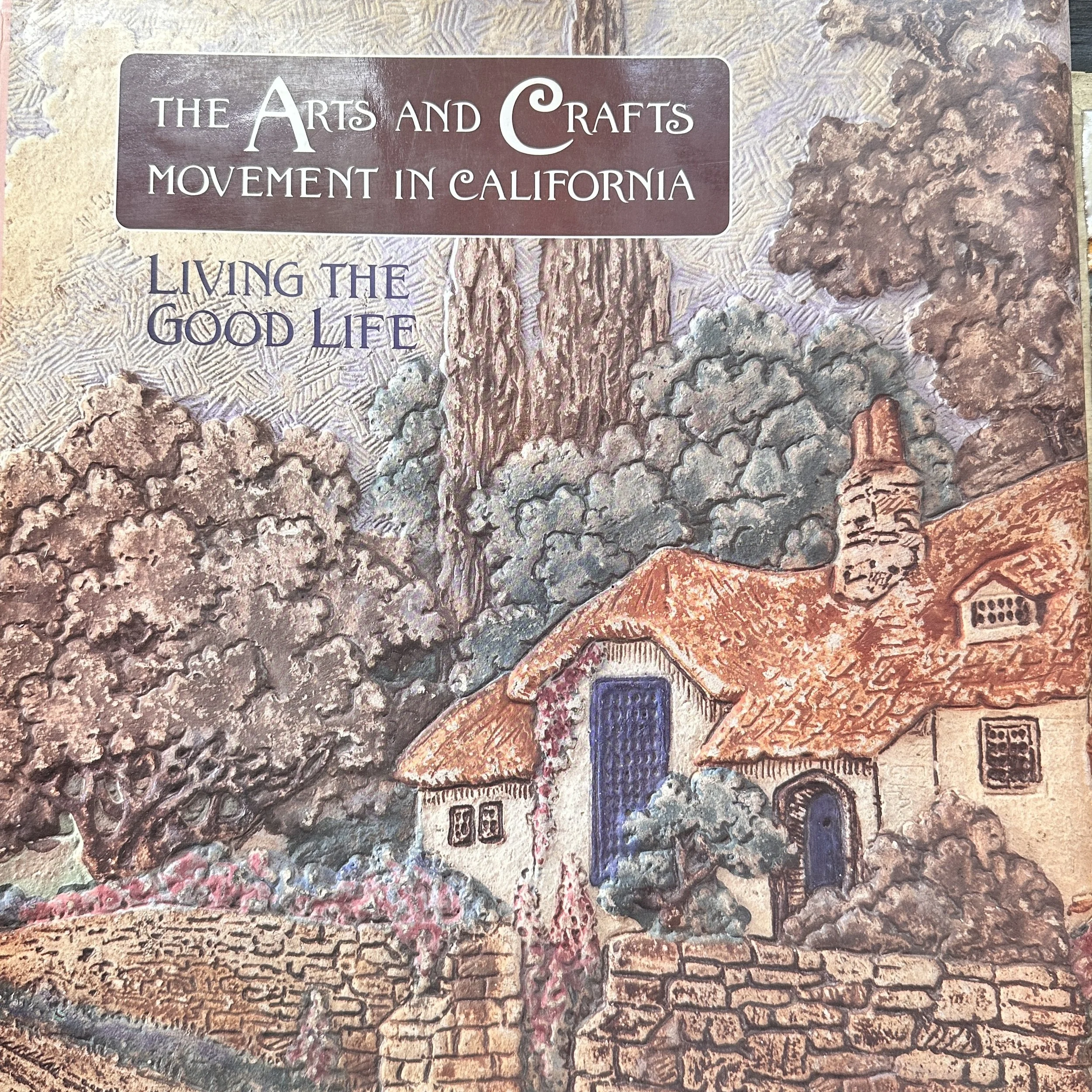
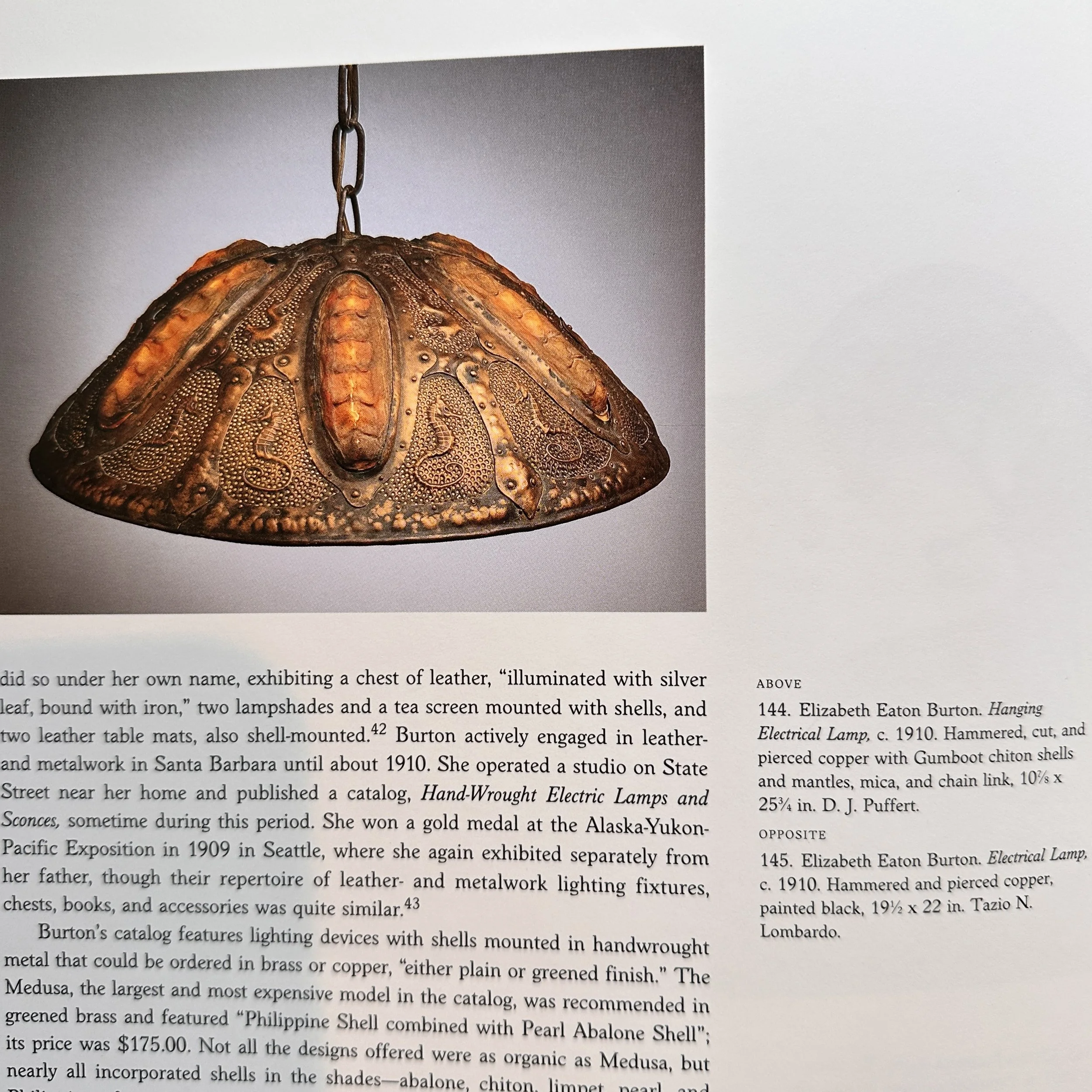
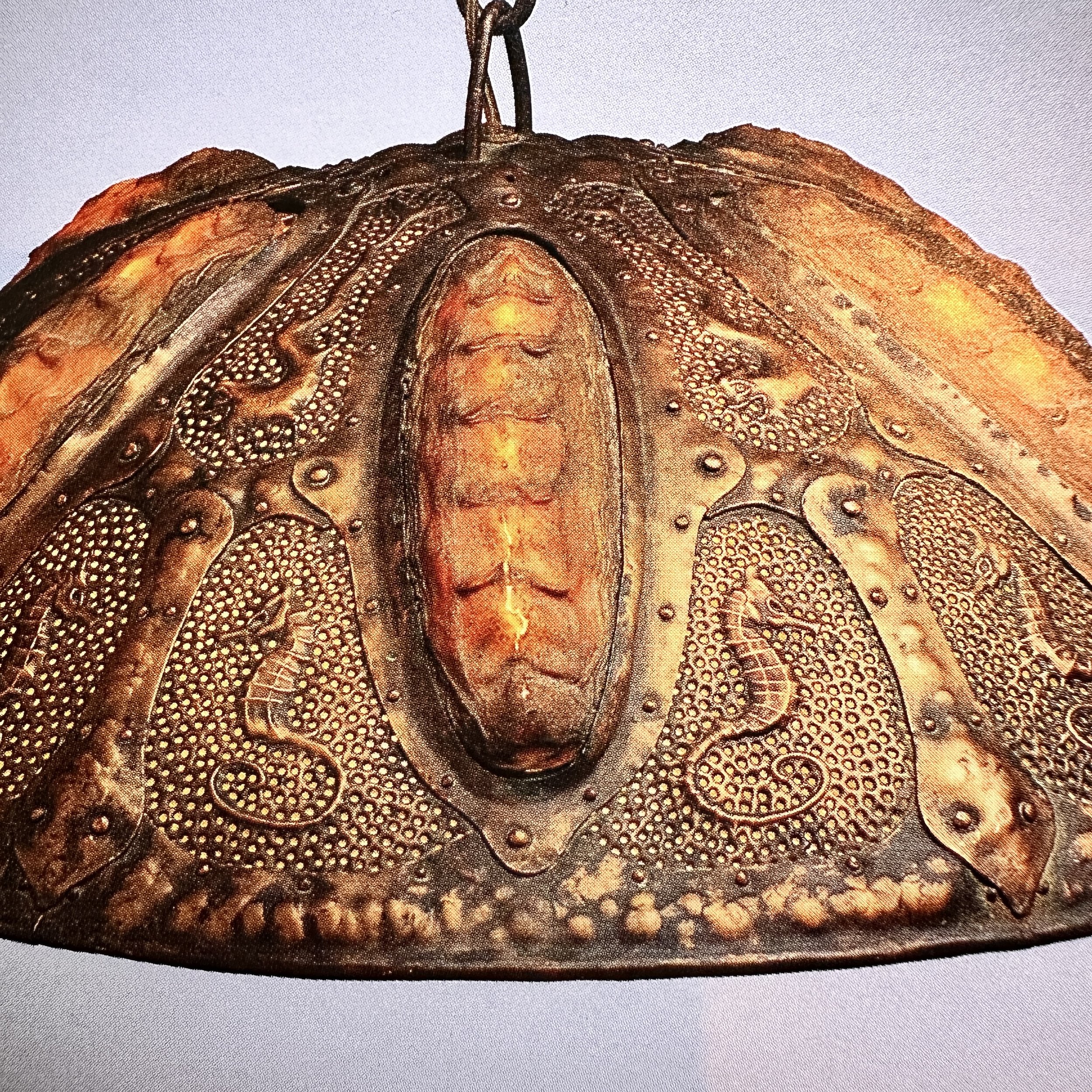
EB Chandelier
Santa Barbara, CA circa 1909
Material: Hammered Copper, Chiton Shell, Silk
Dimensions: 30” wide, 12” high, 25” high with canopy
Unmarked
Provenance:
Grace Nicholson “The Treasure House” Pasadena, CA
Private Collection, Tucson, AZ
Hammered & Hewn, Pasadena, CA
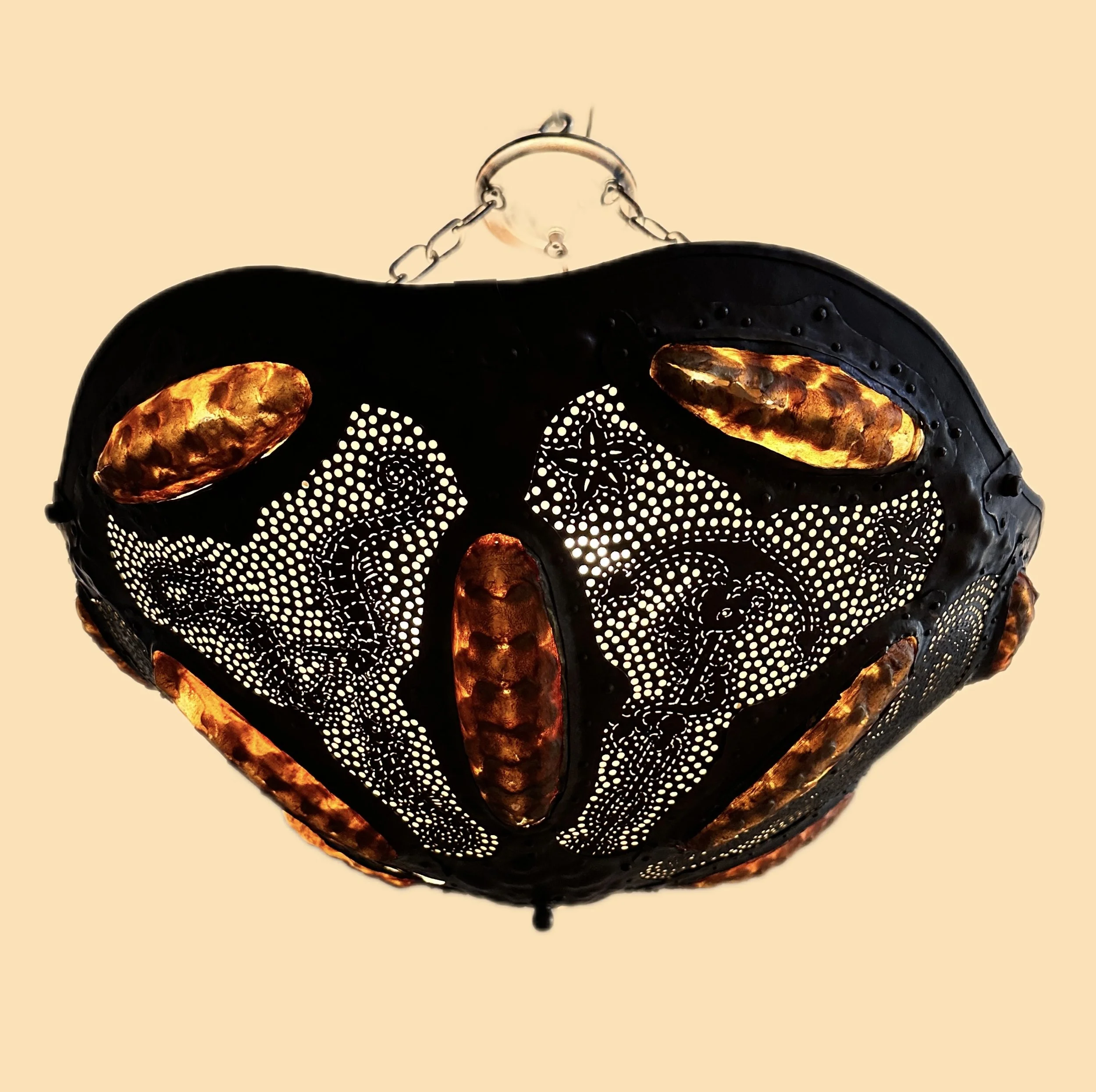
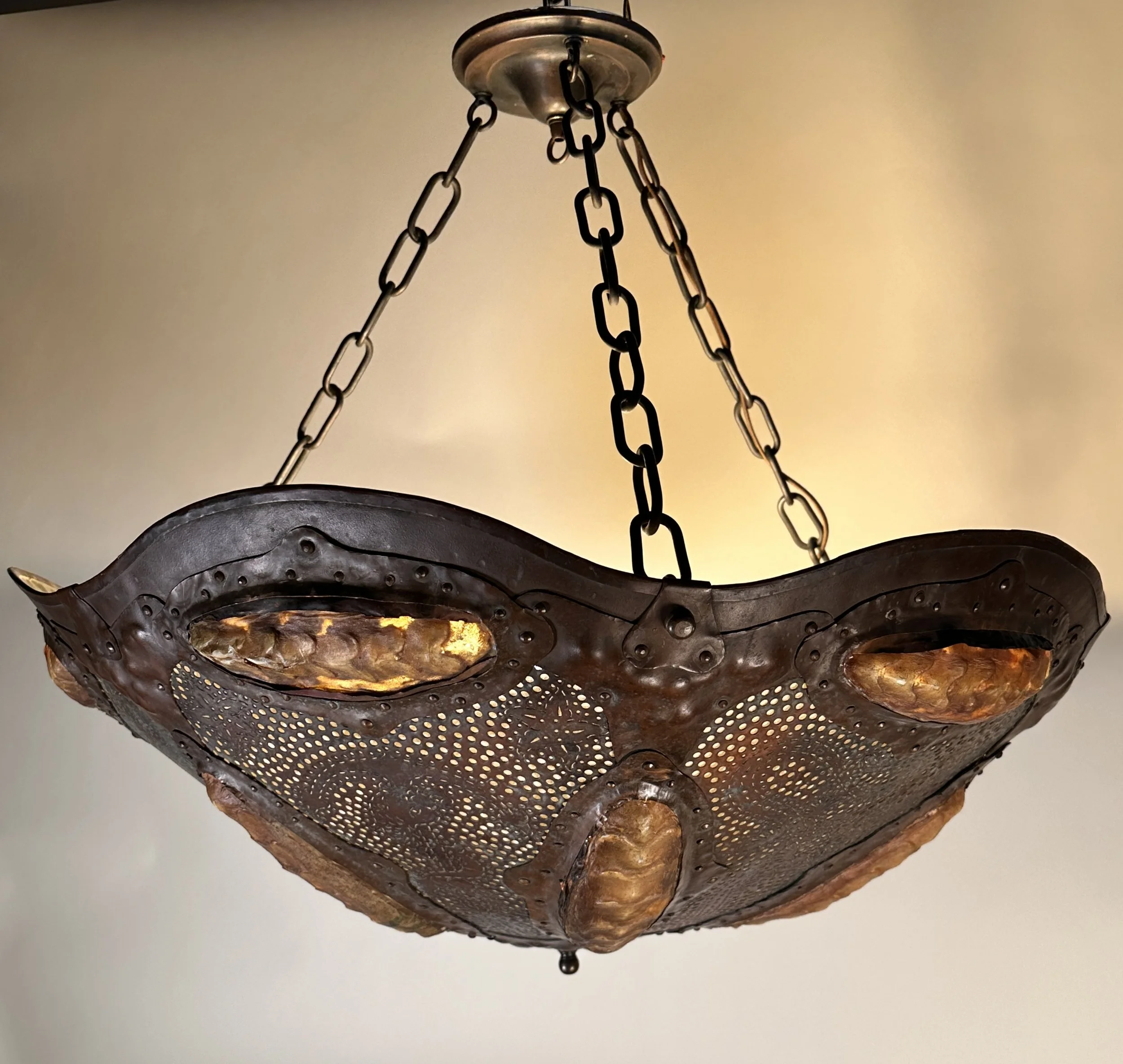
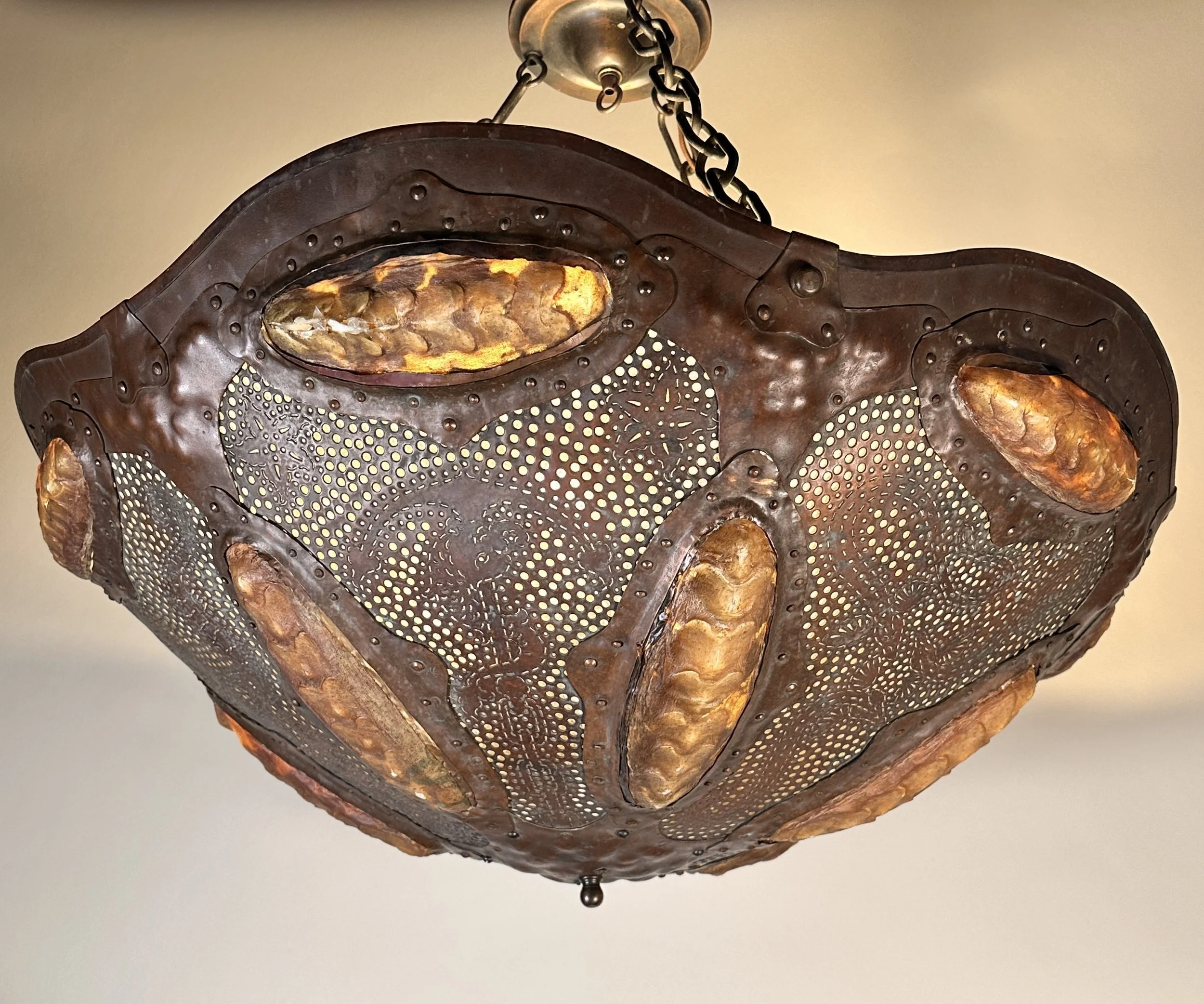
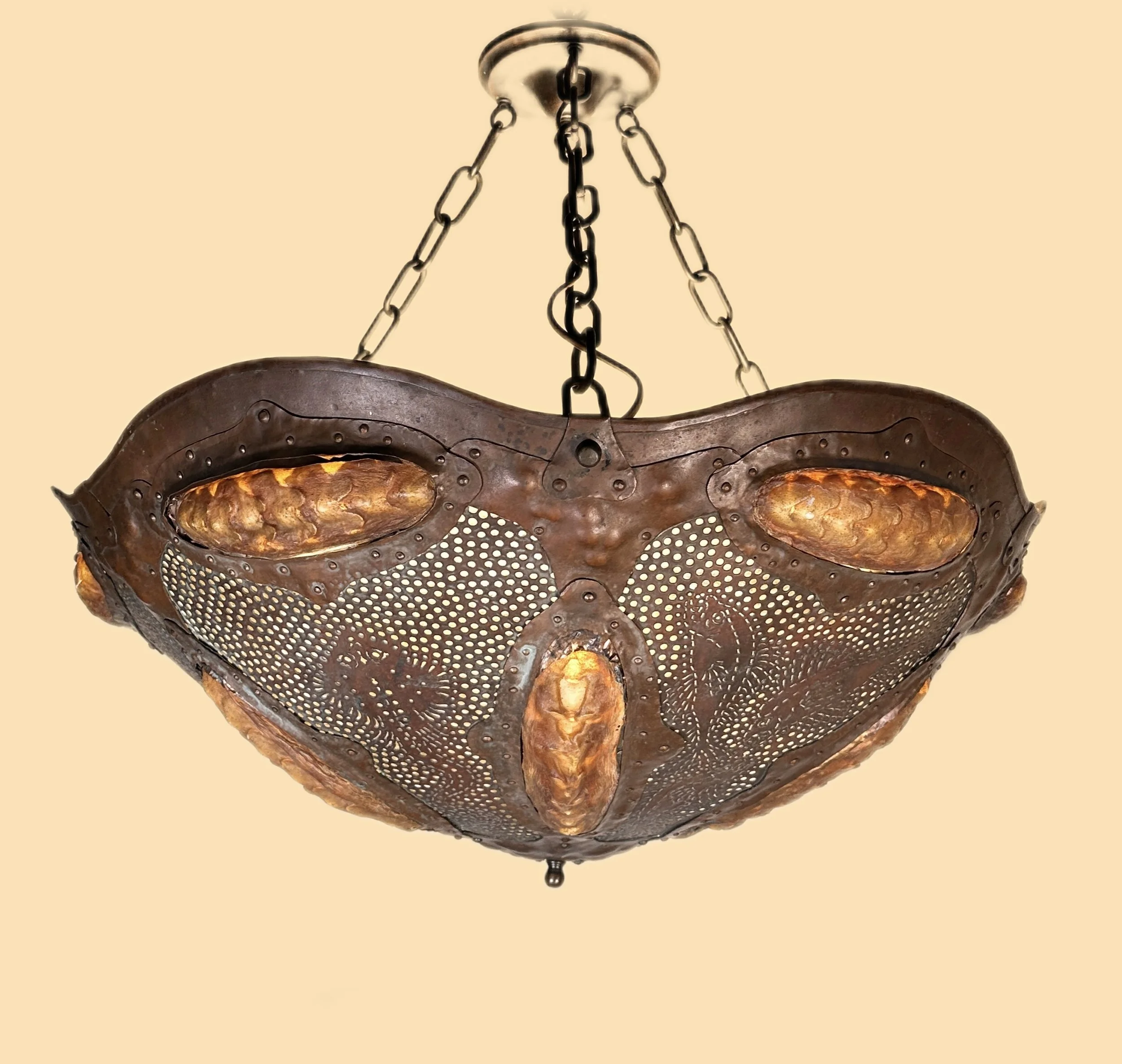
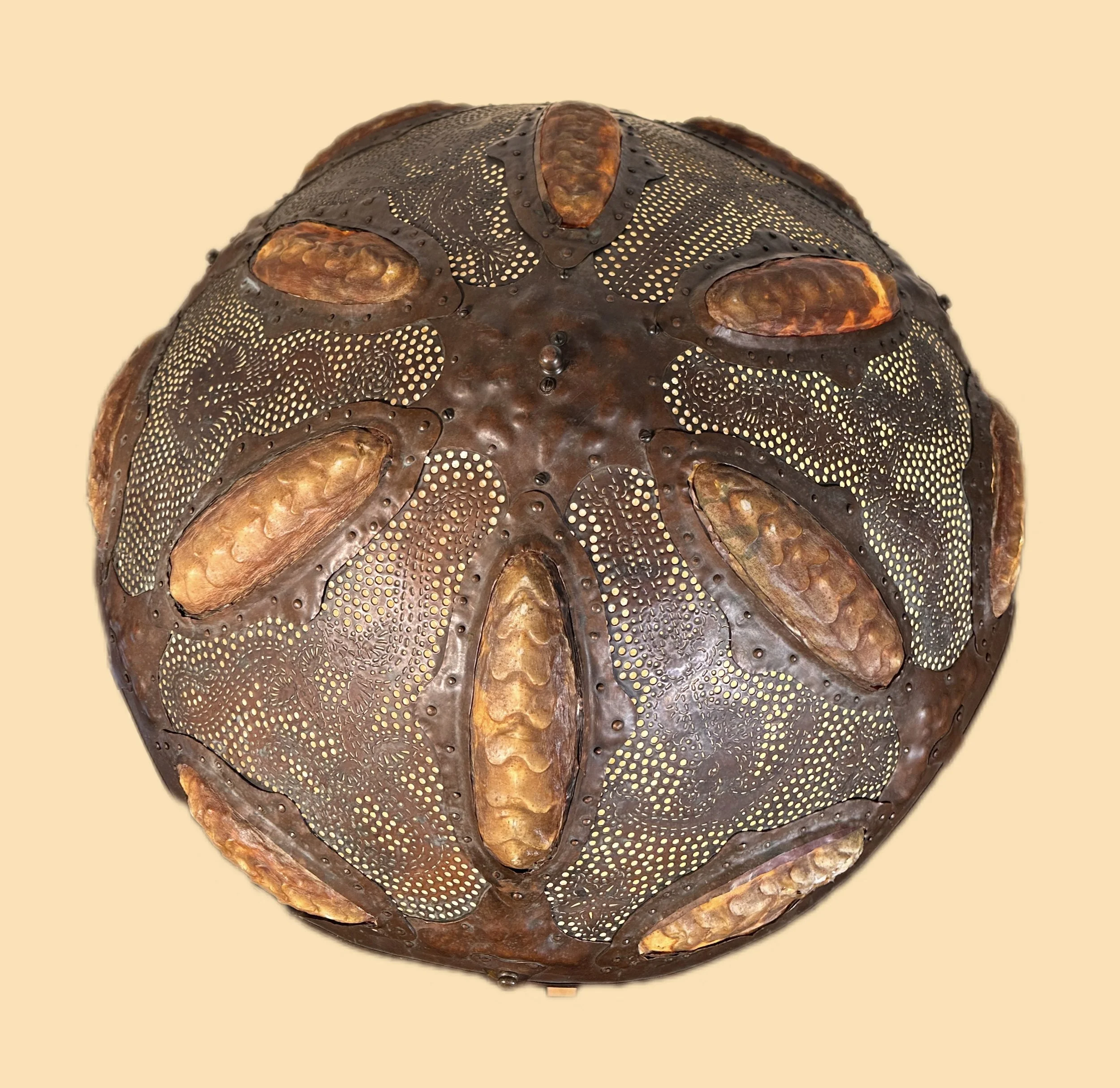
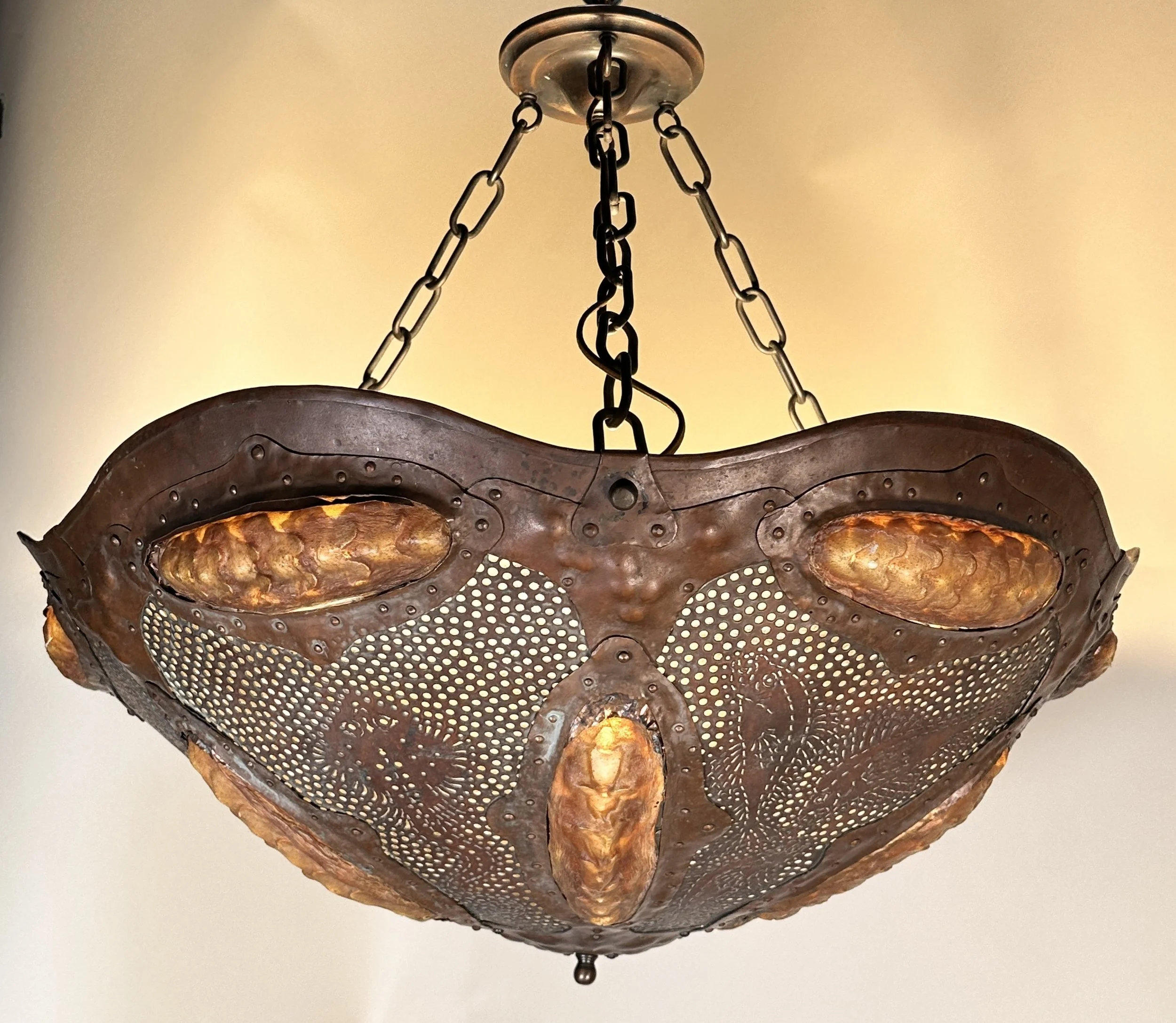
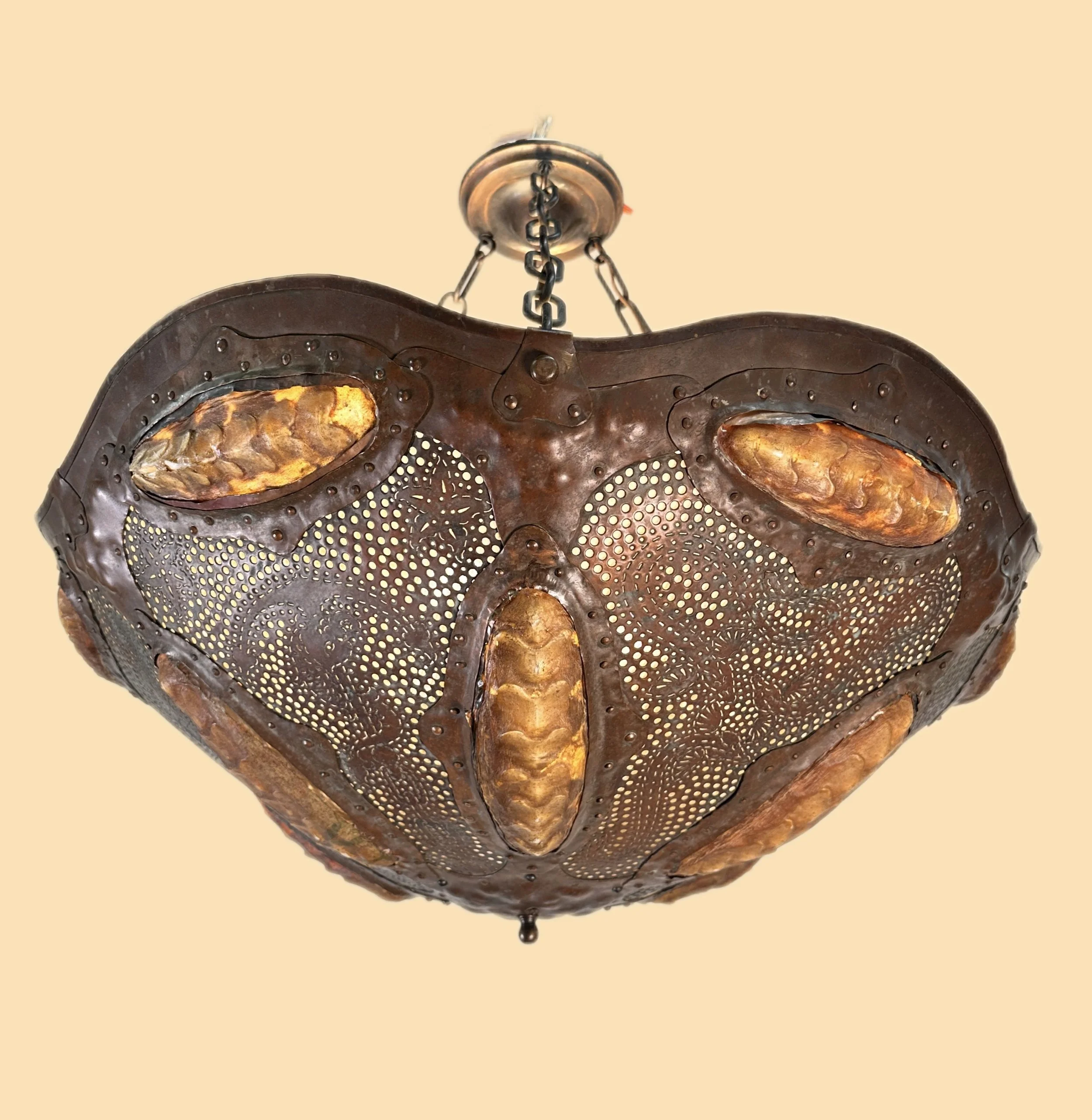
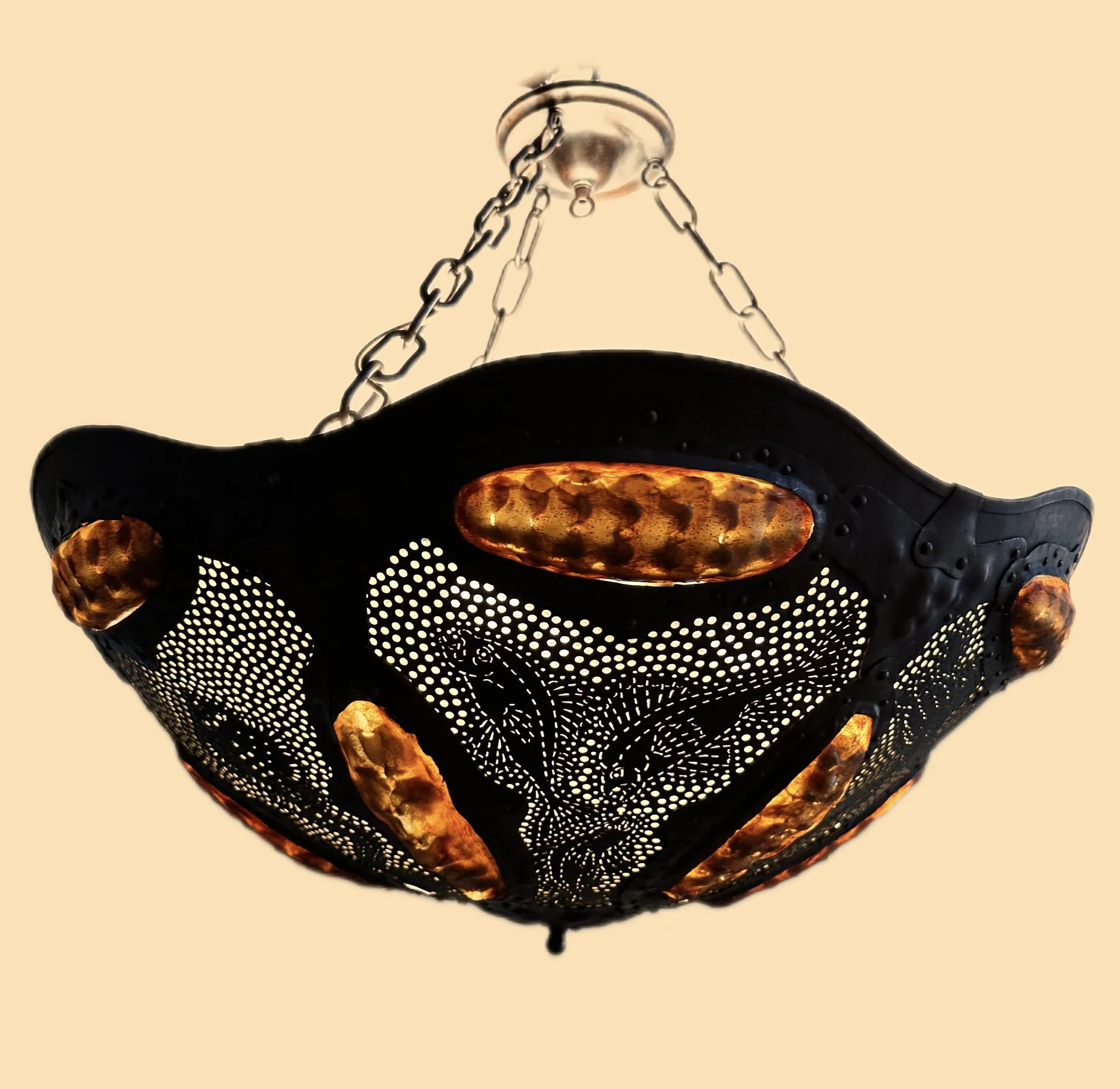
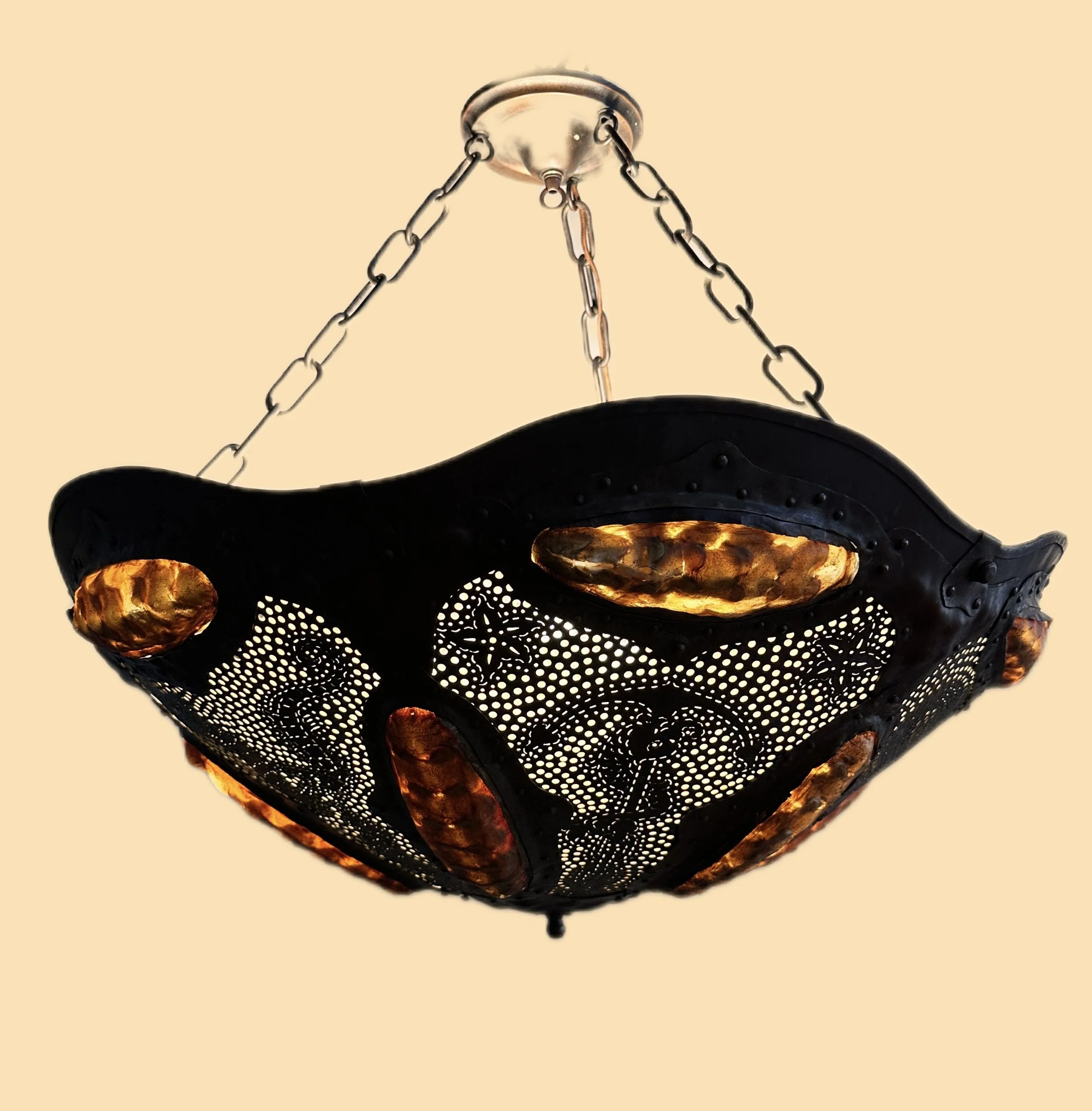
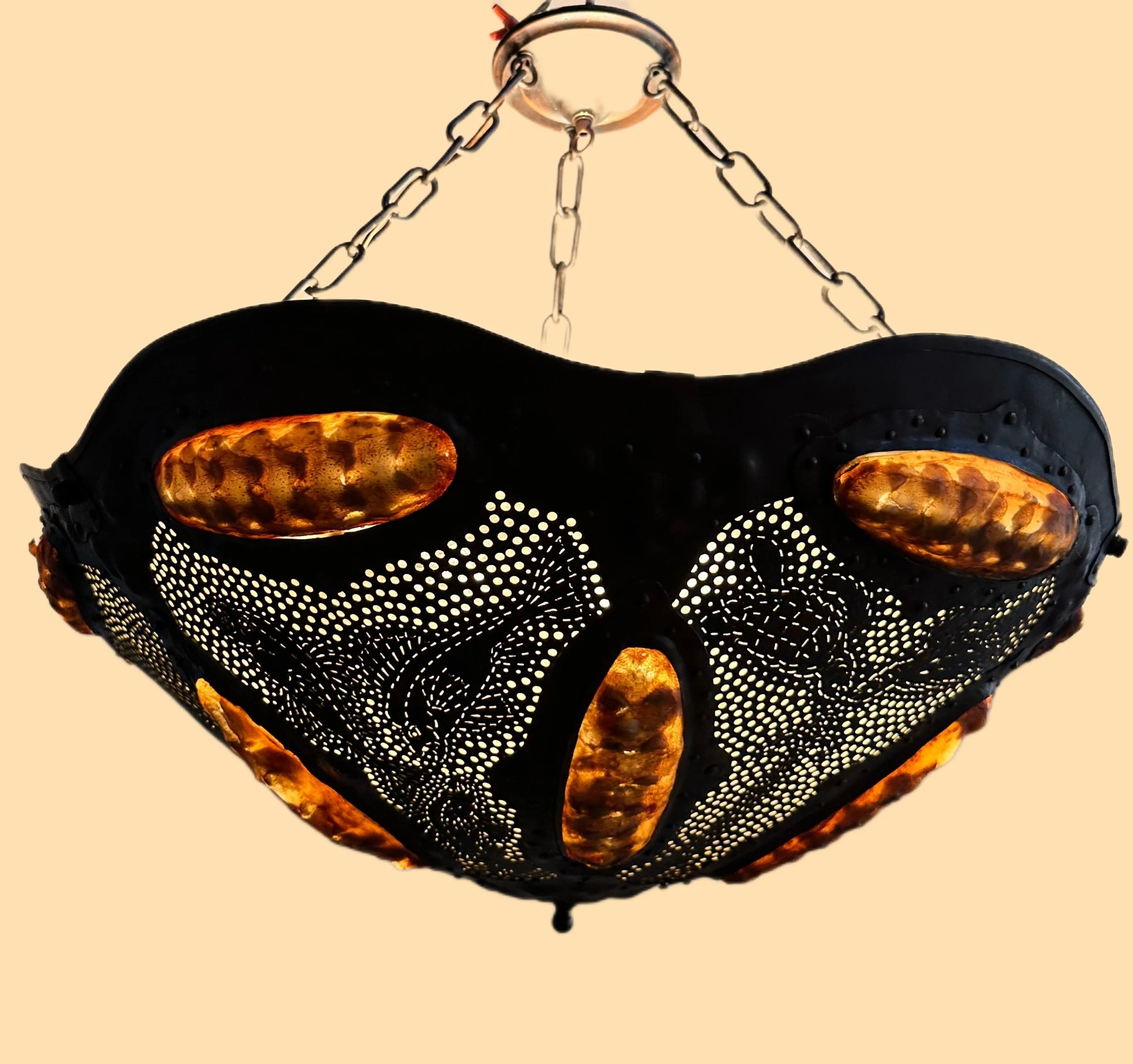
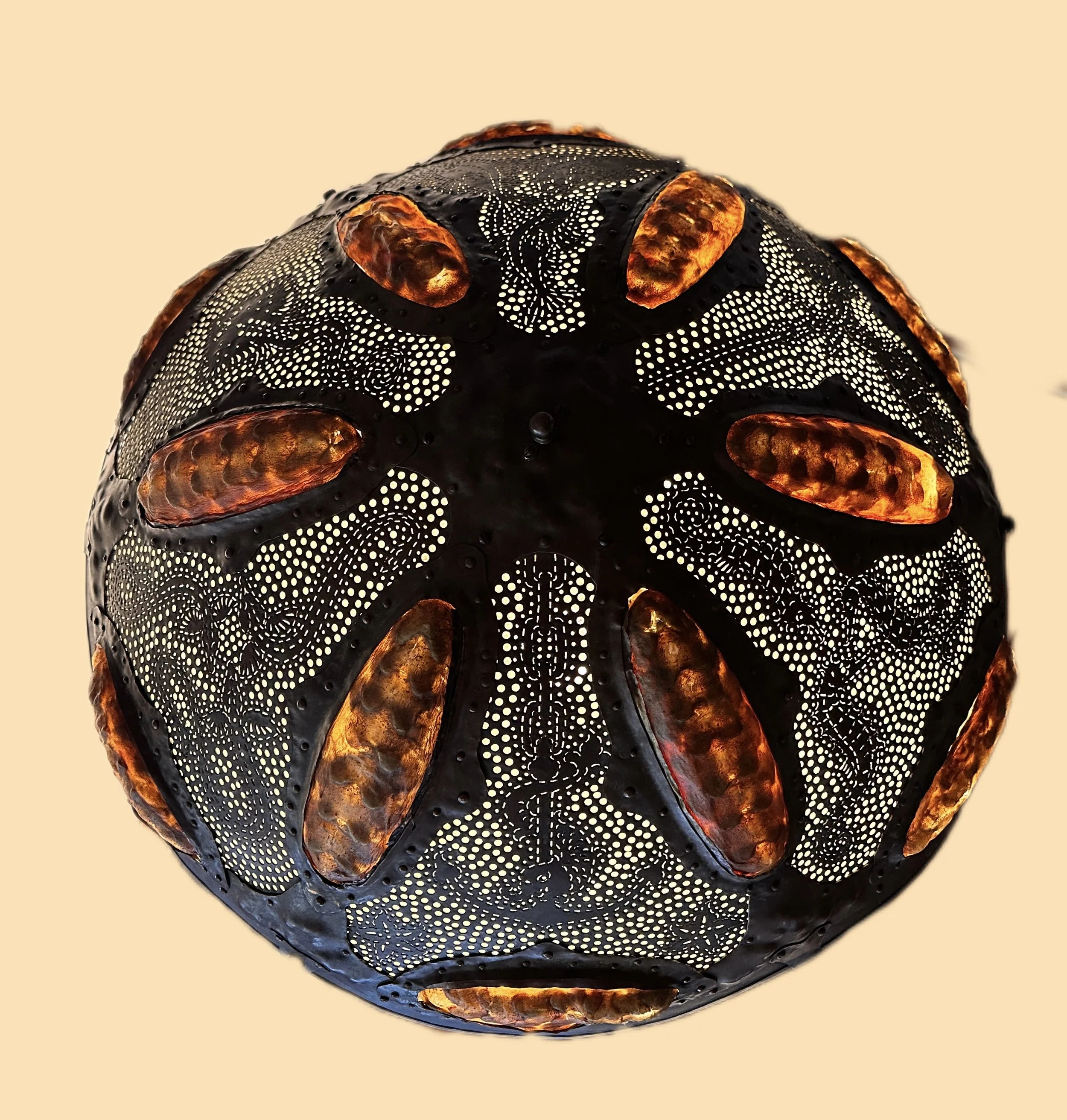
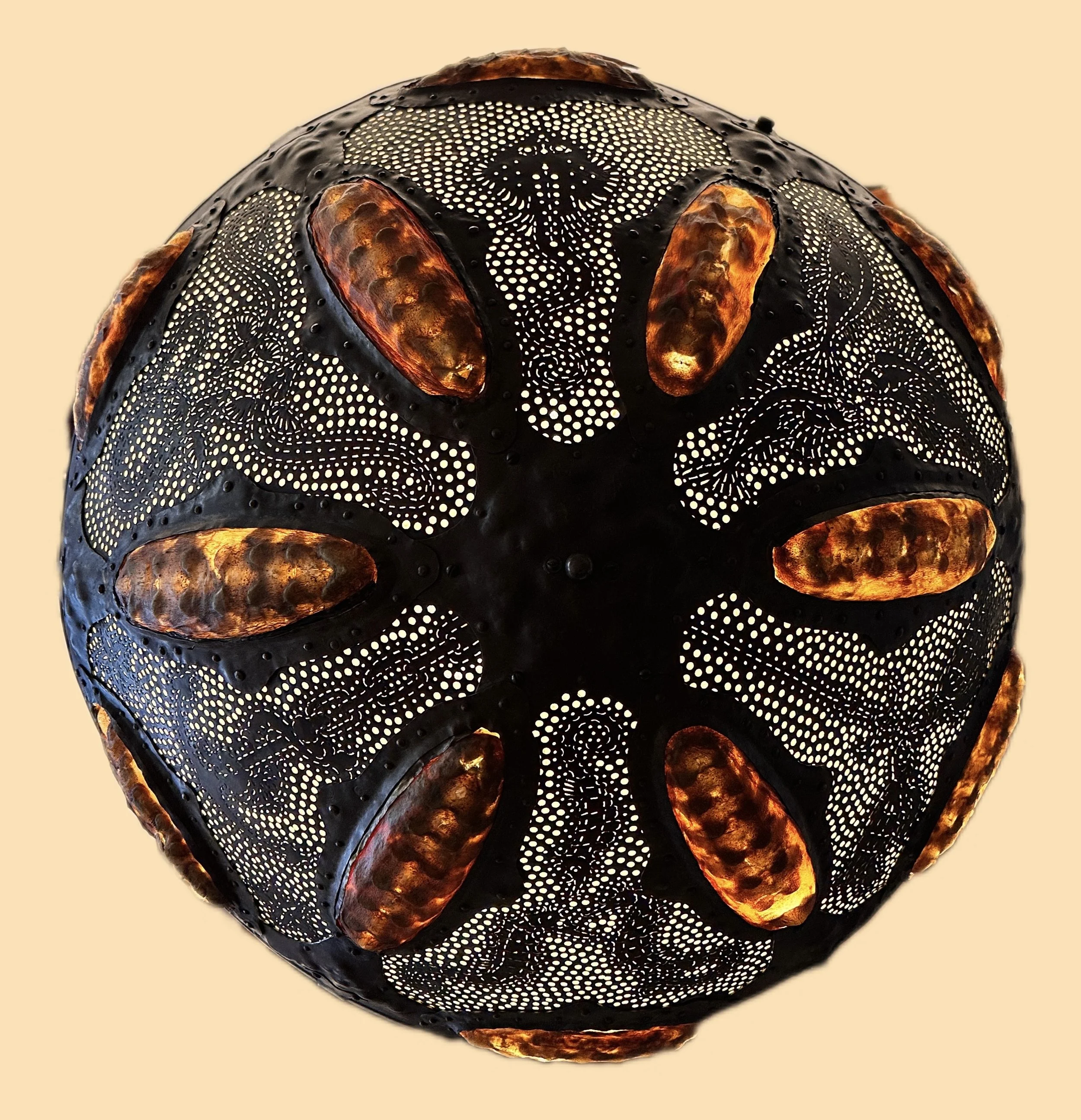
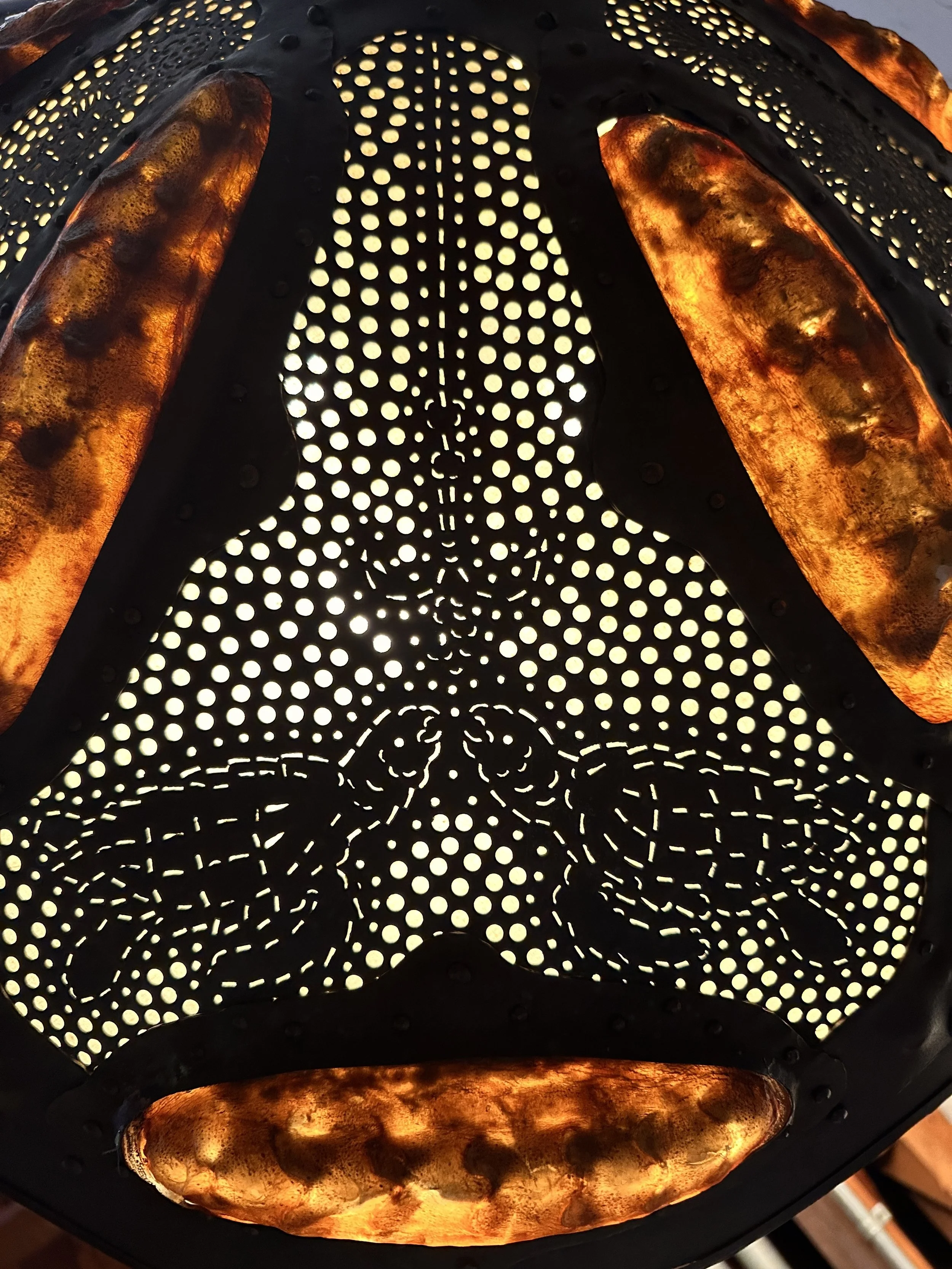
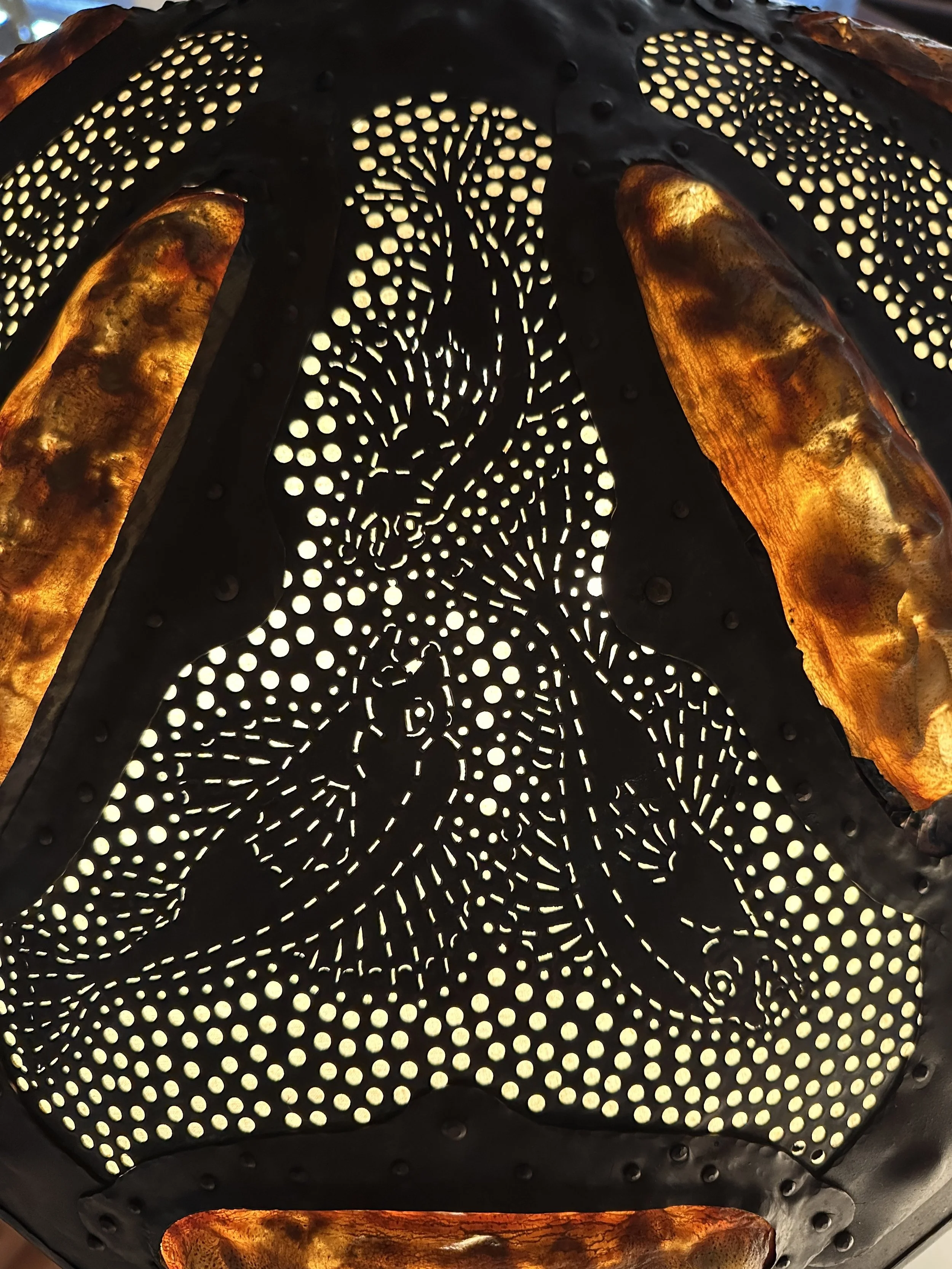
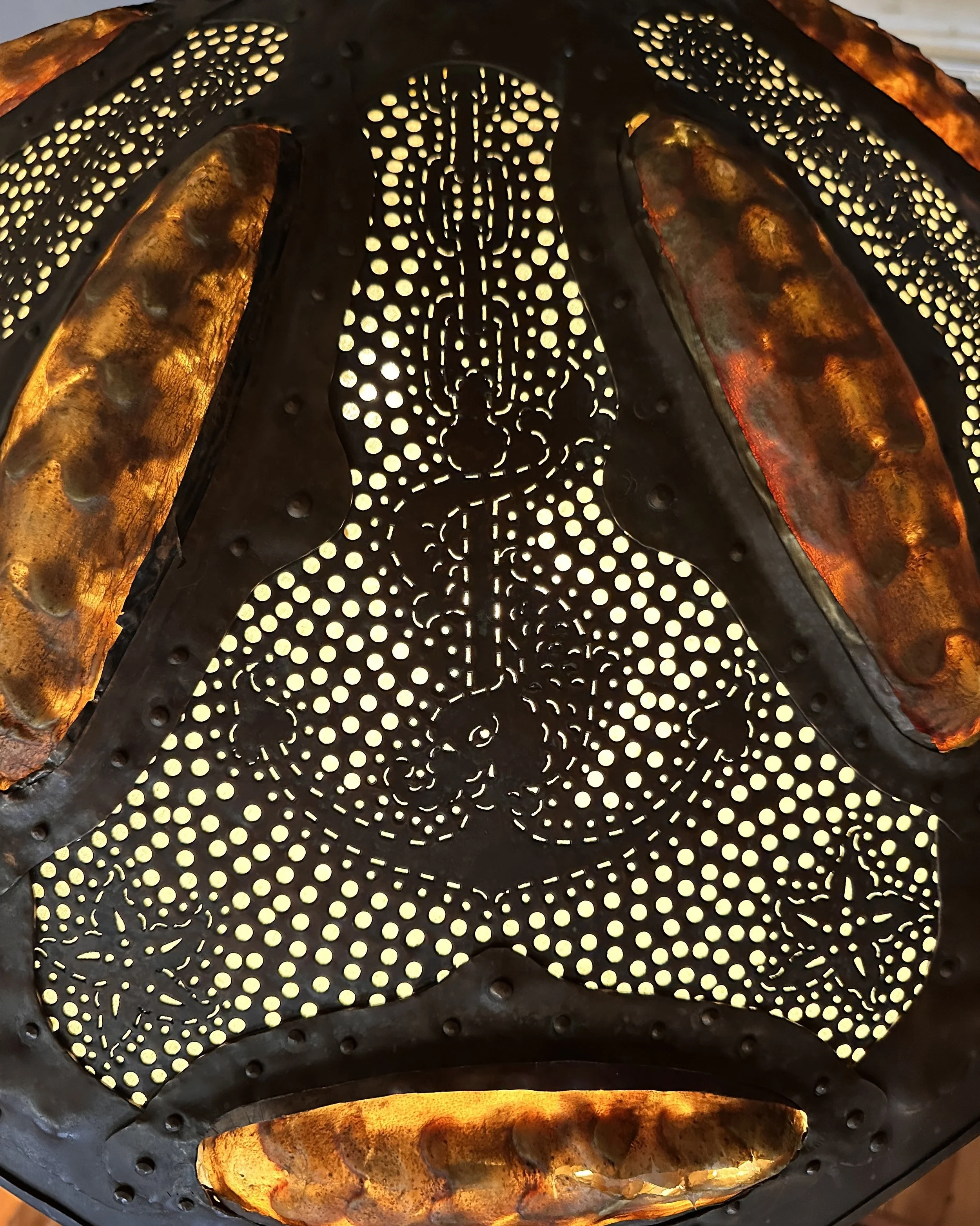
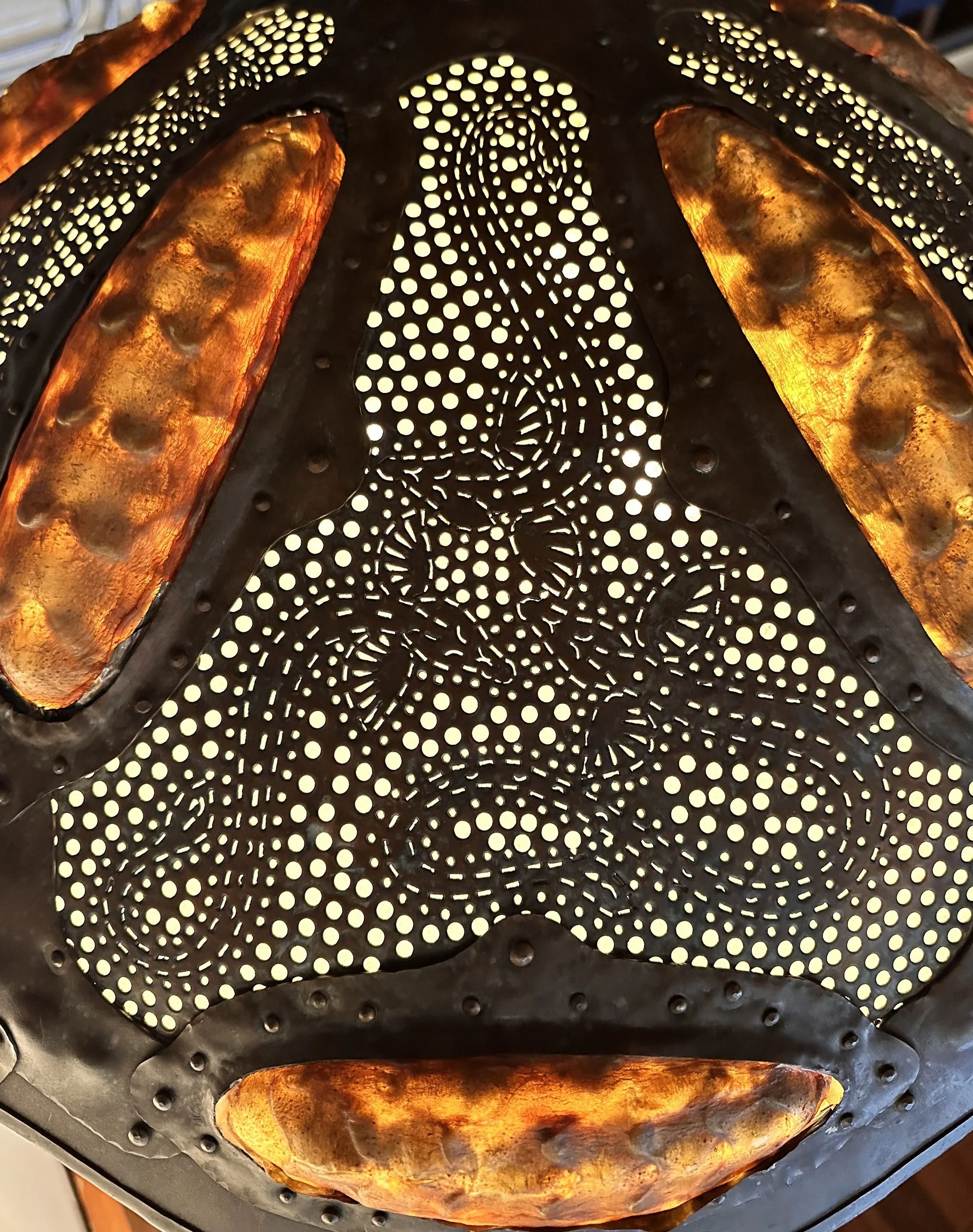
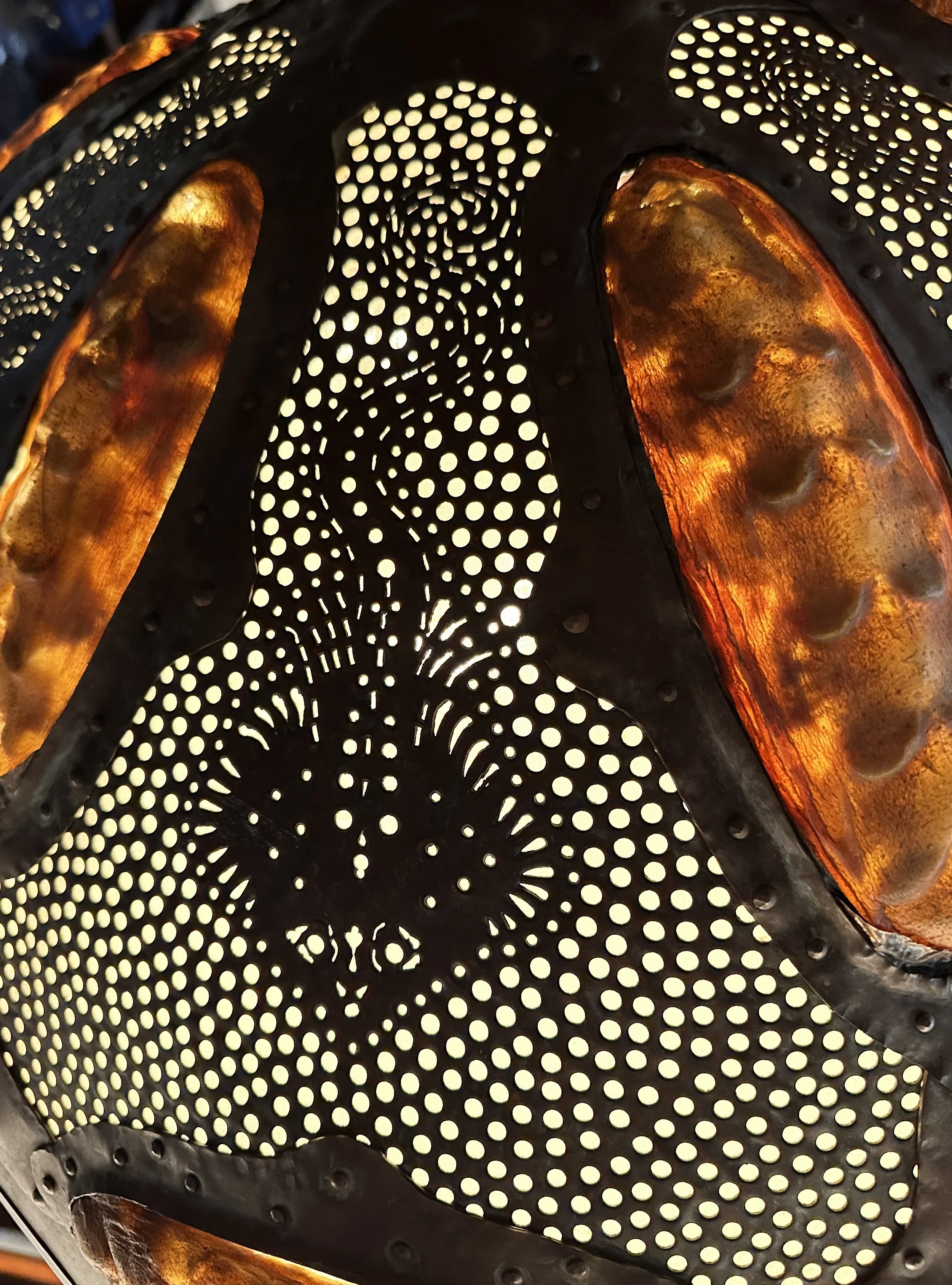
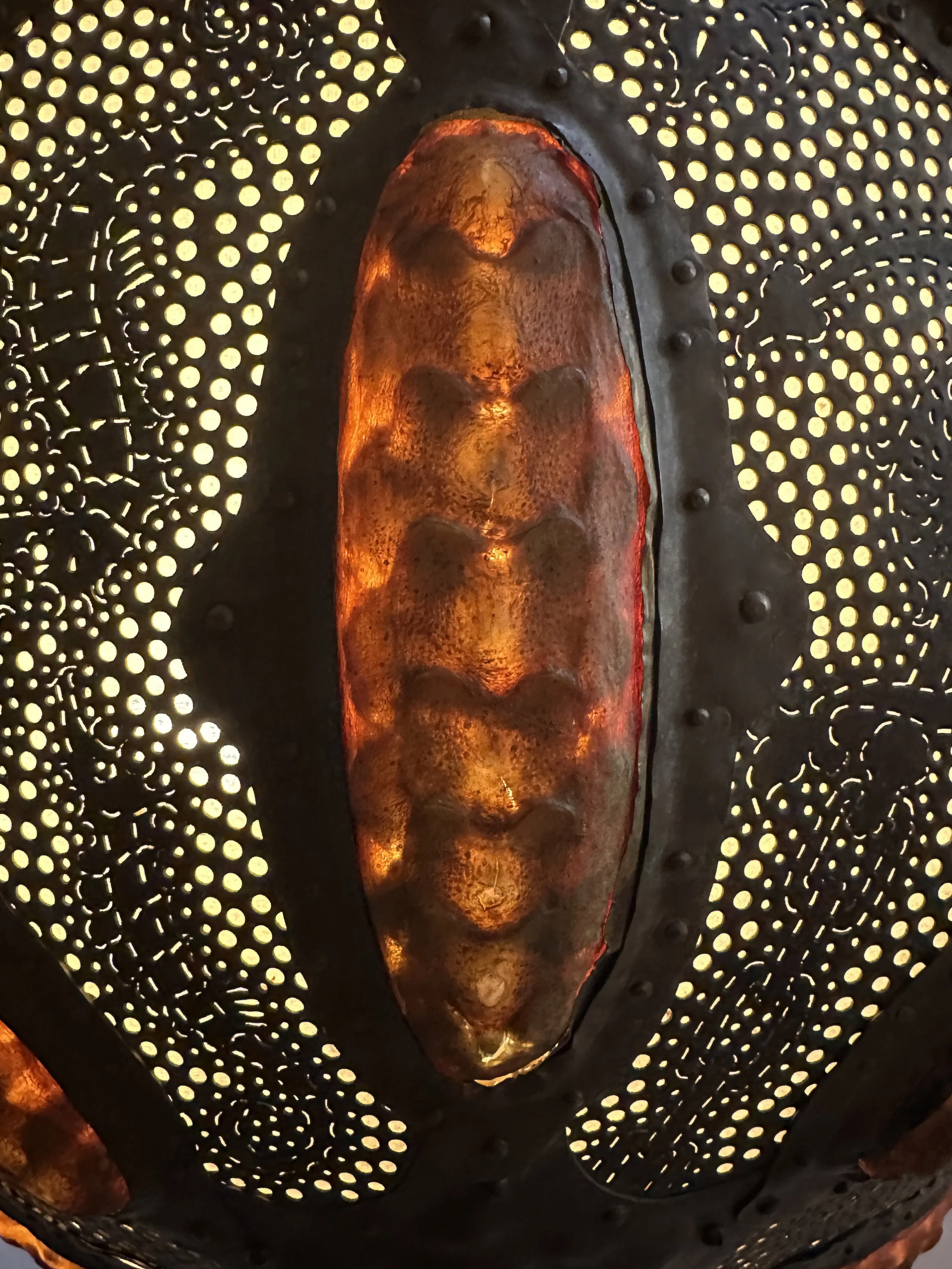
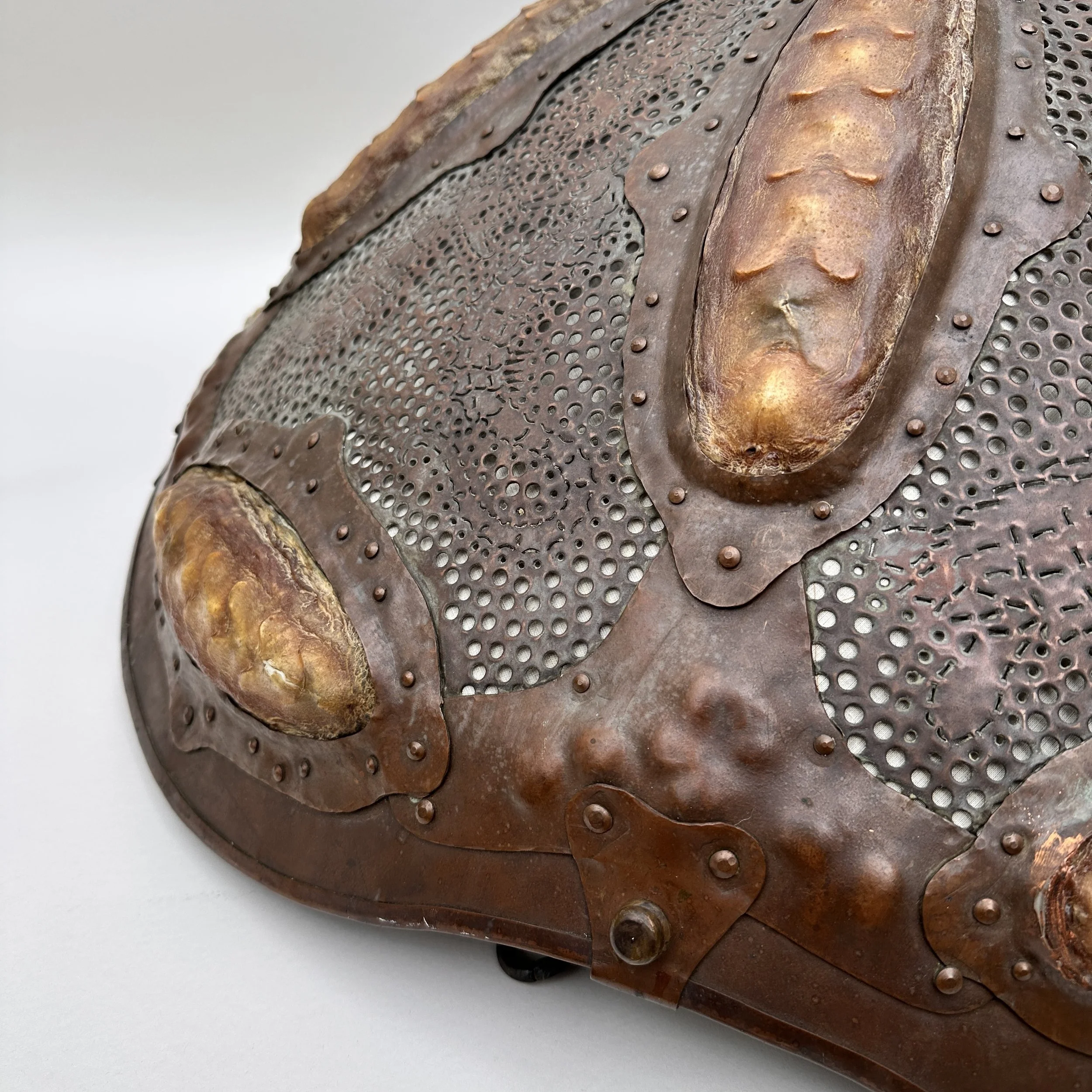
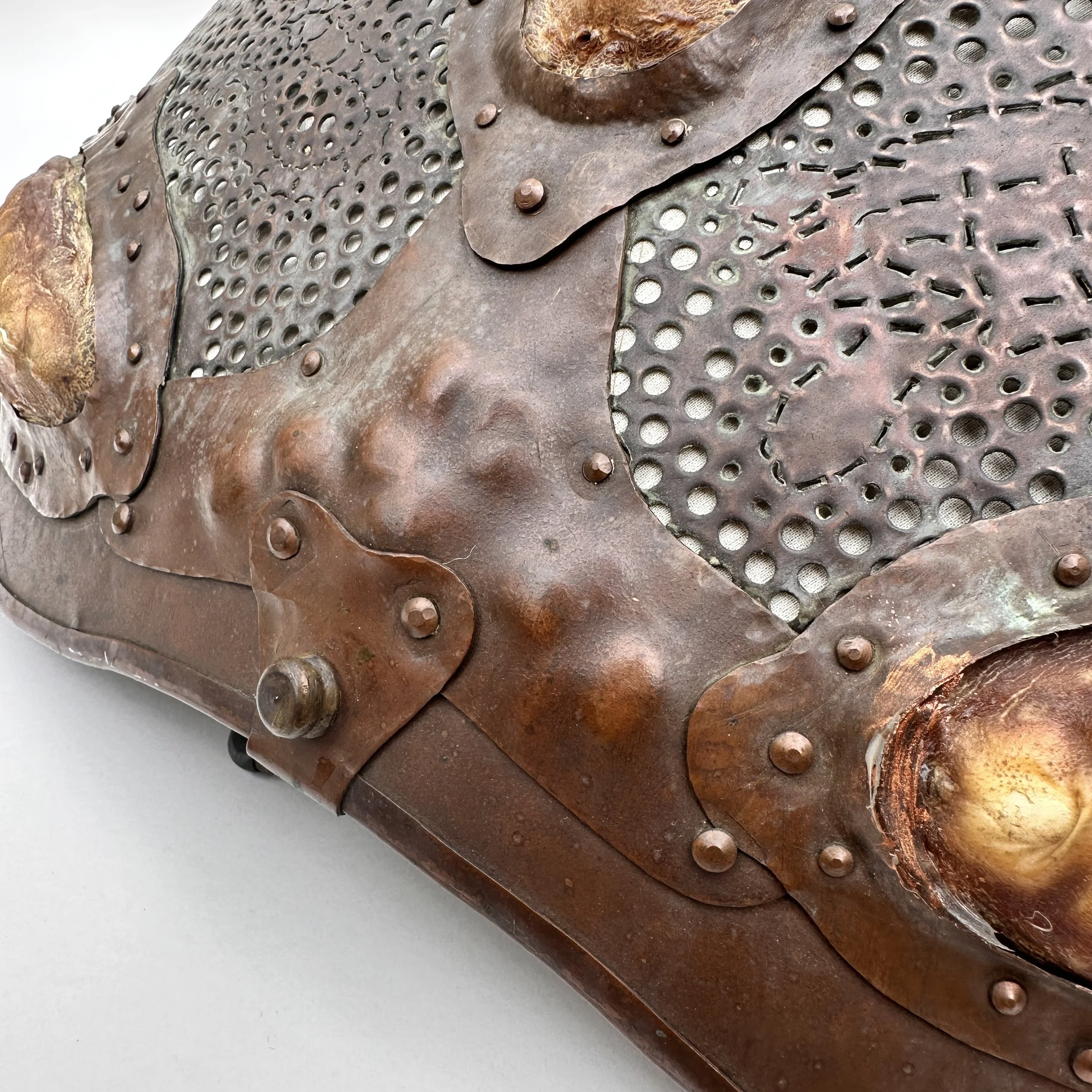
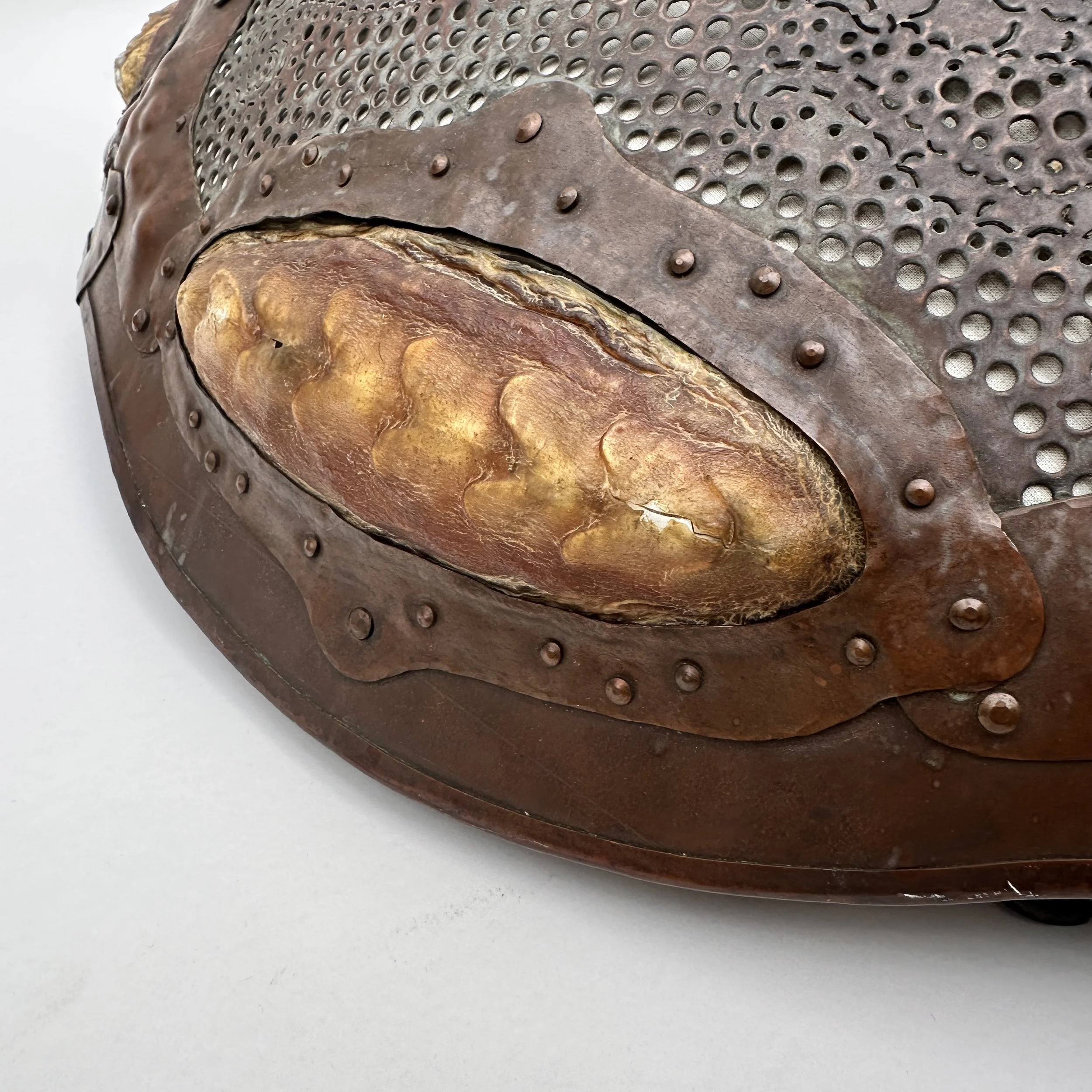
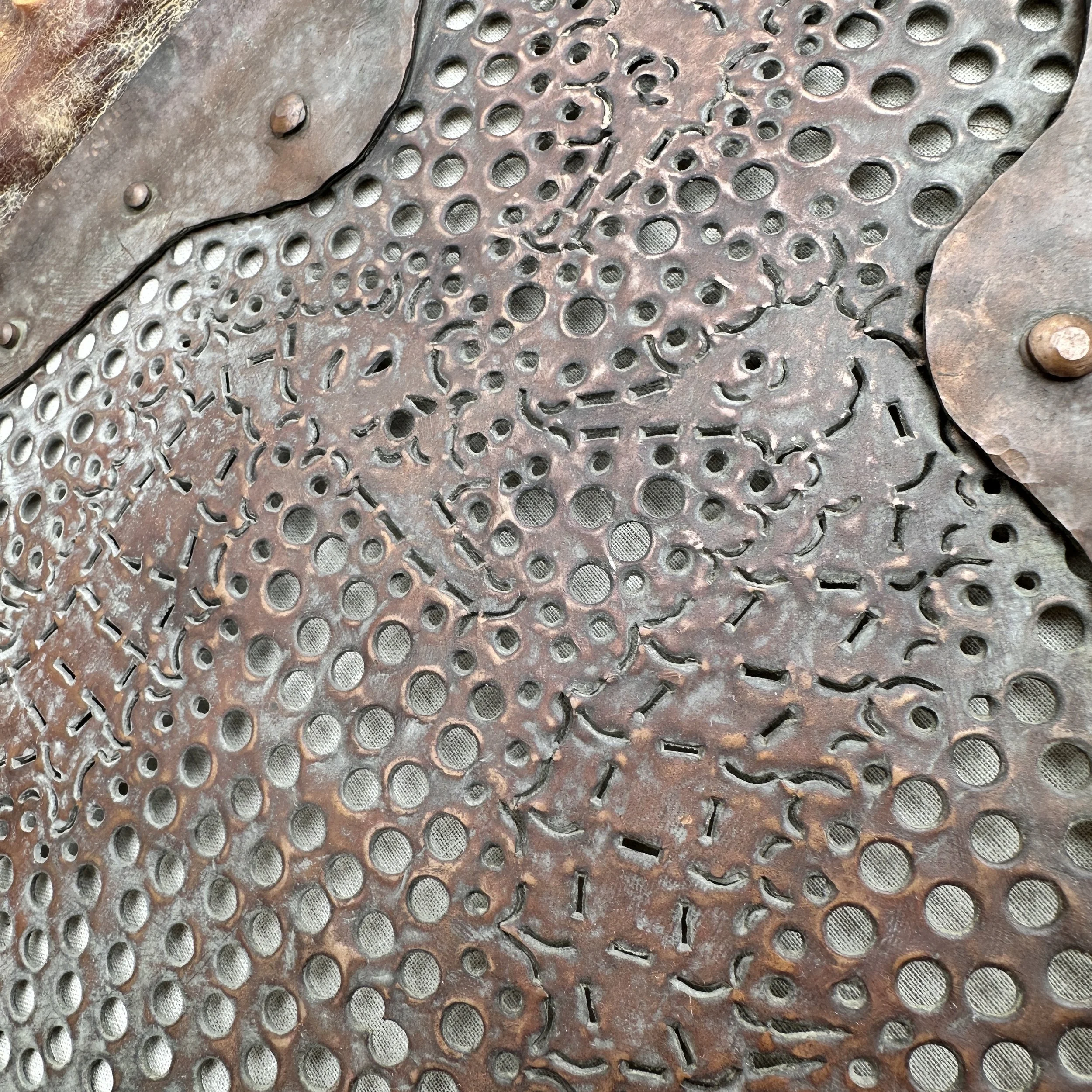
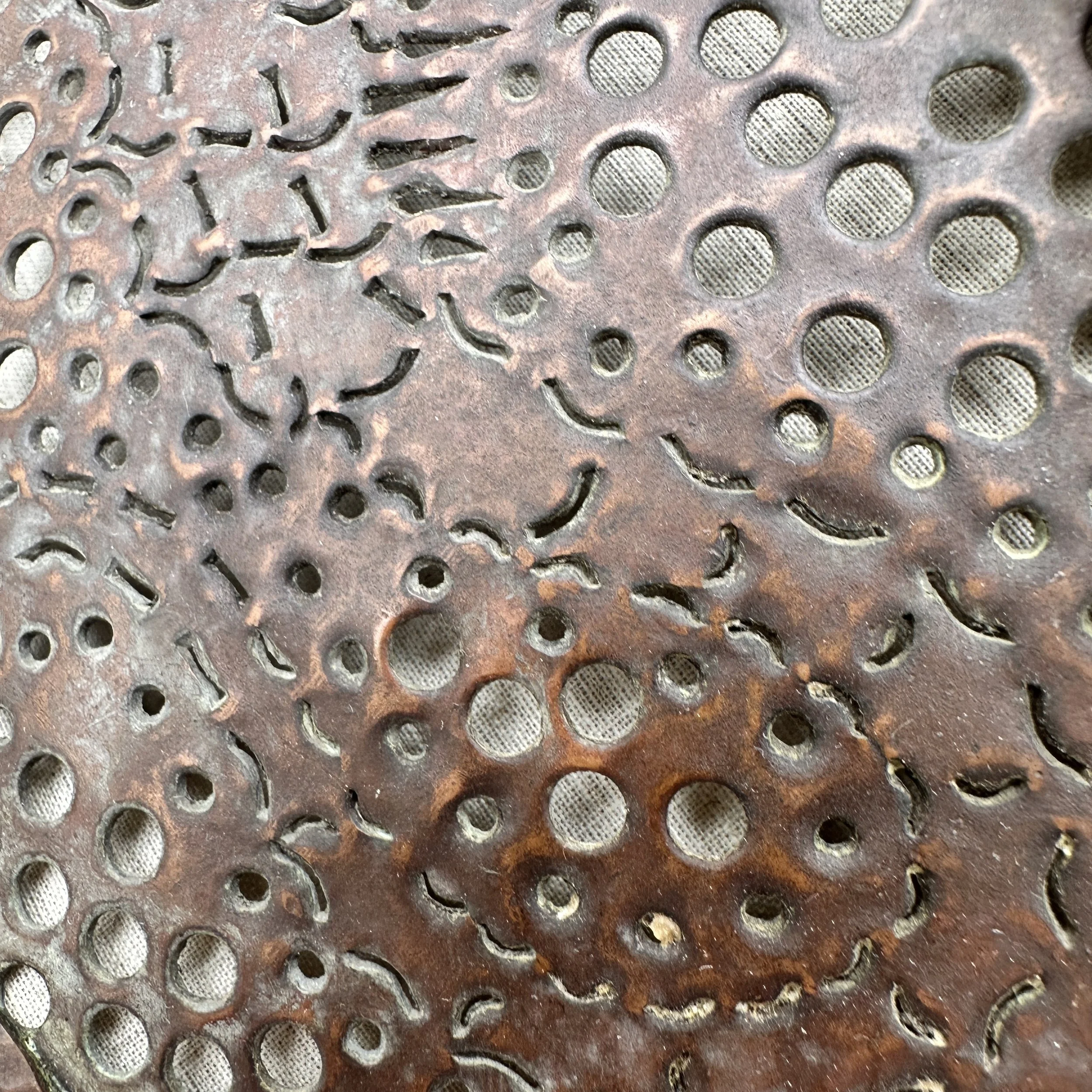
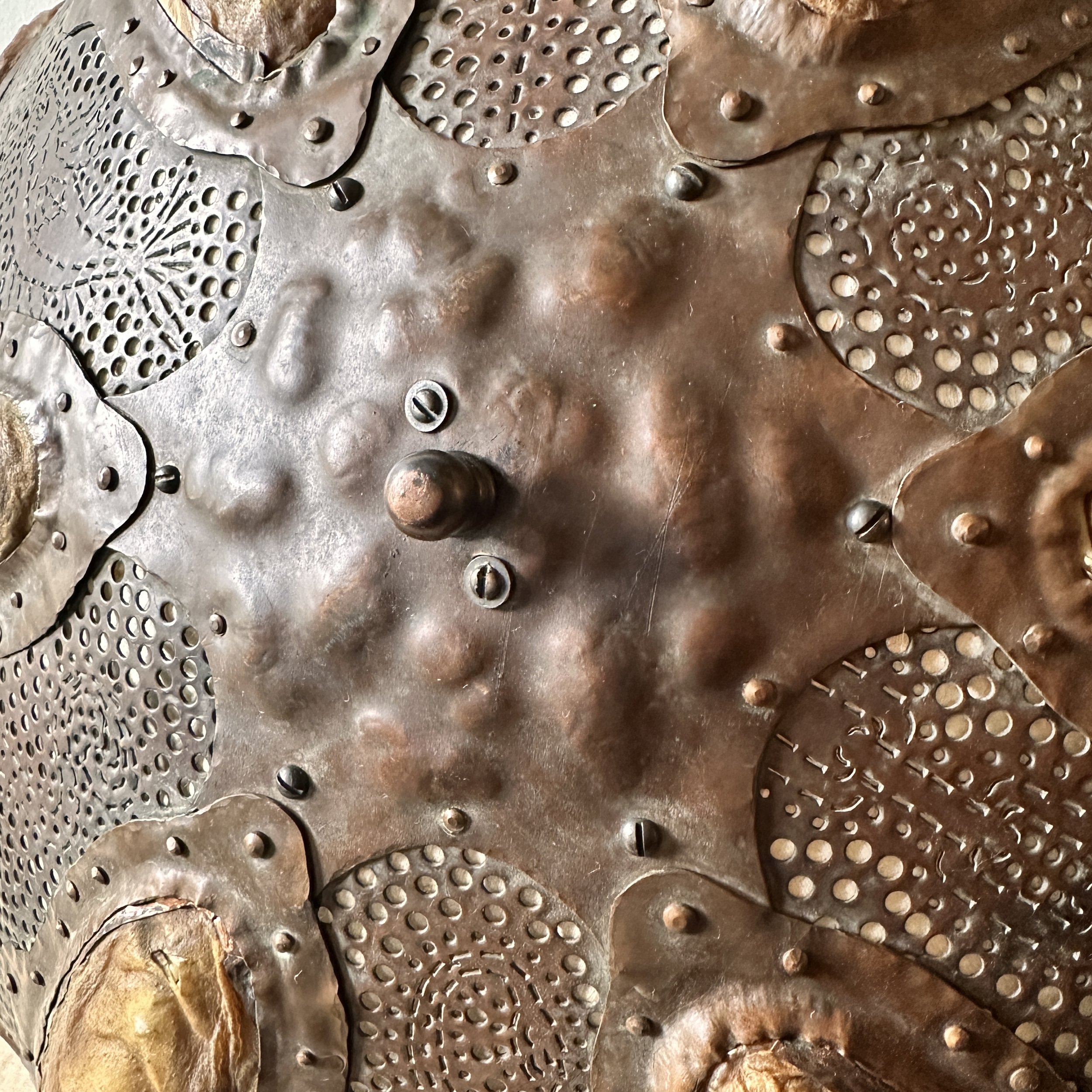
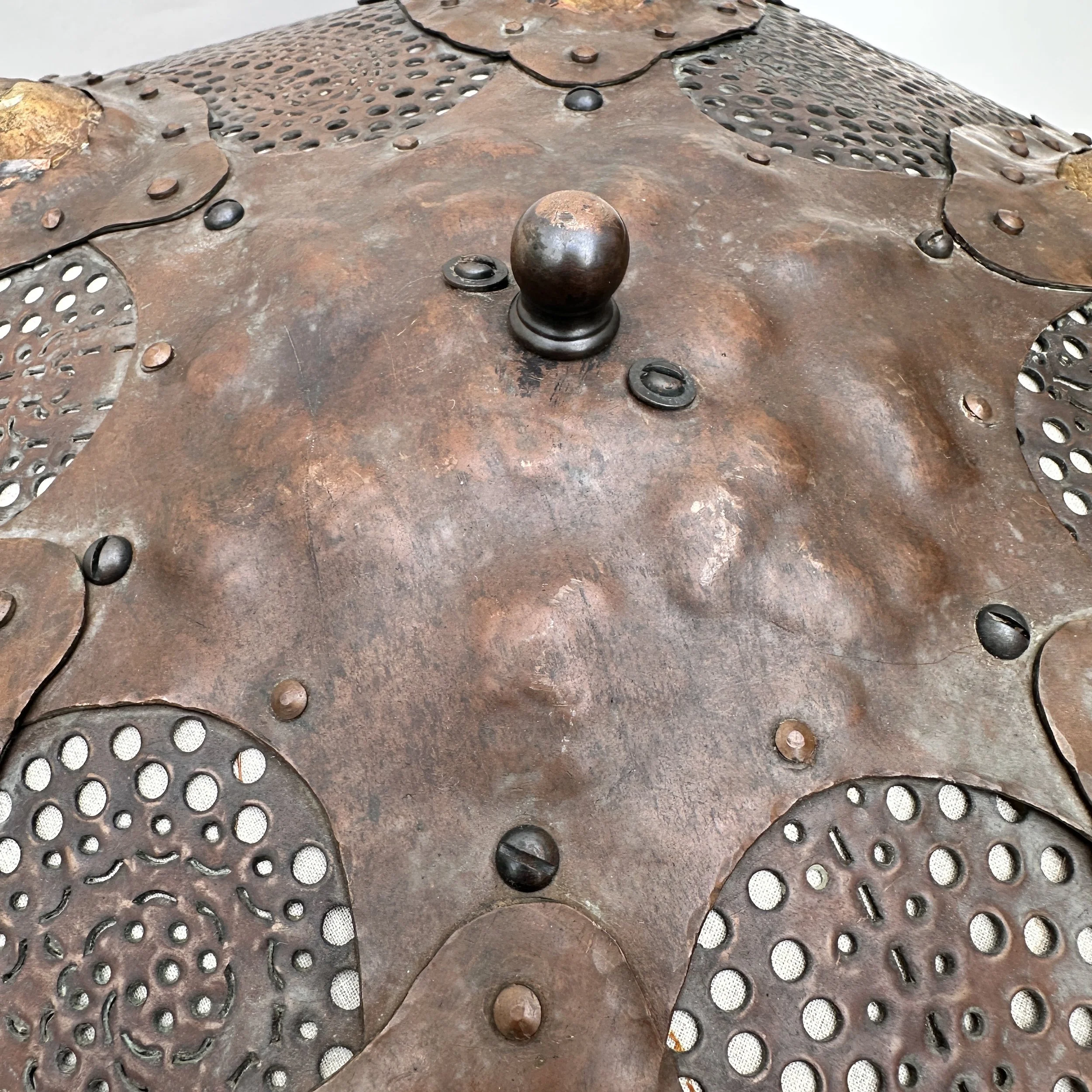
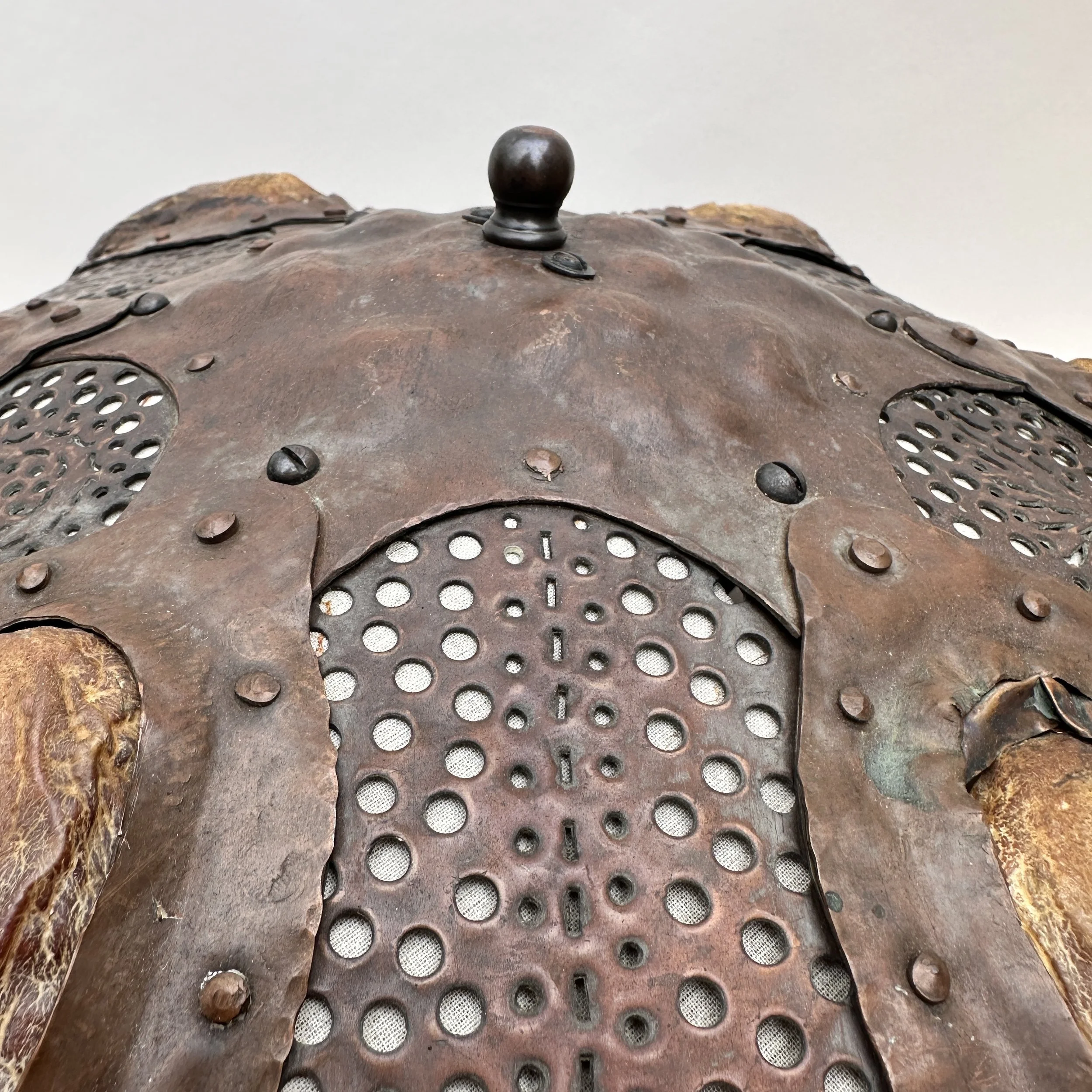
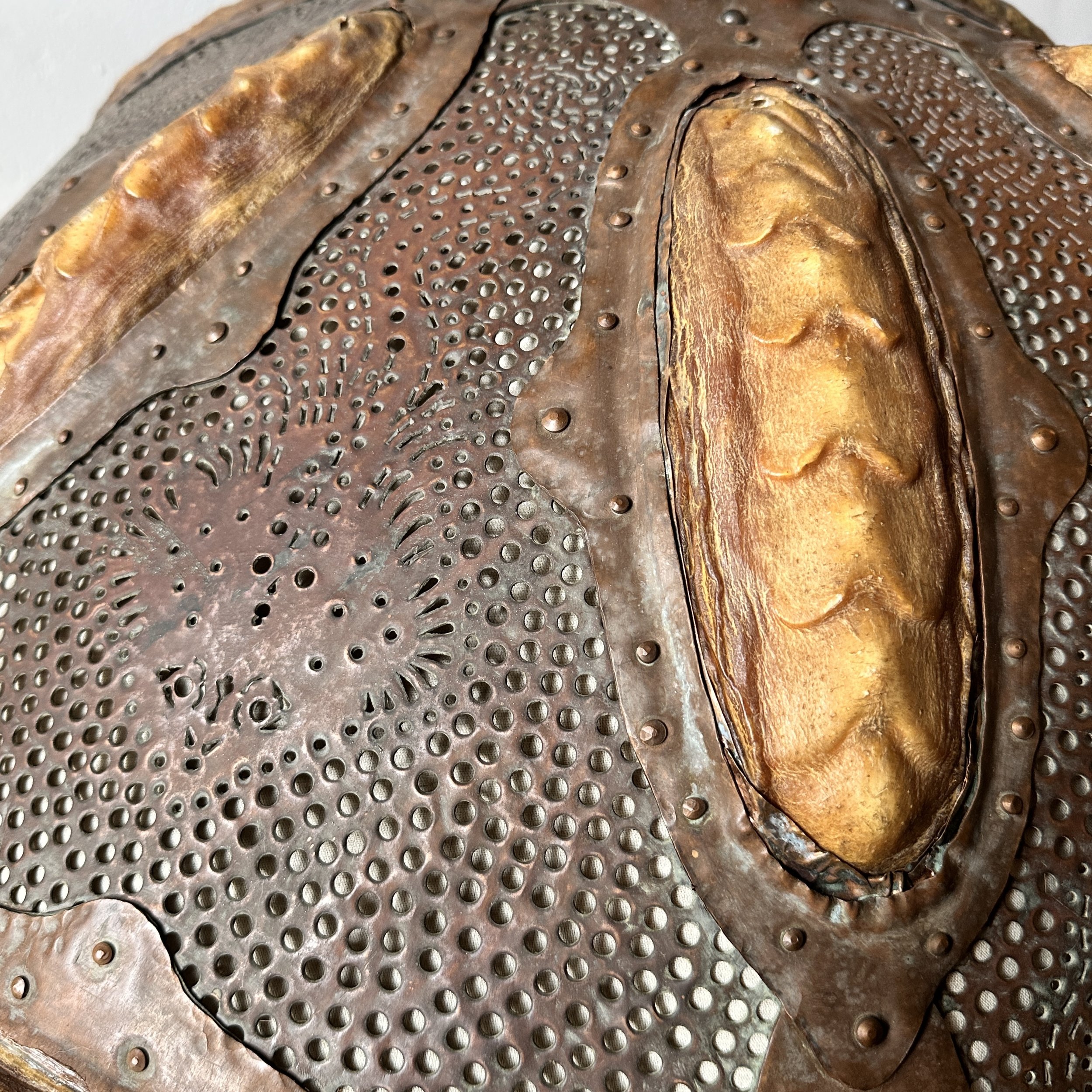
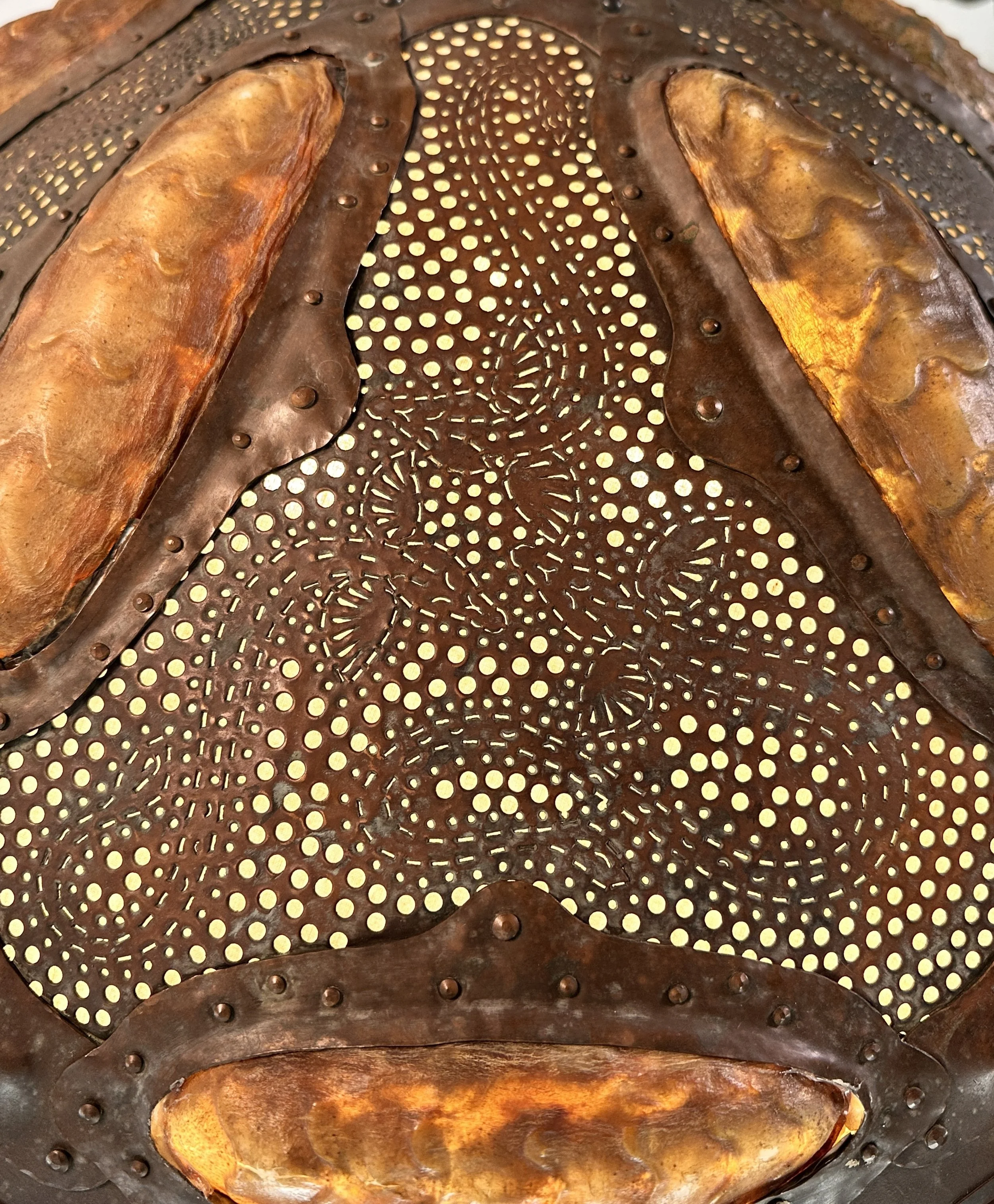
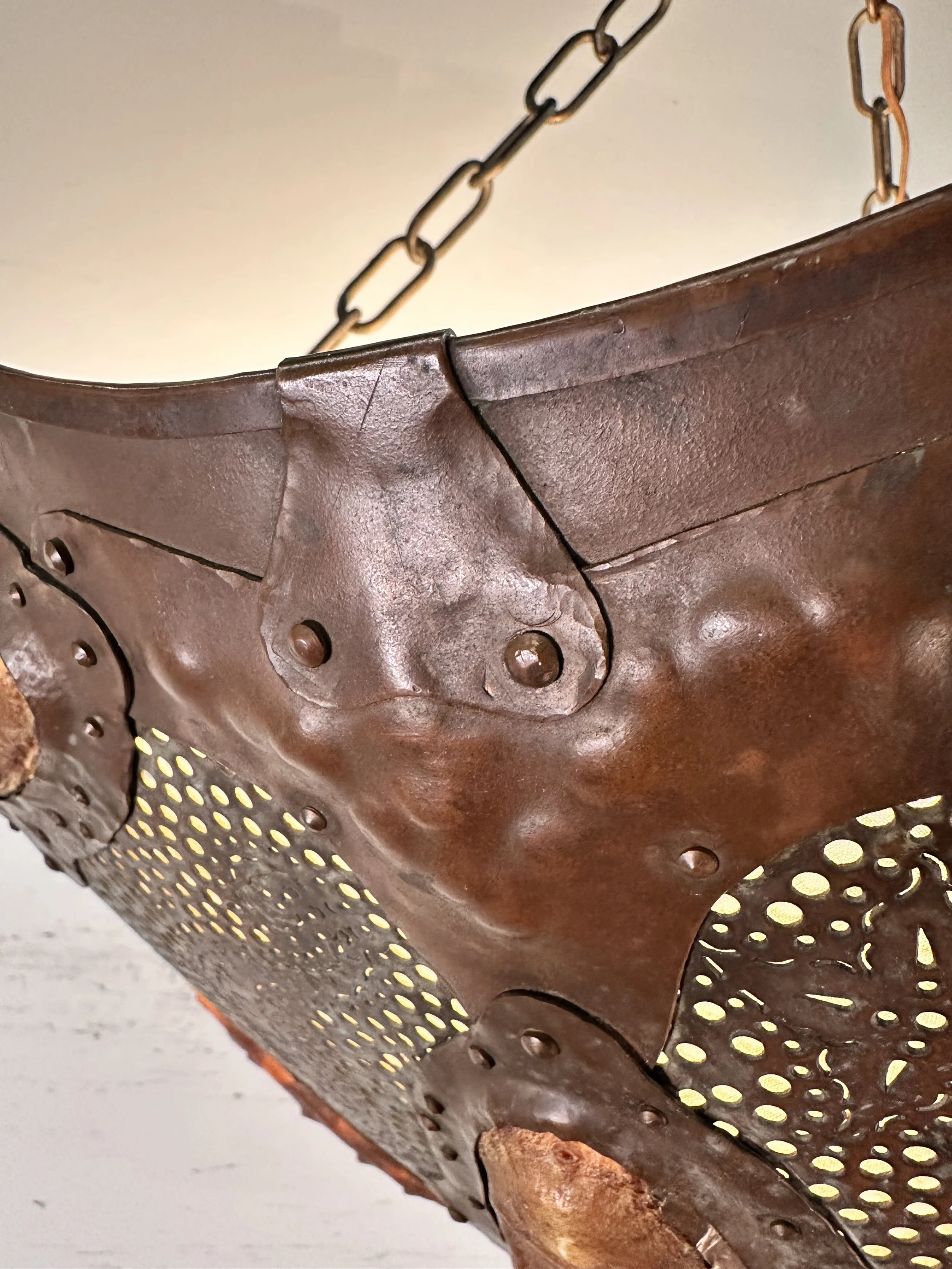
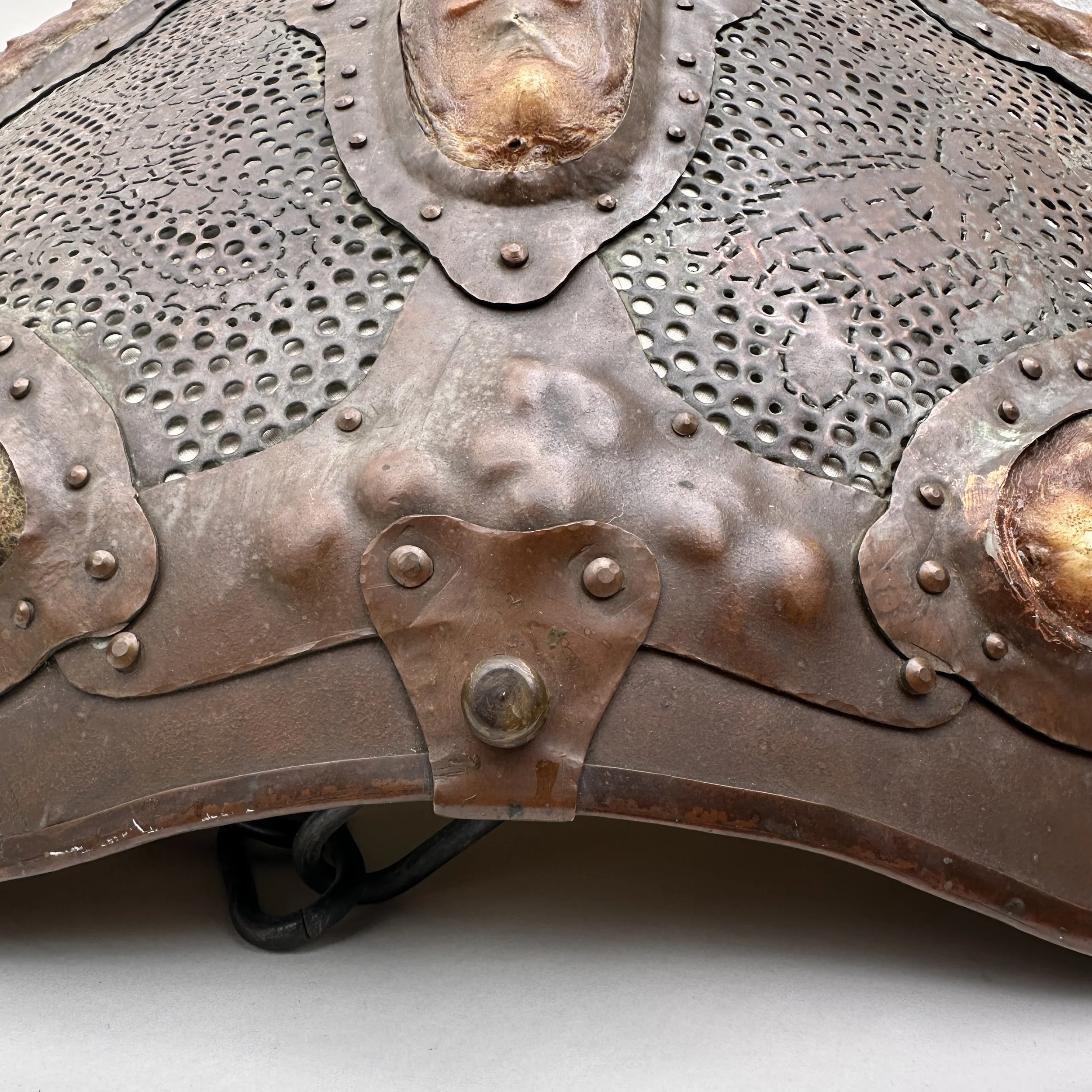
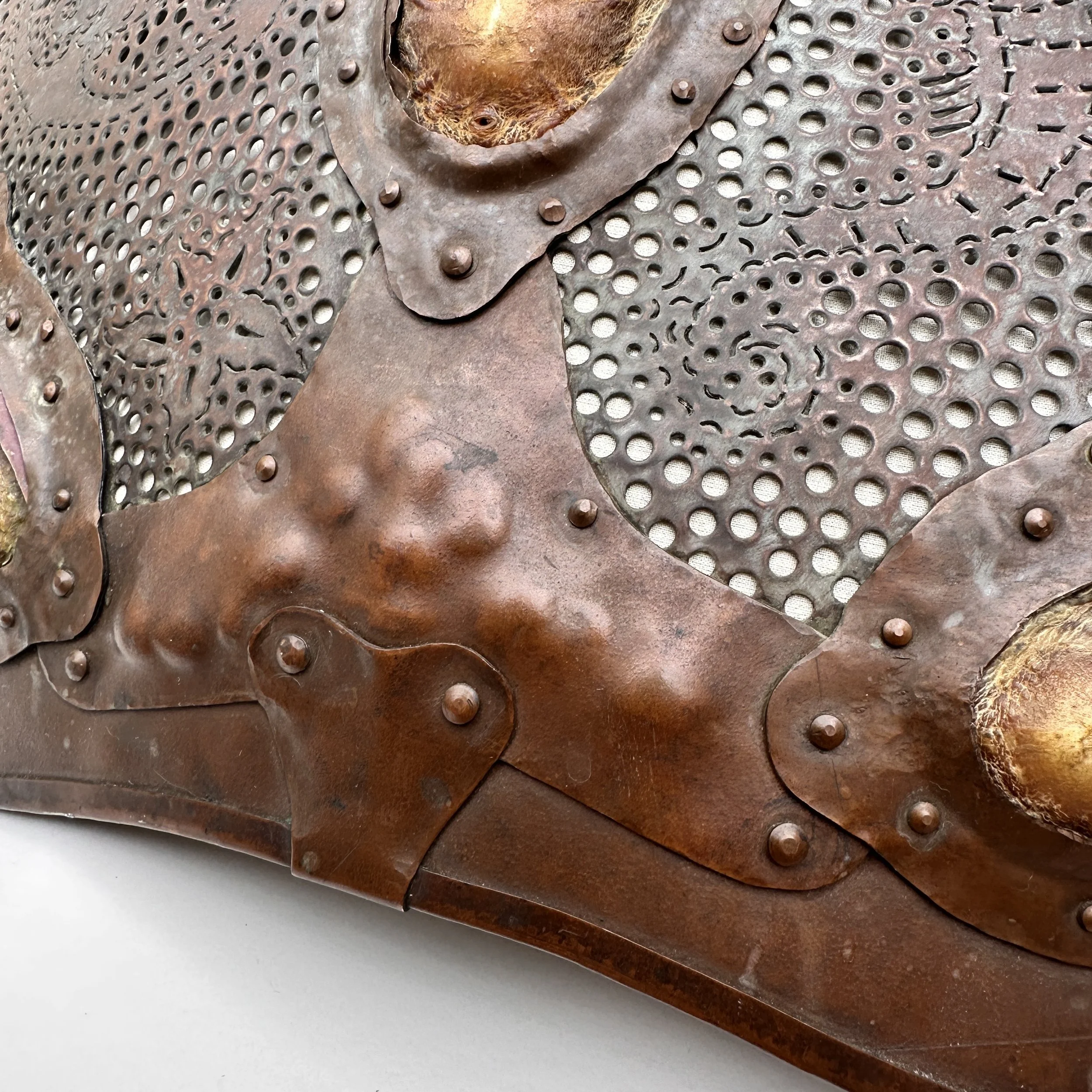
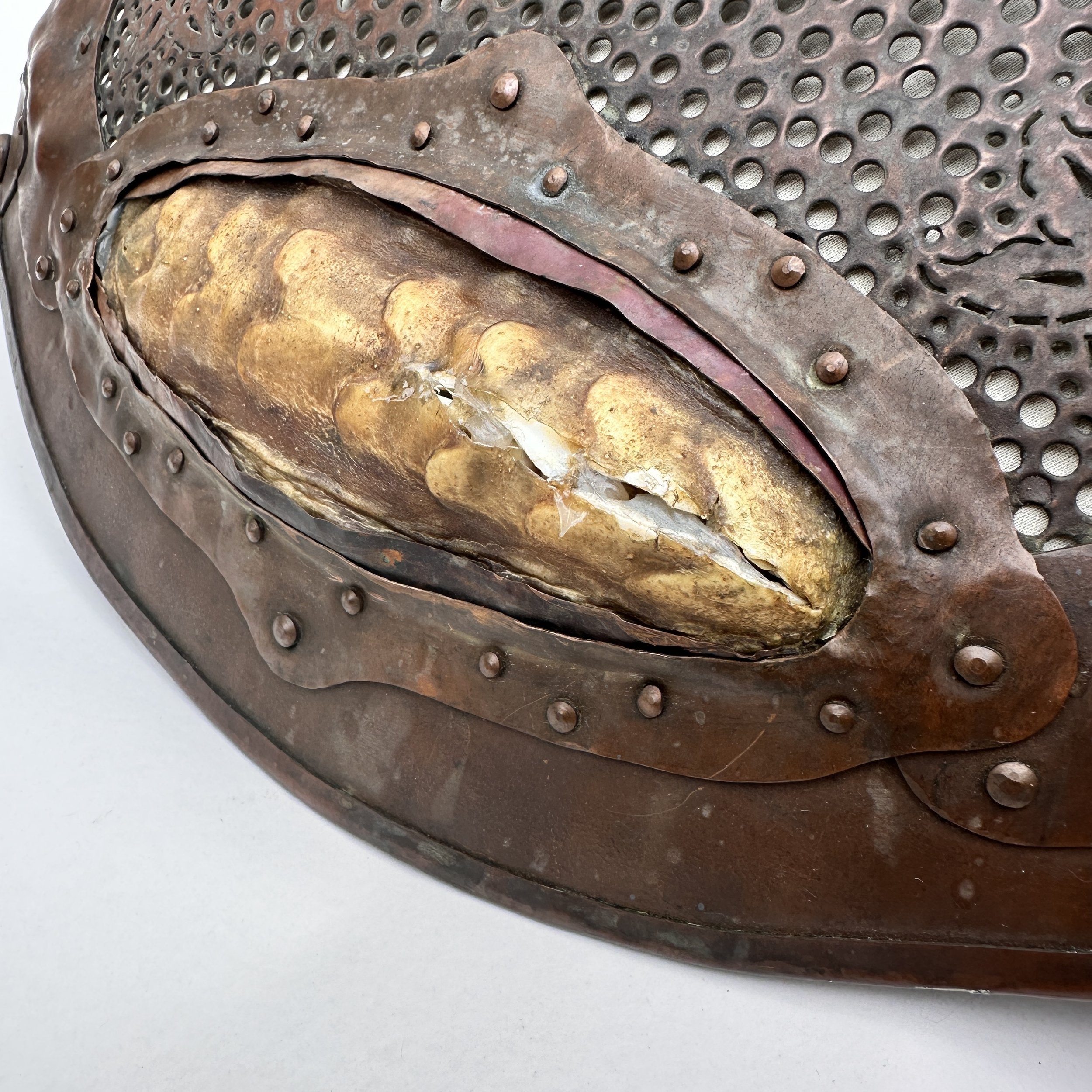
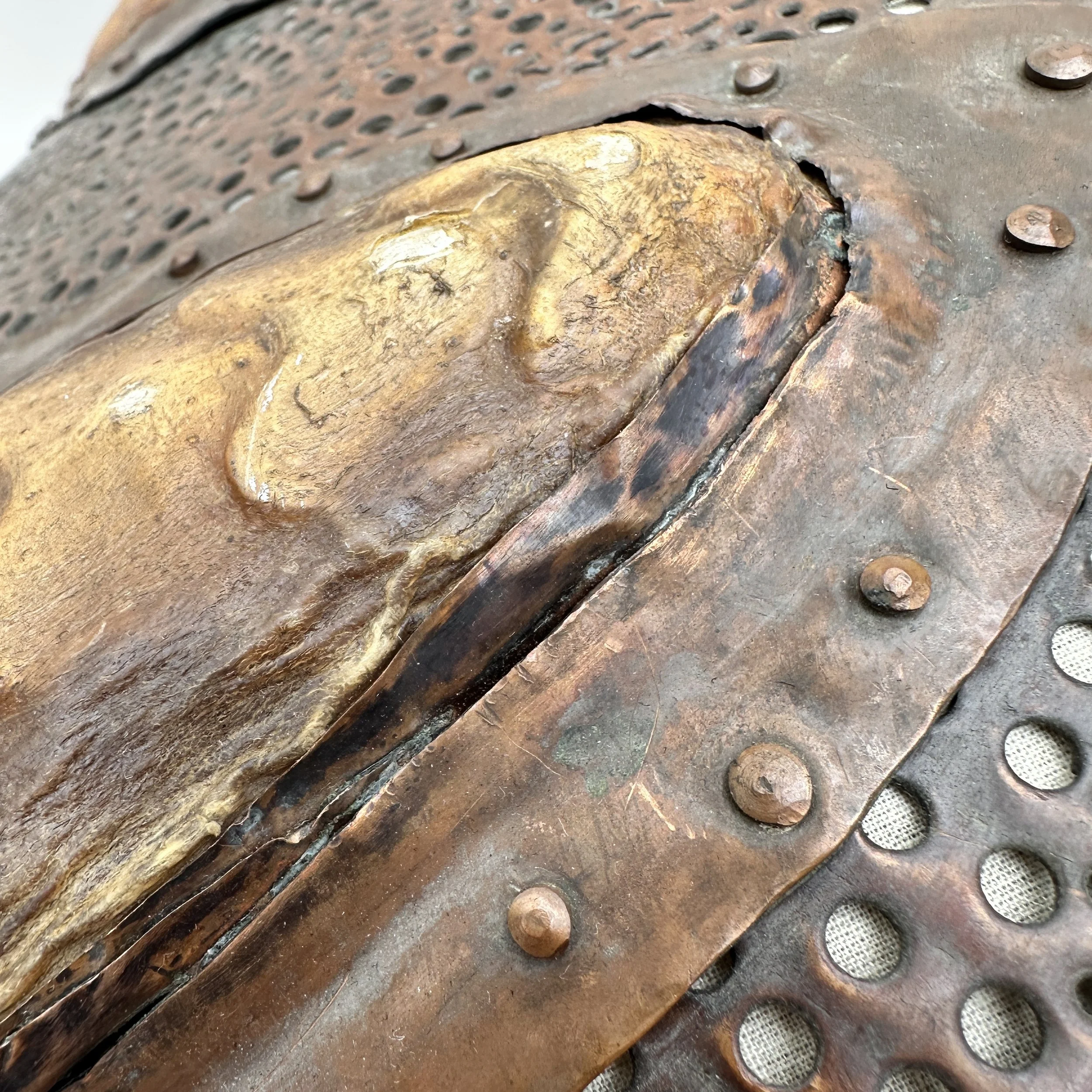
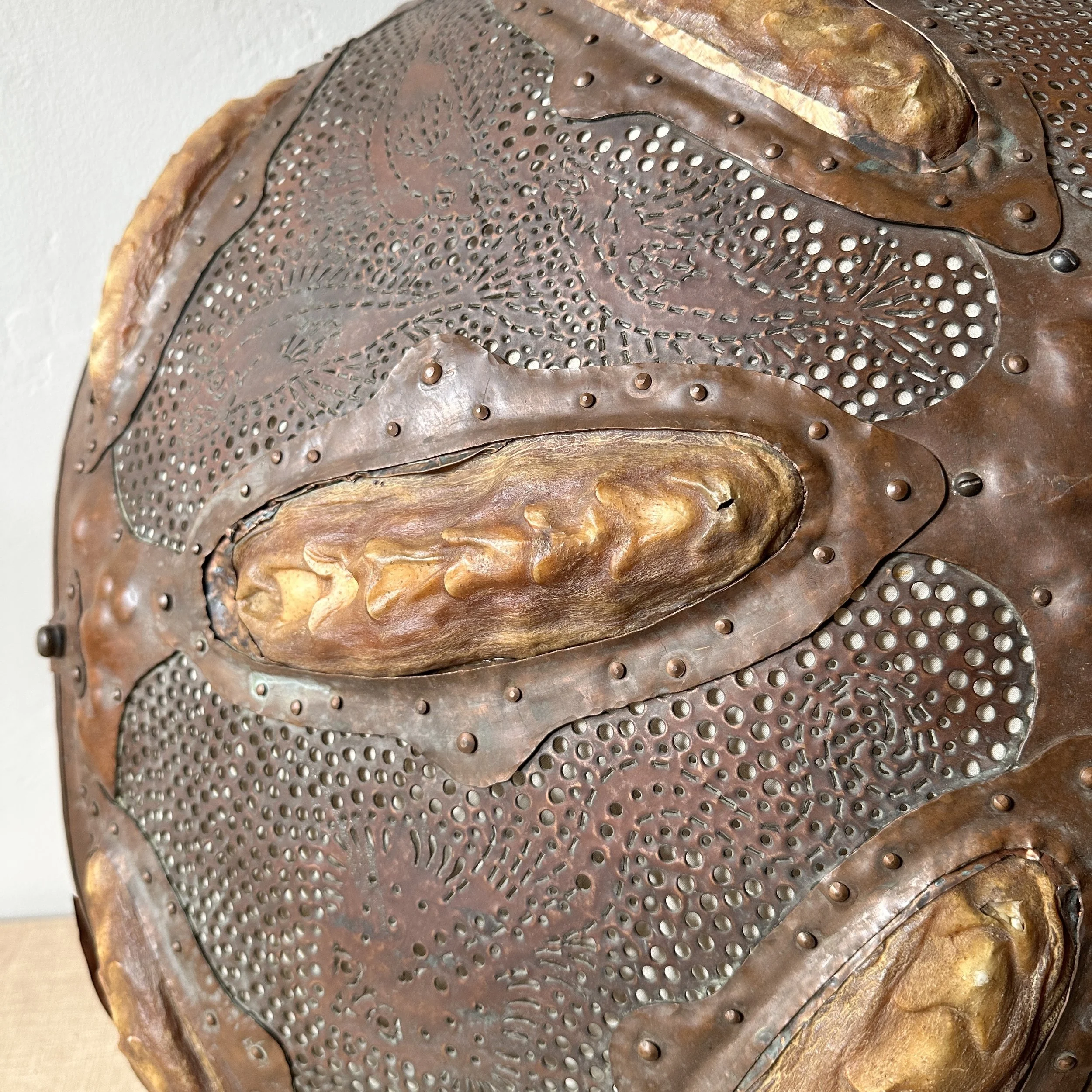
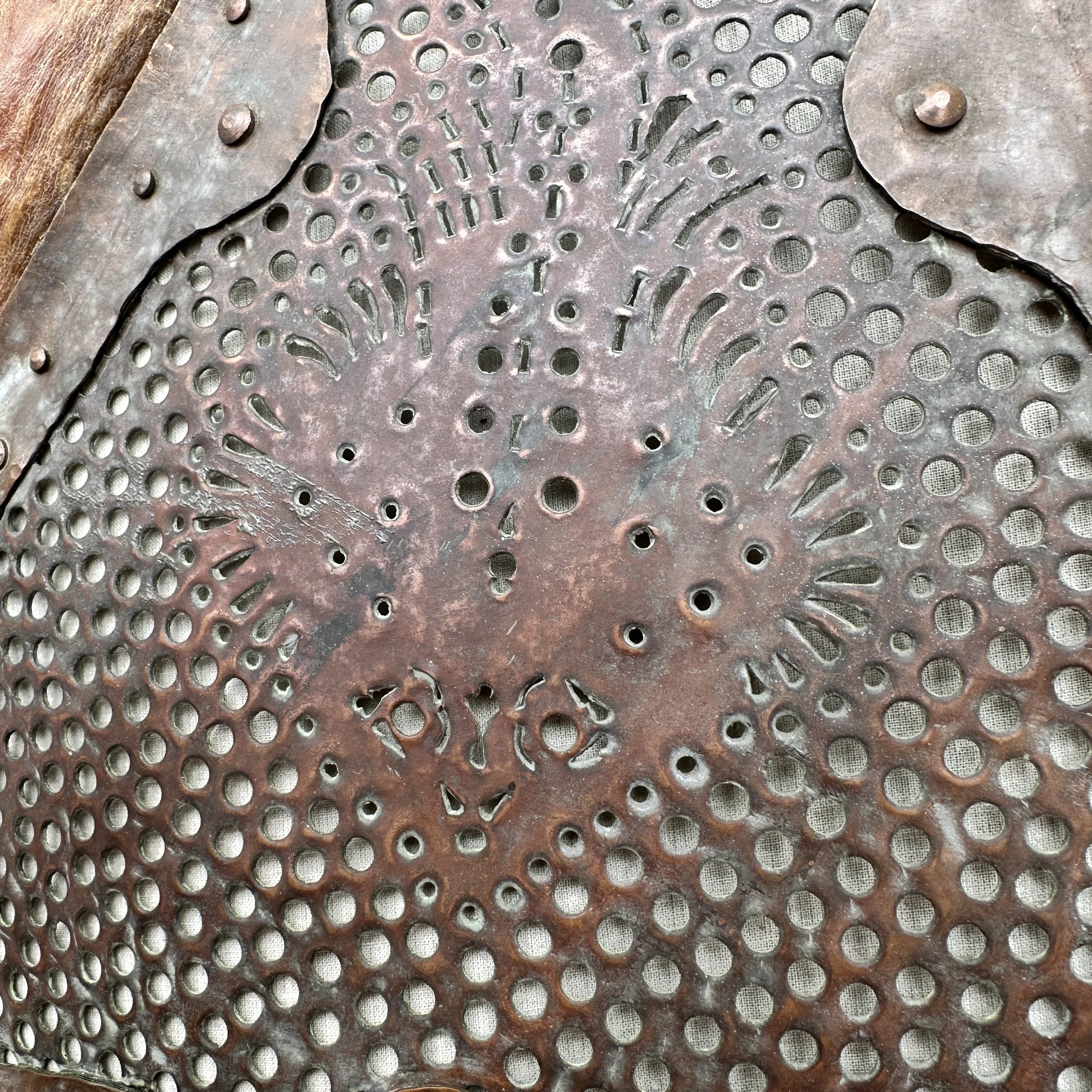
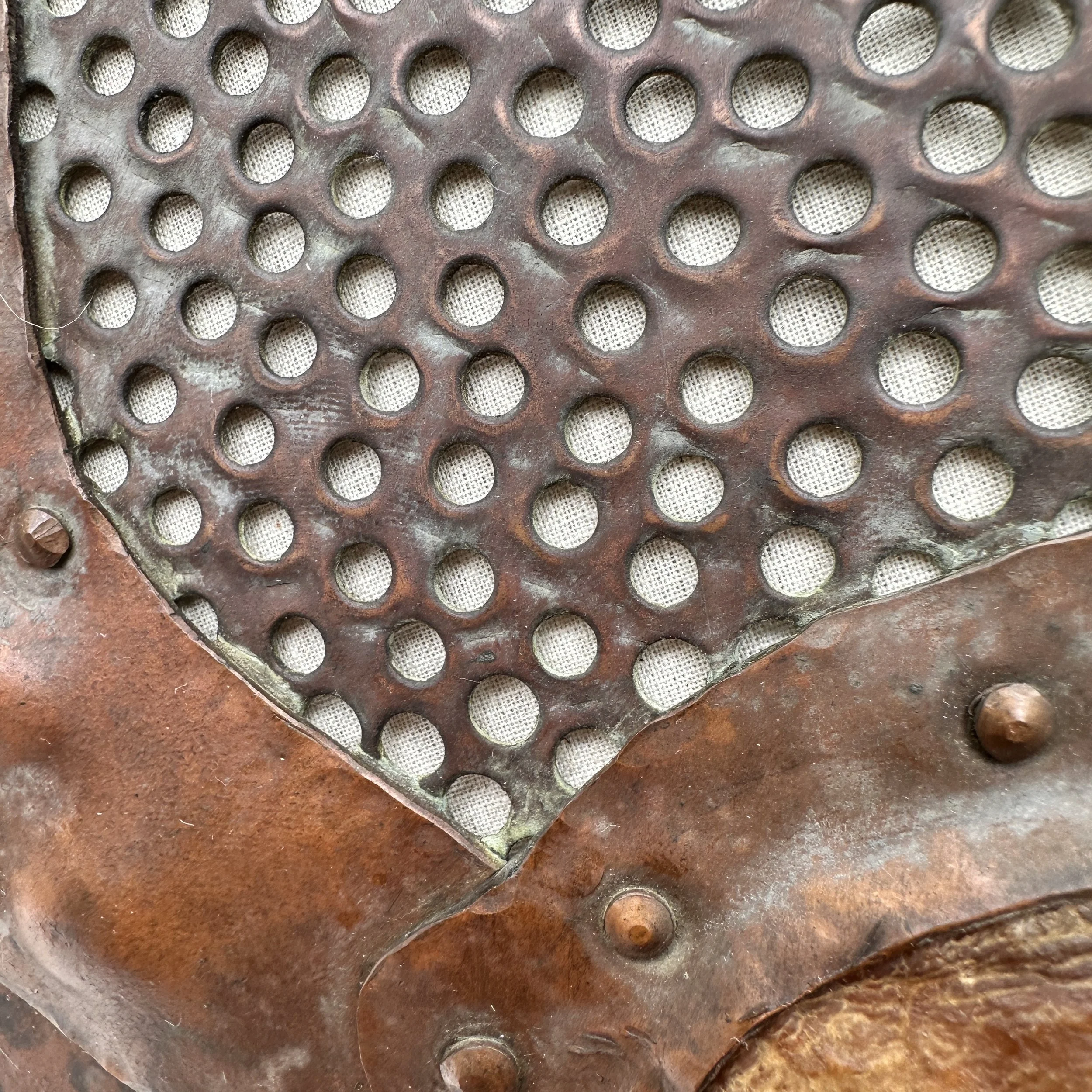
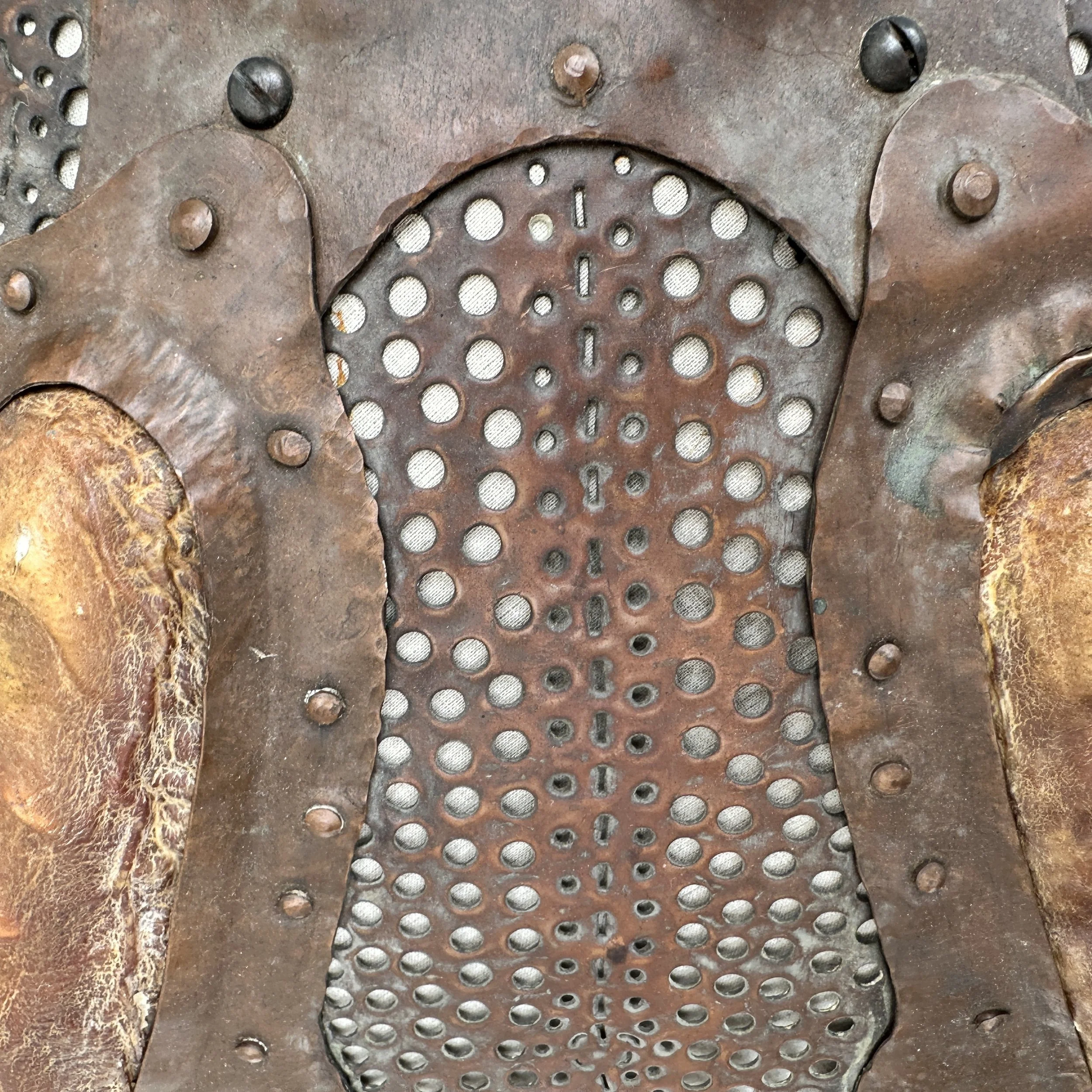
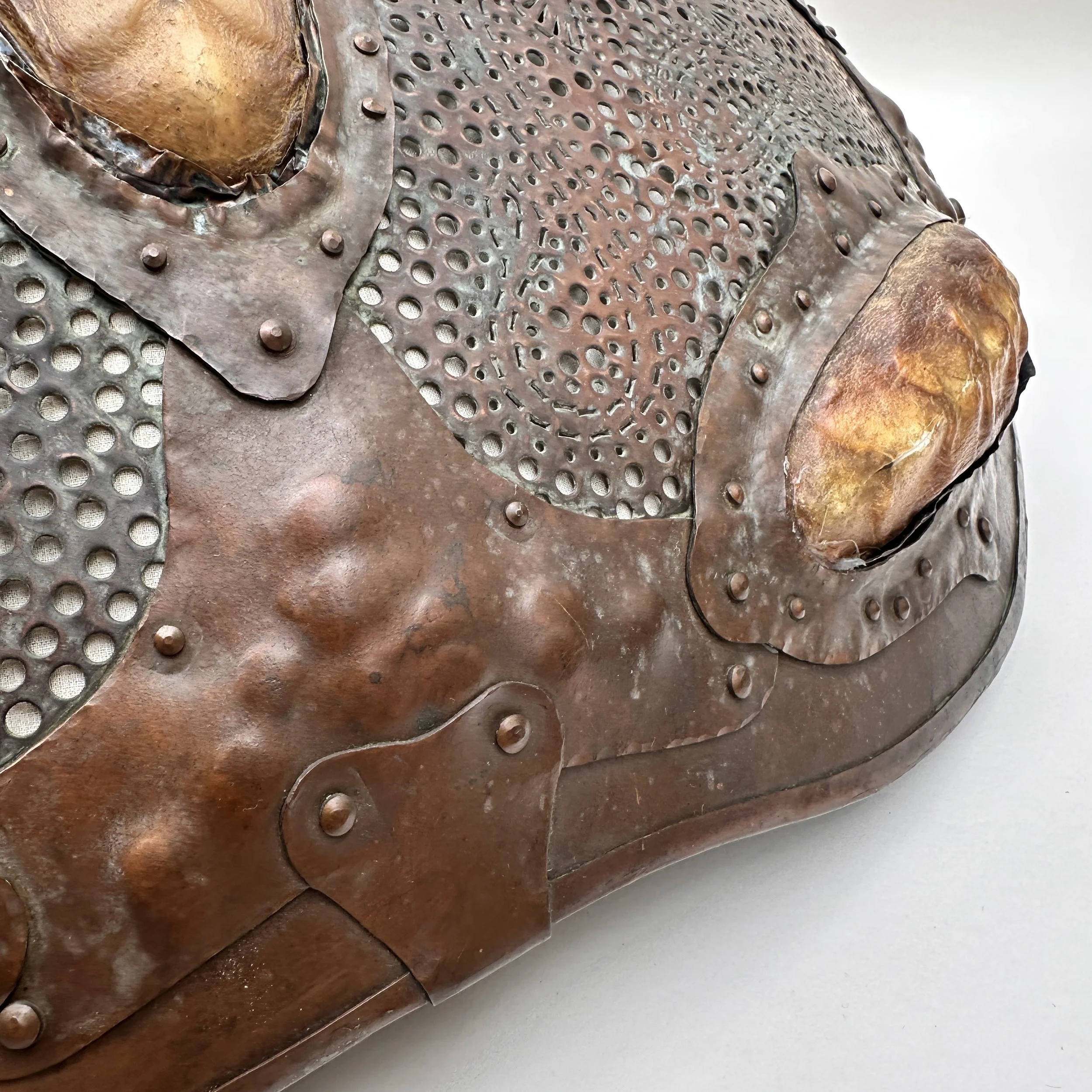
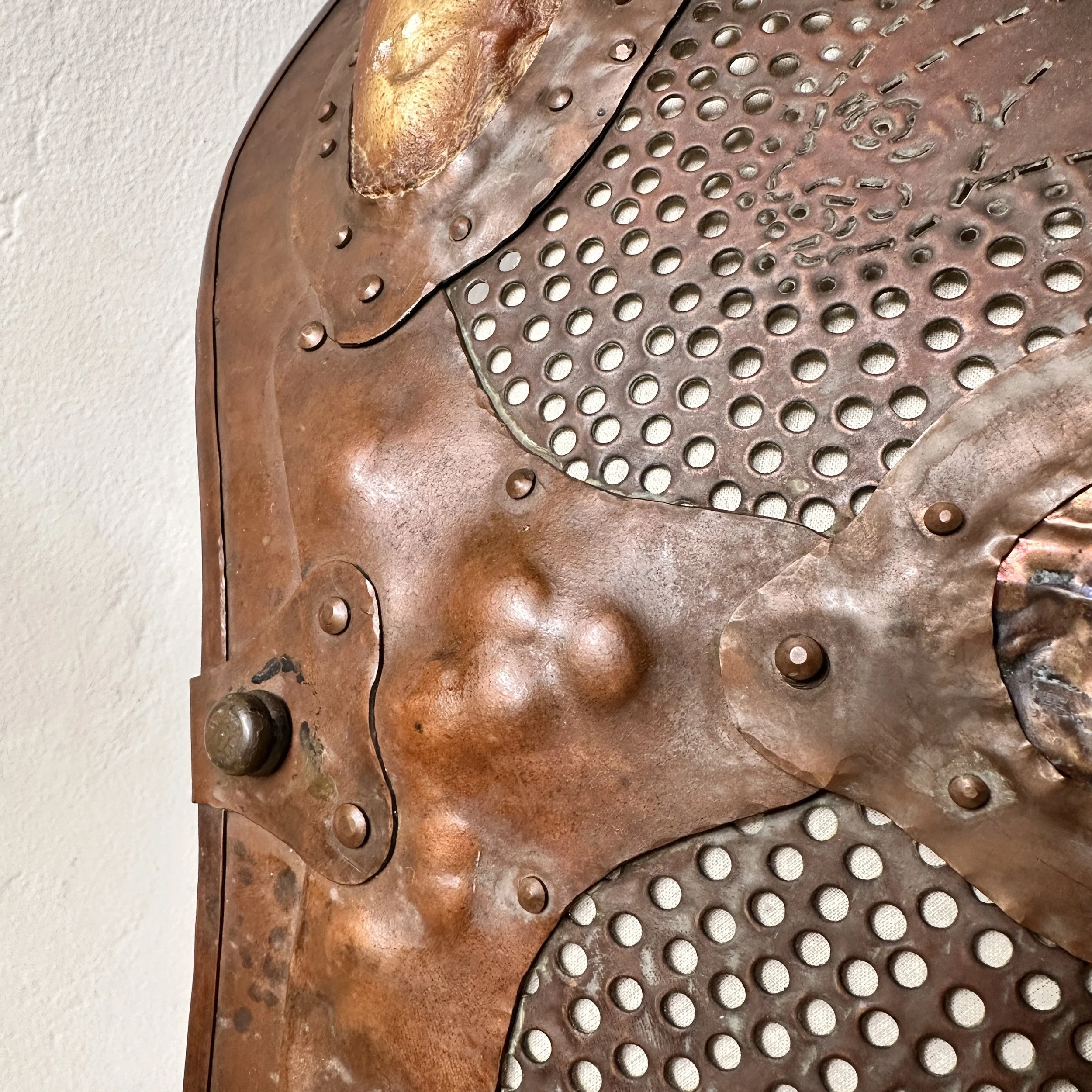
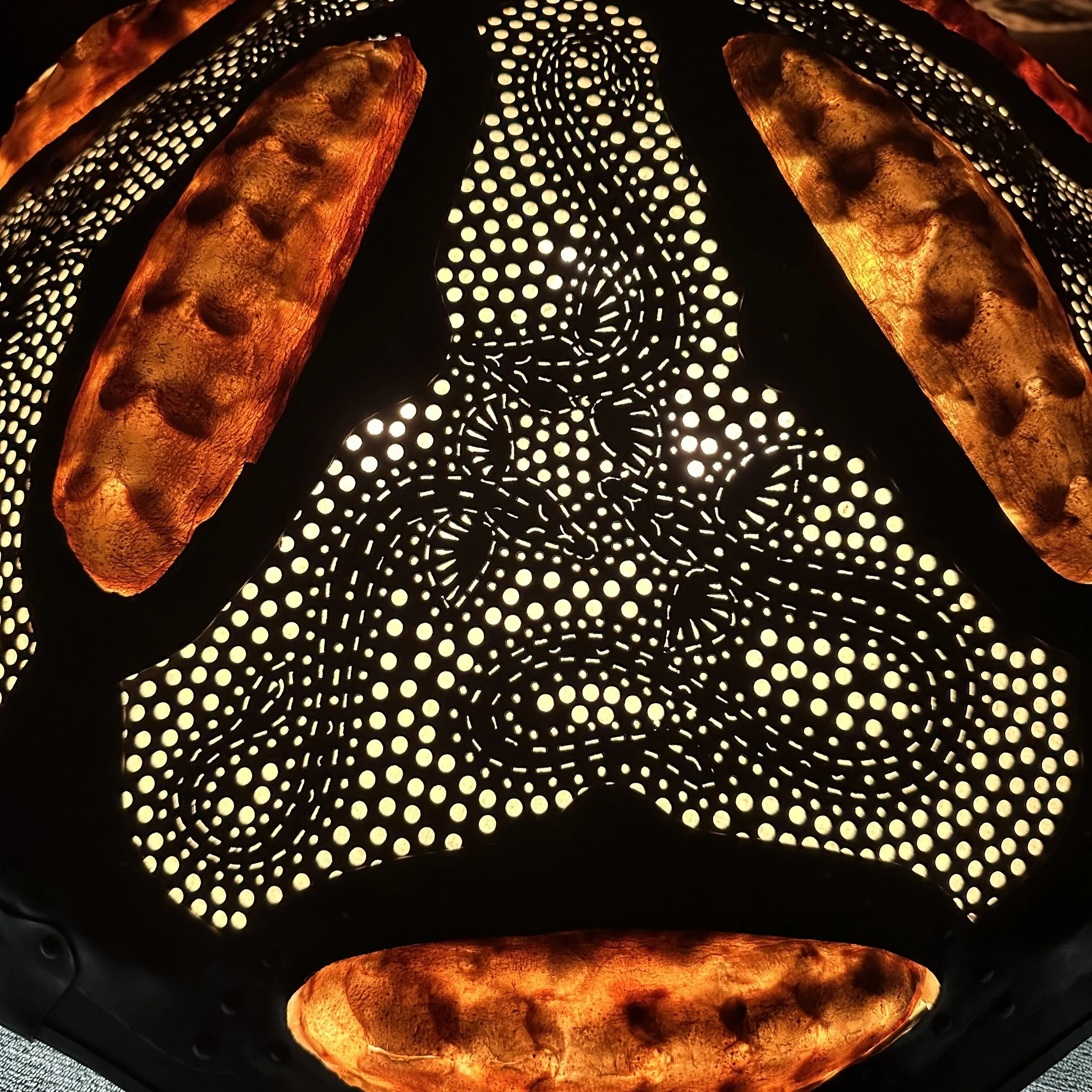
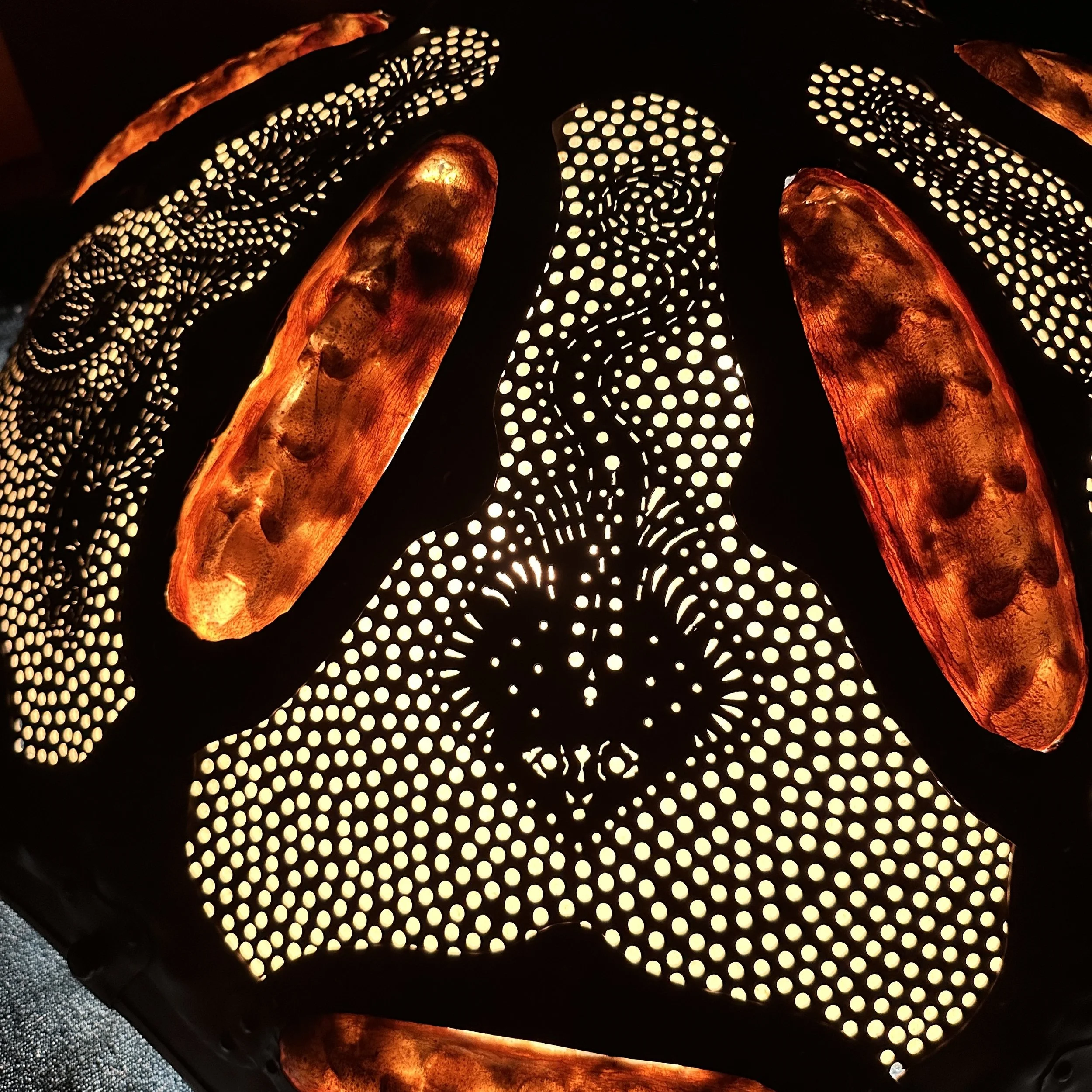
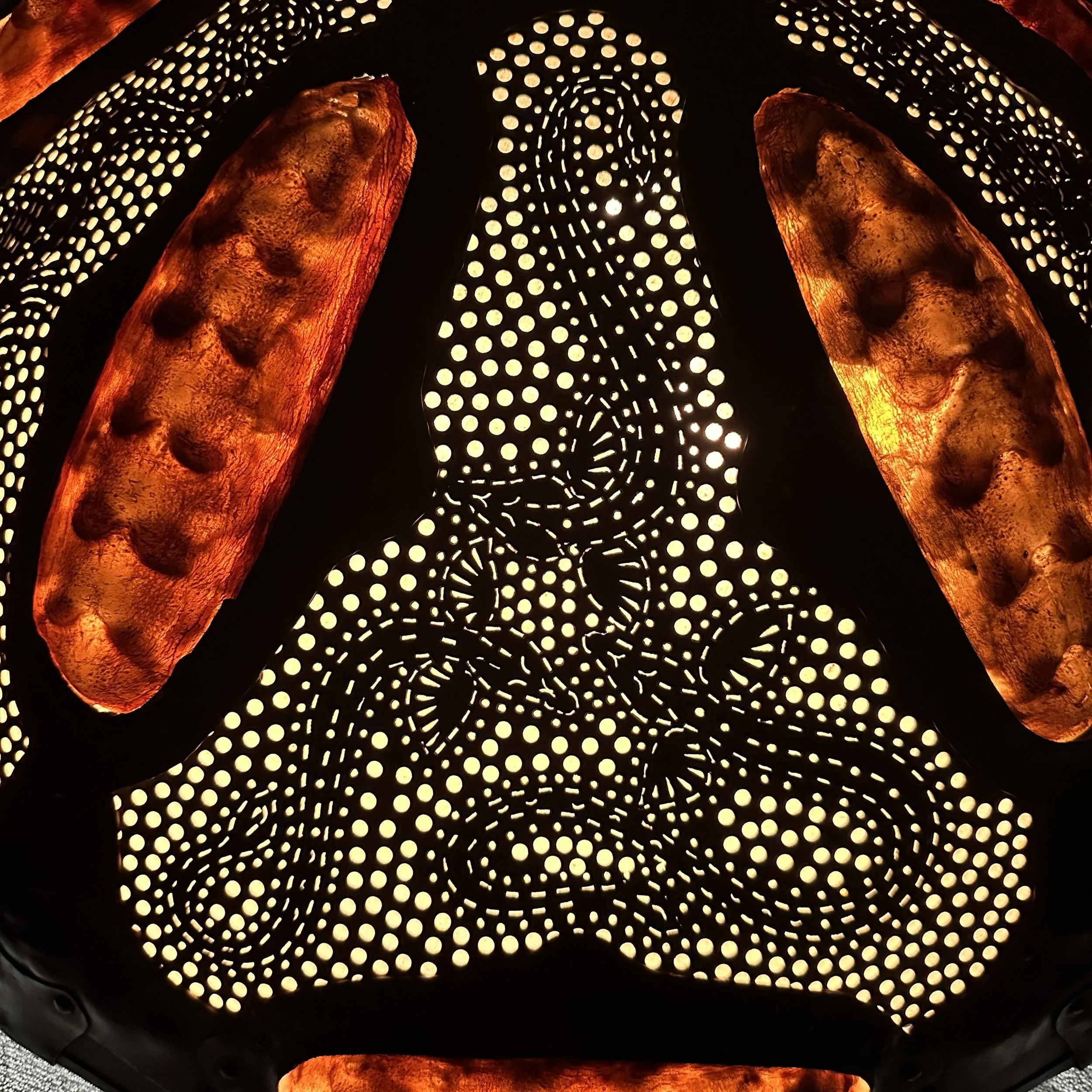
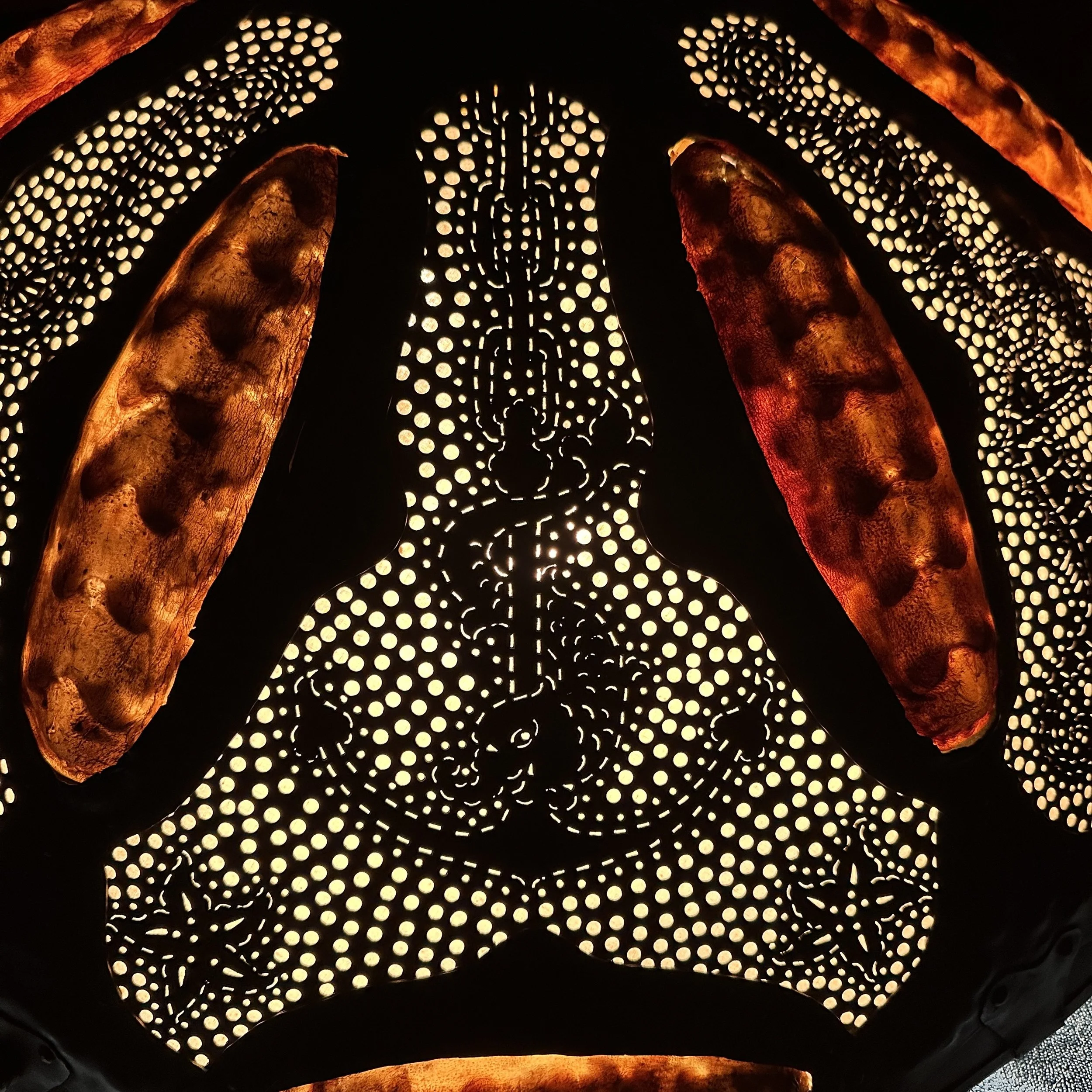
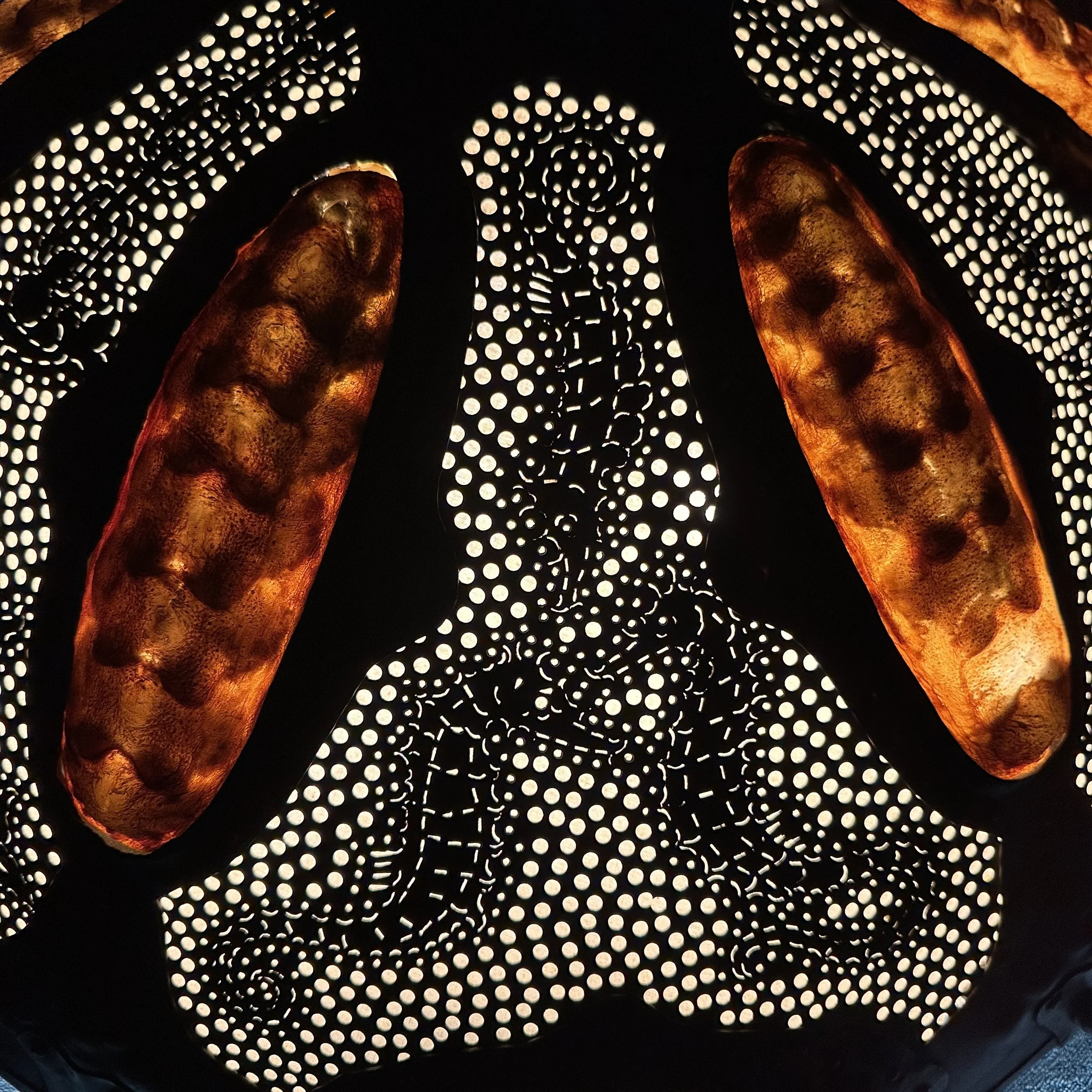
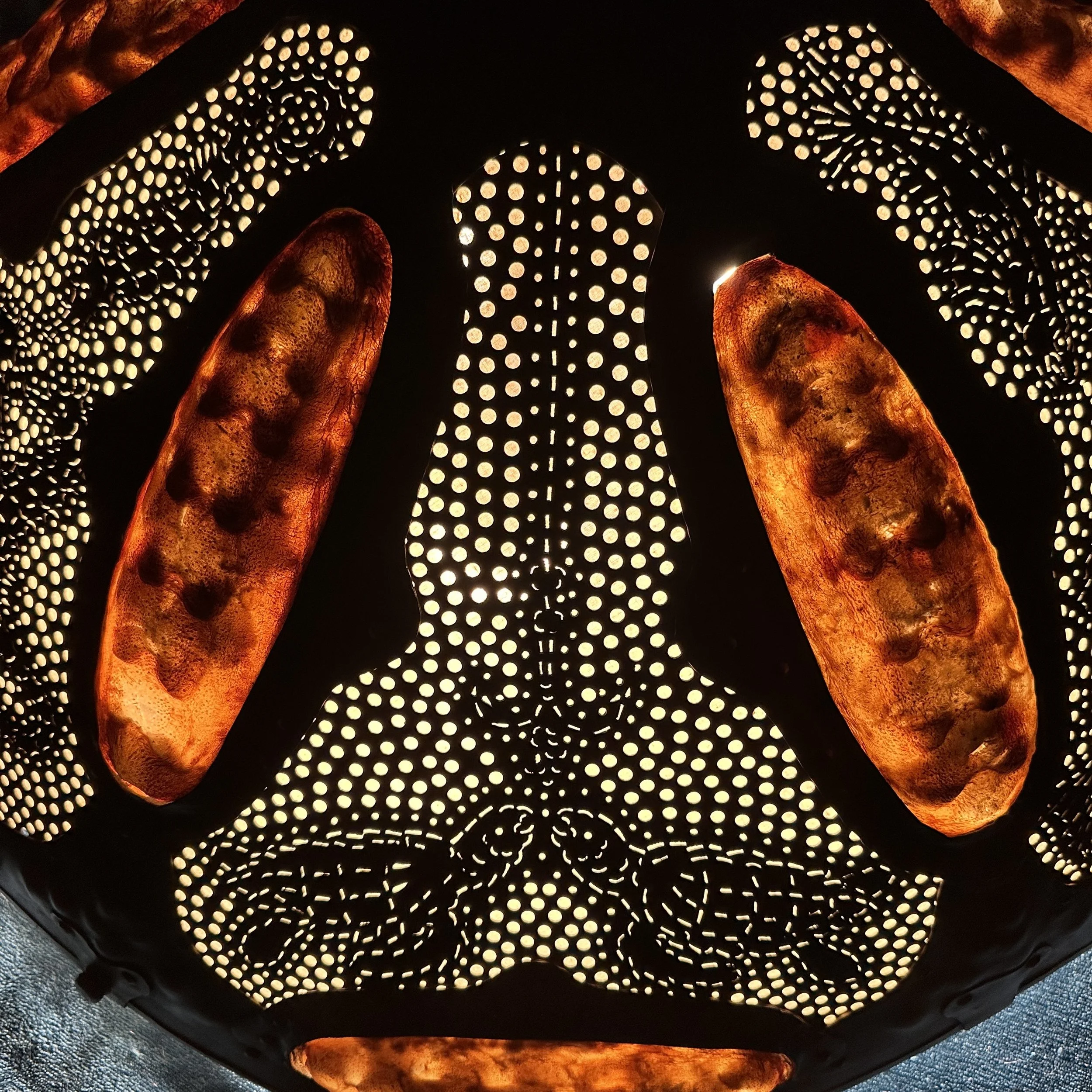
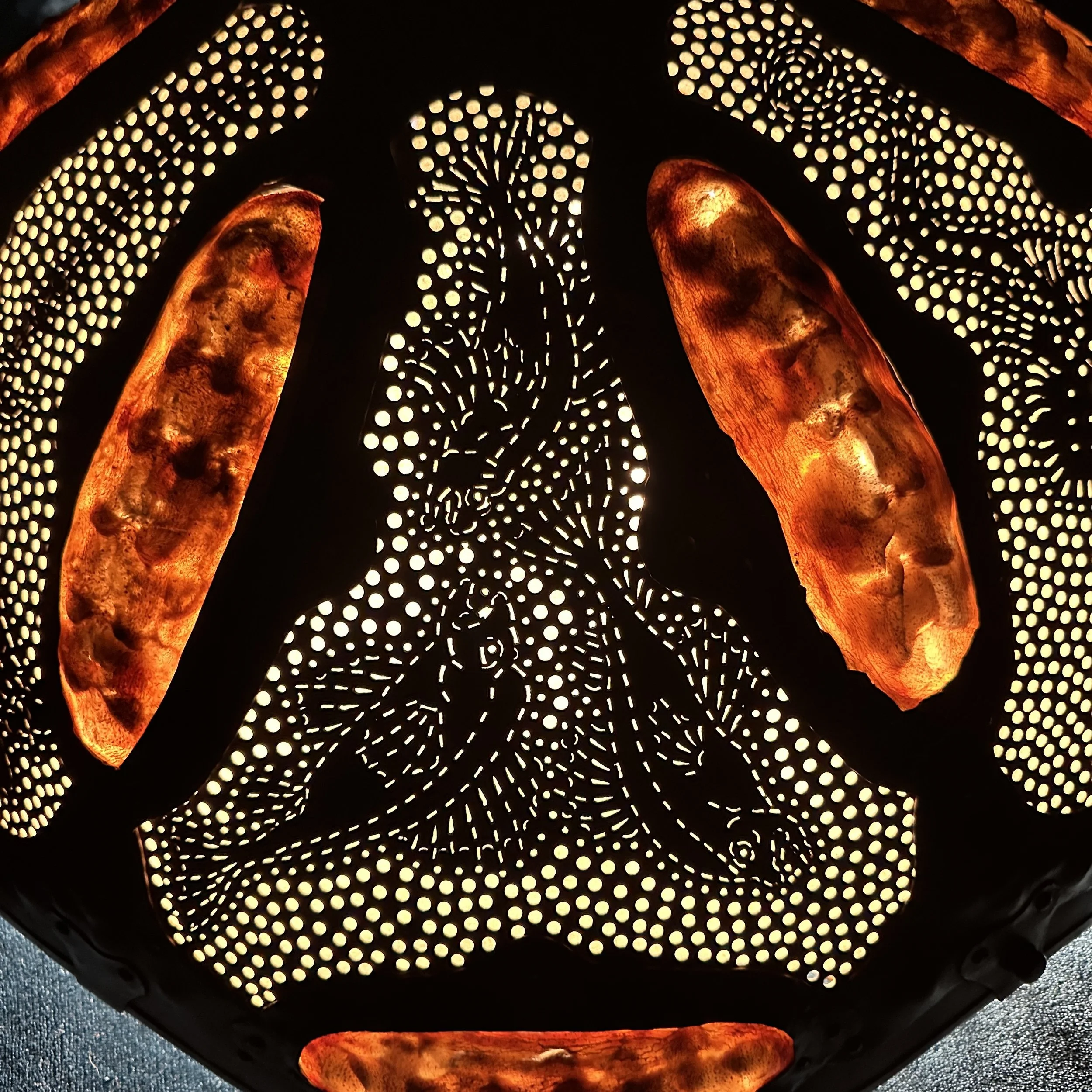
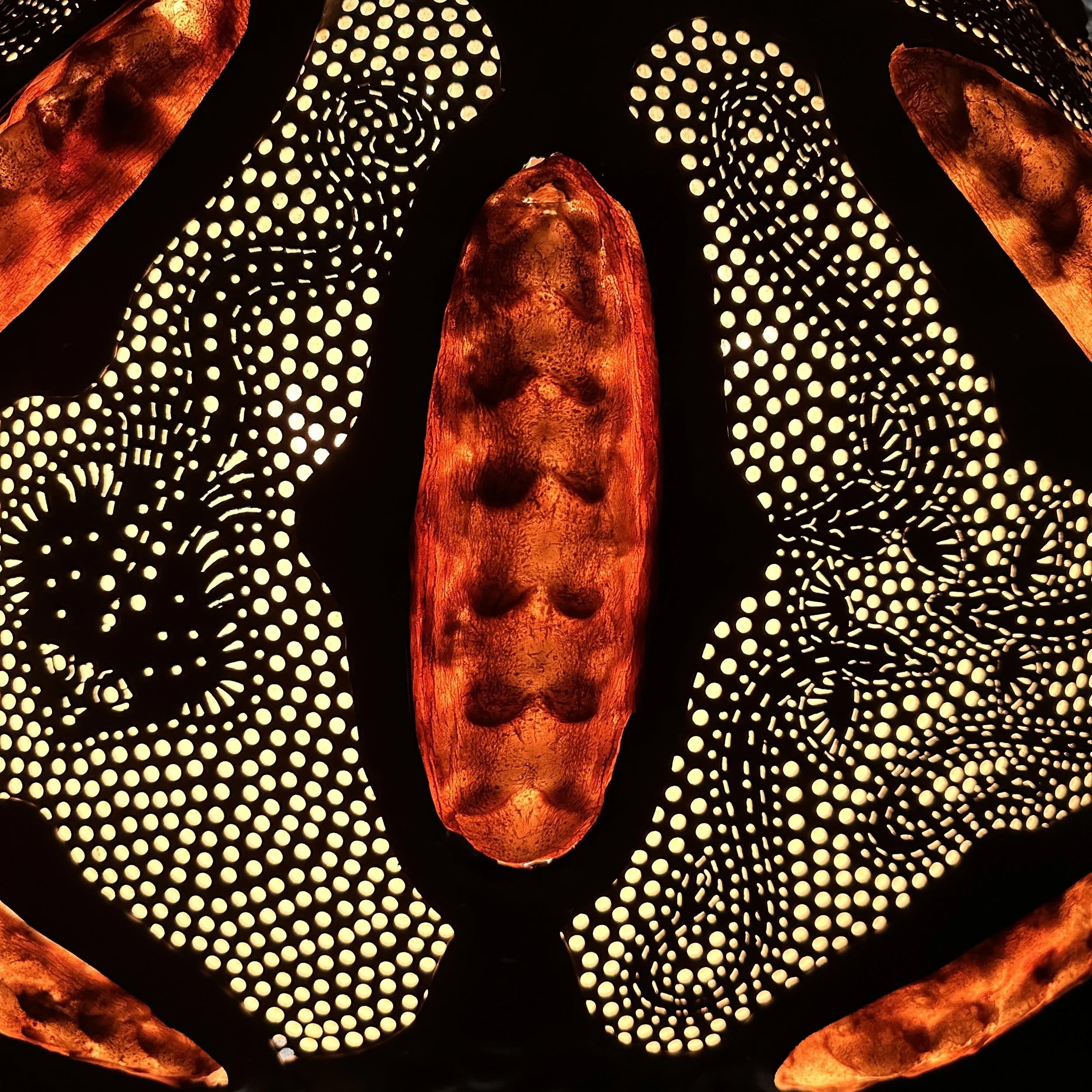
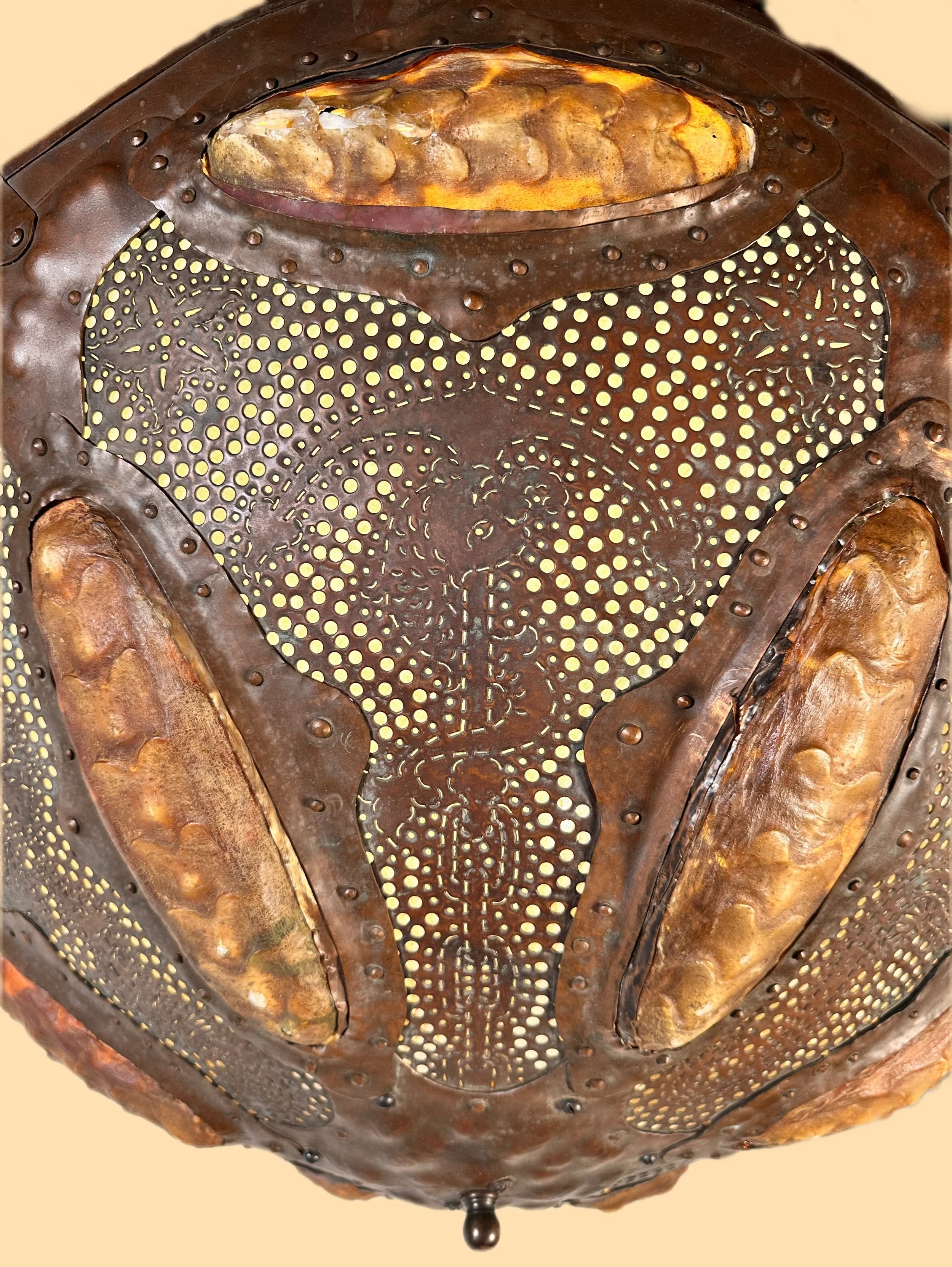
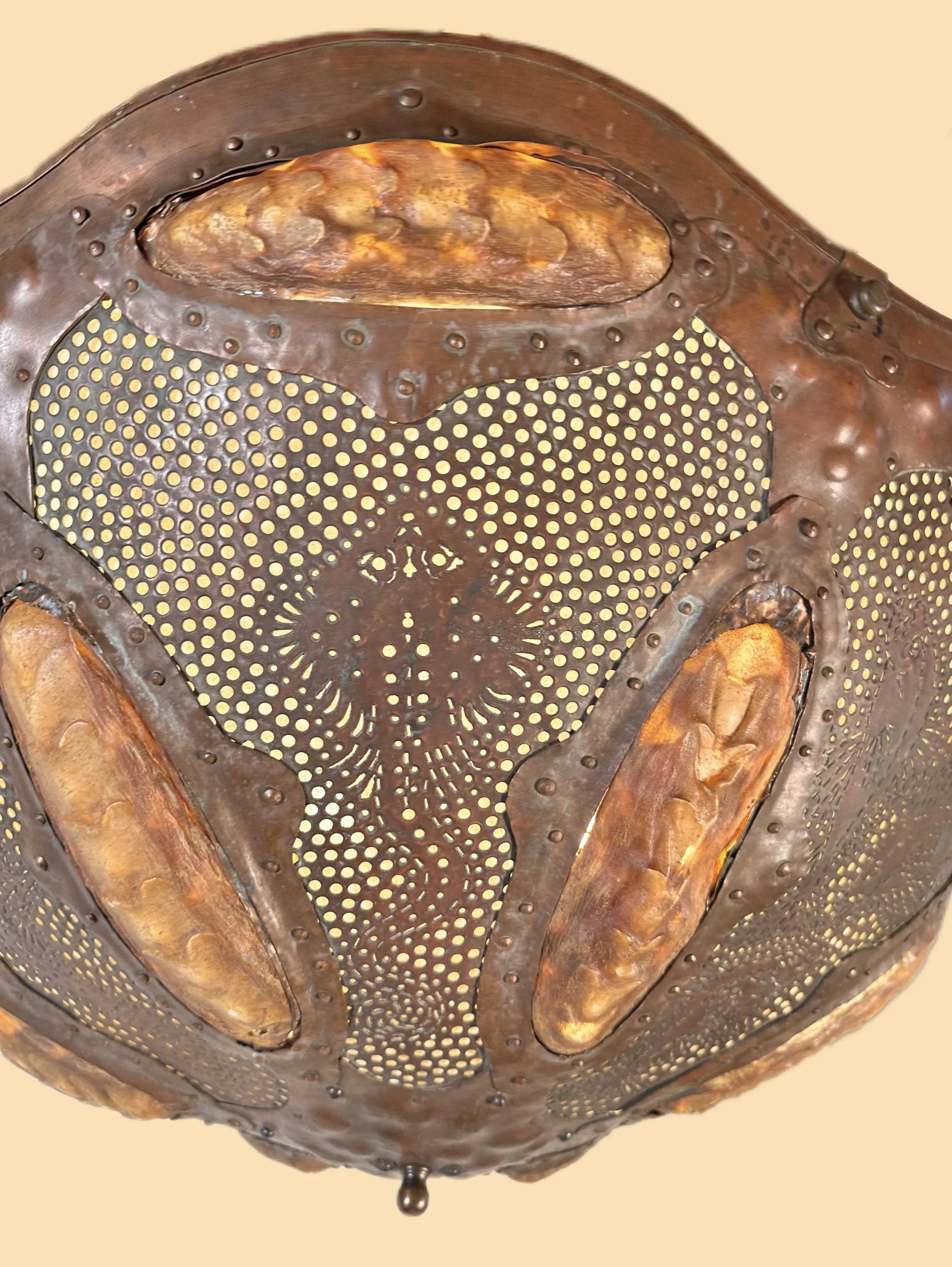
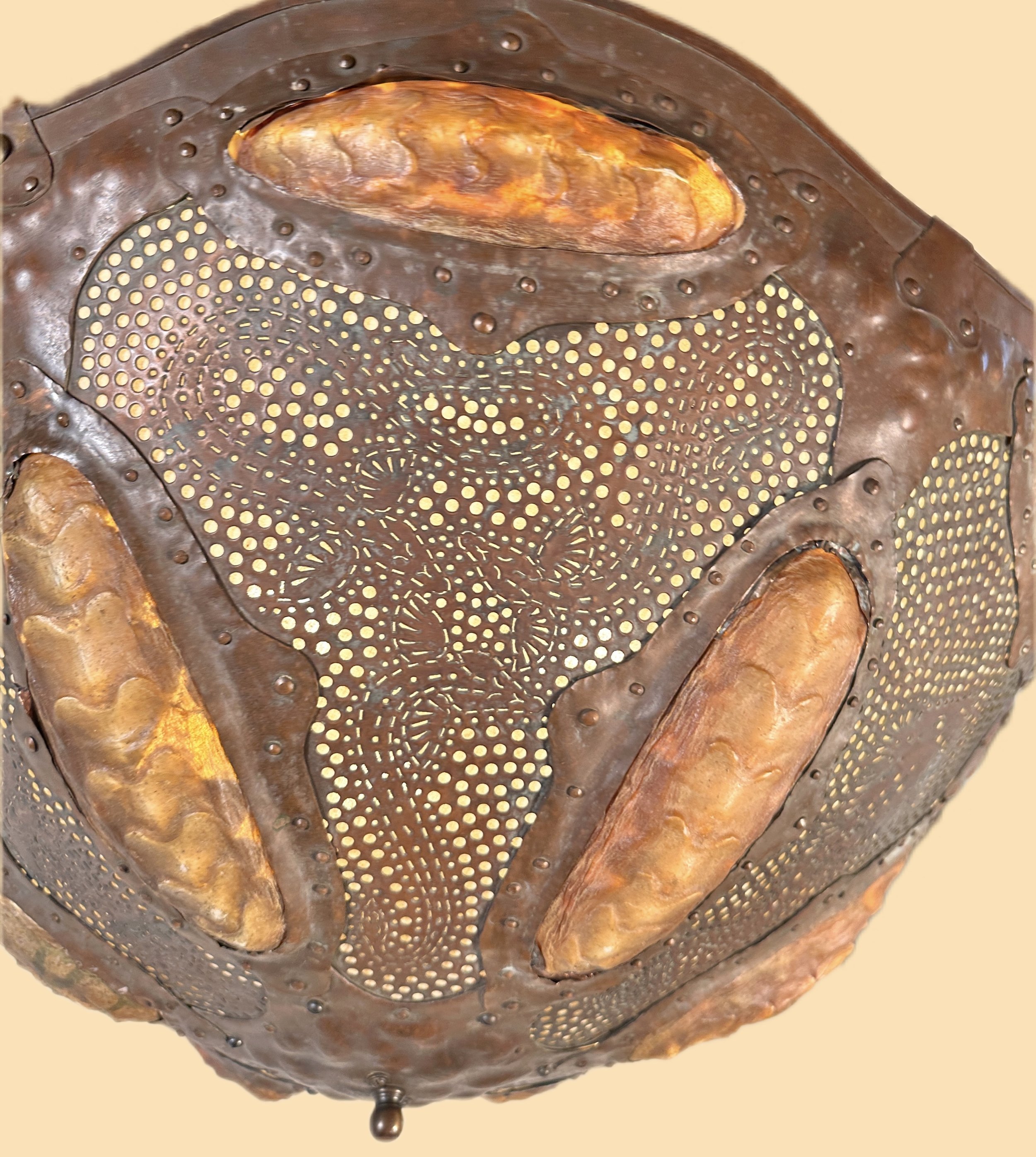
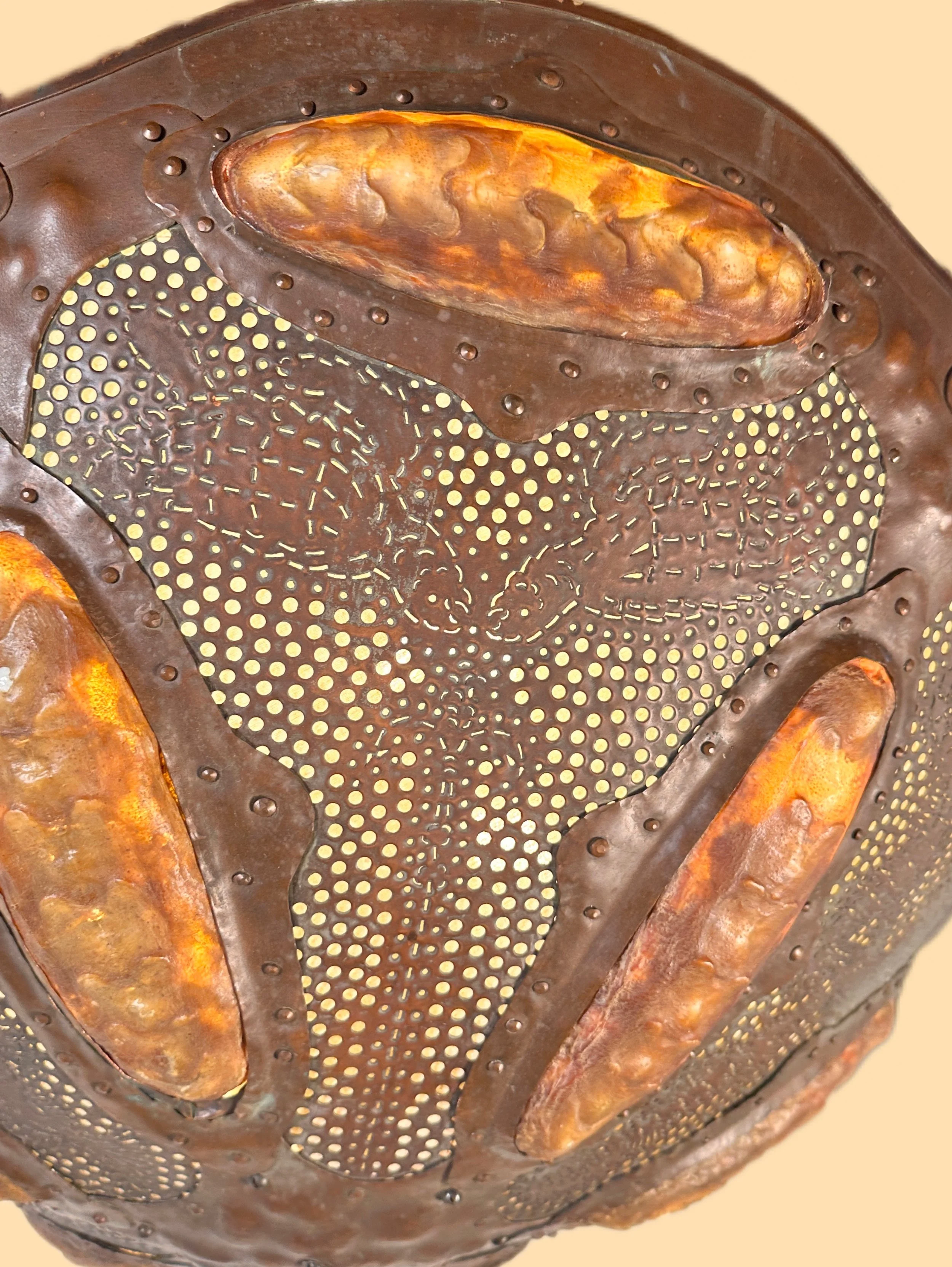
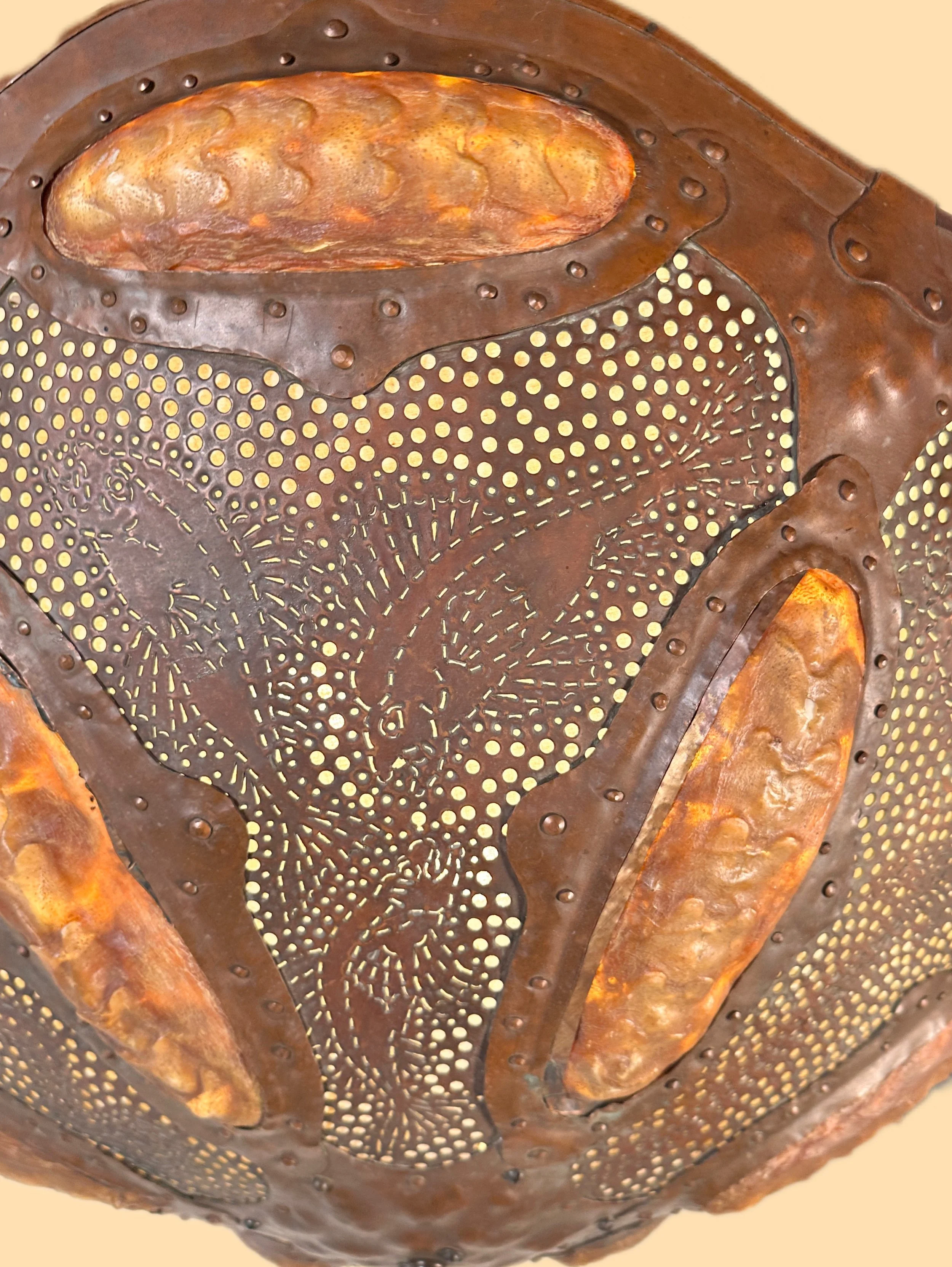
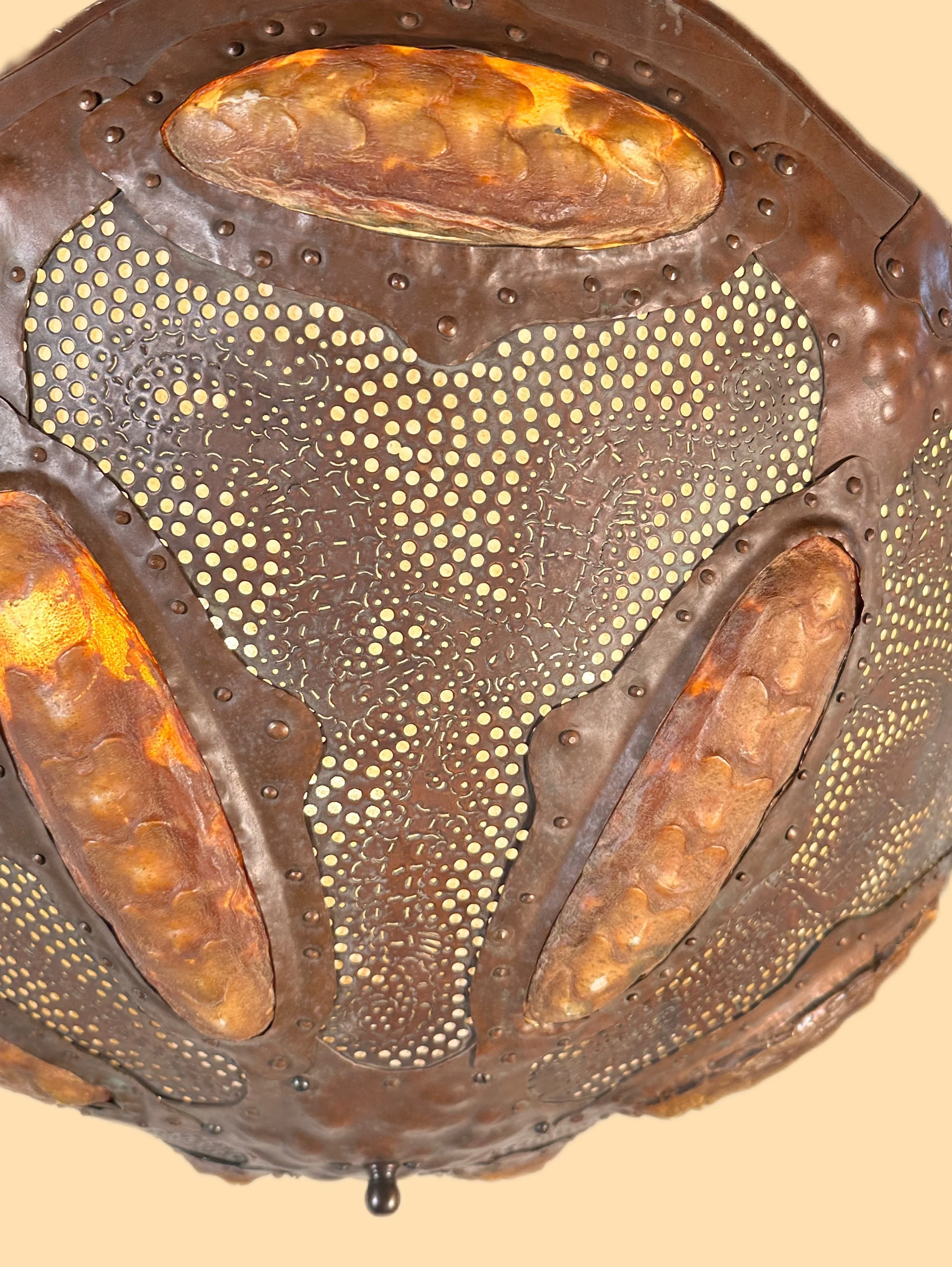
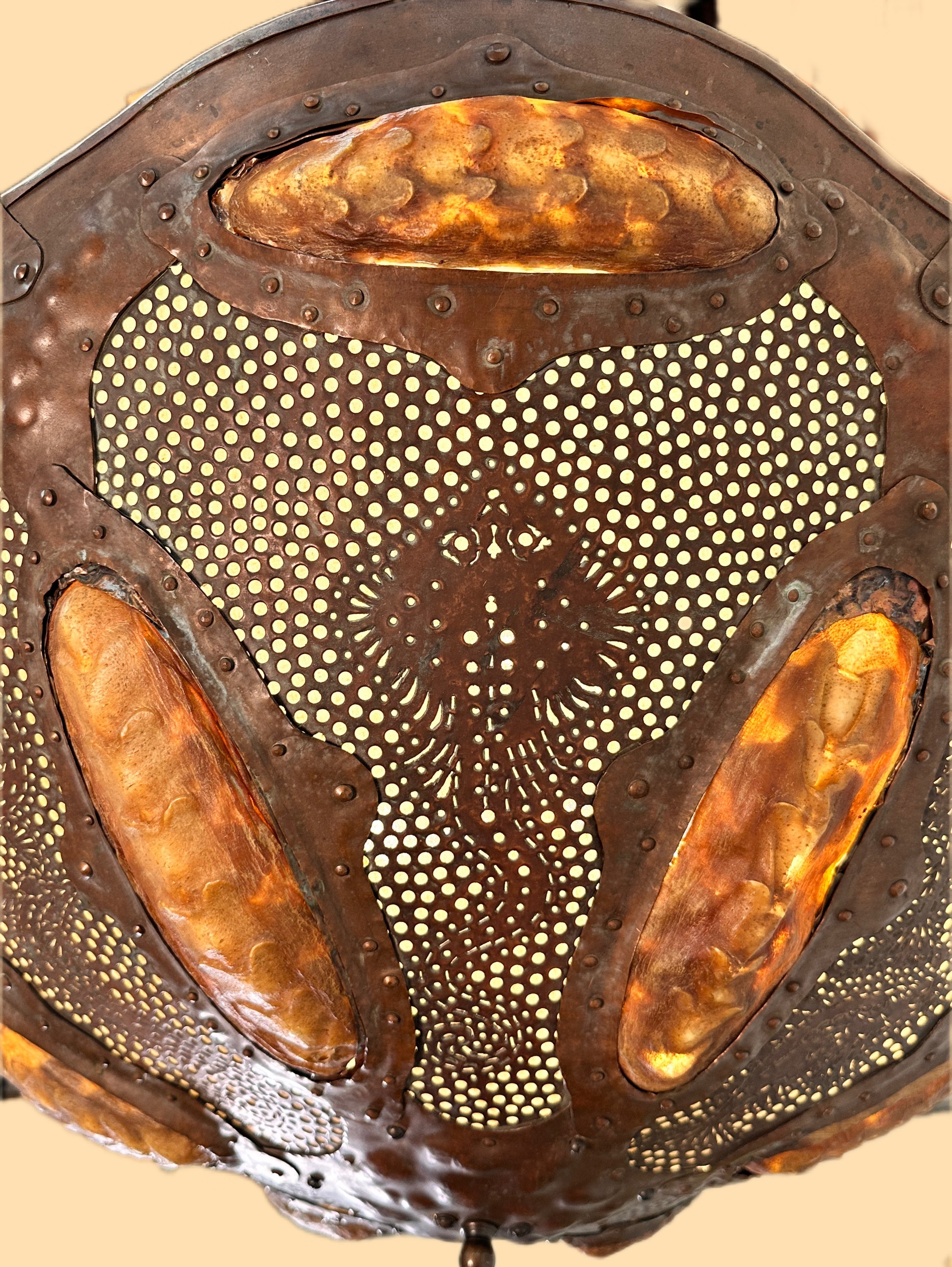
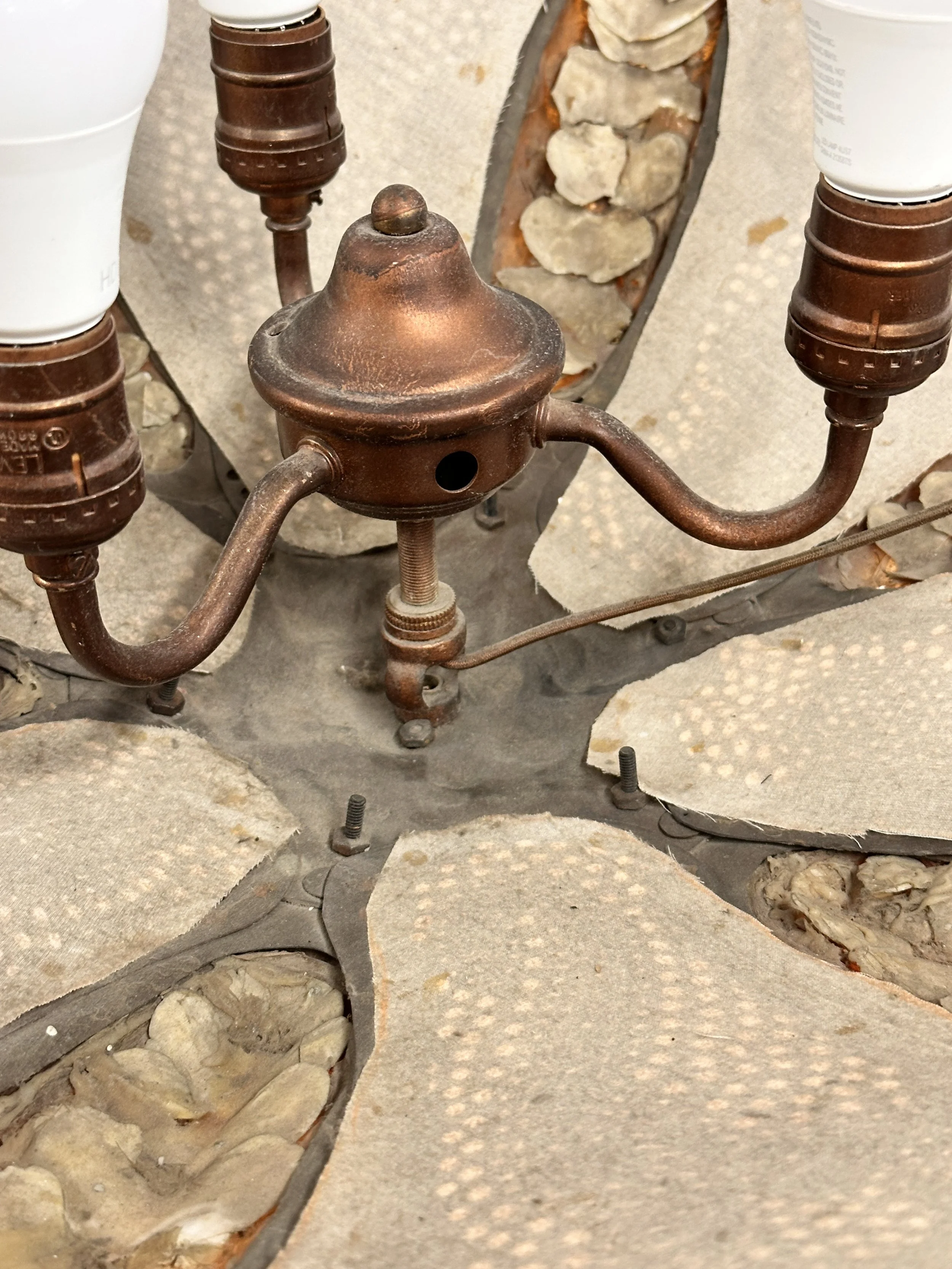
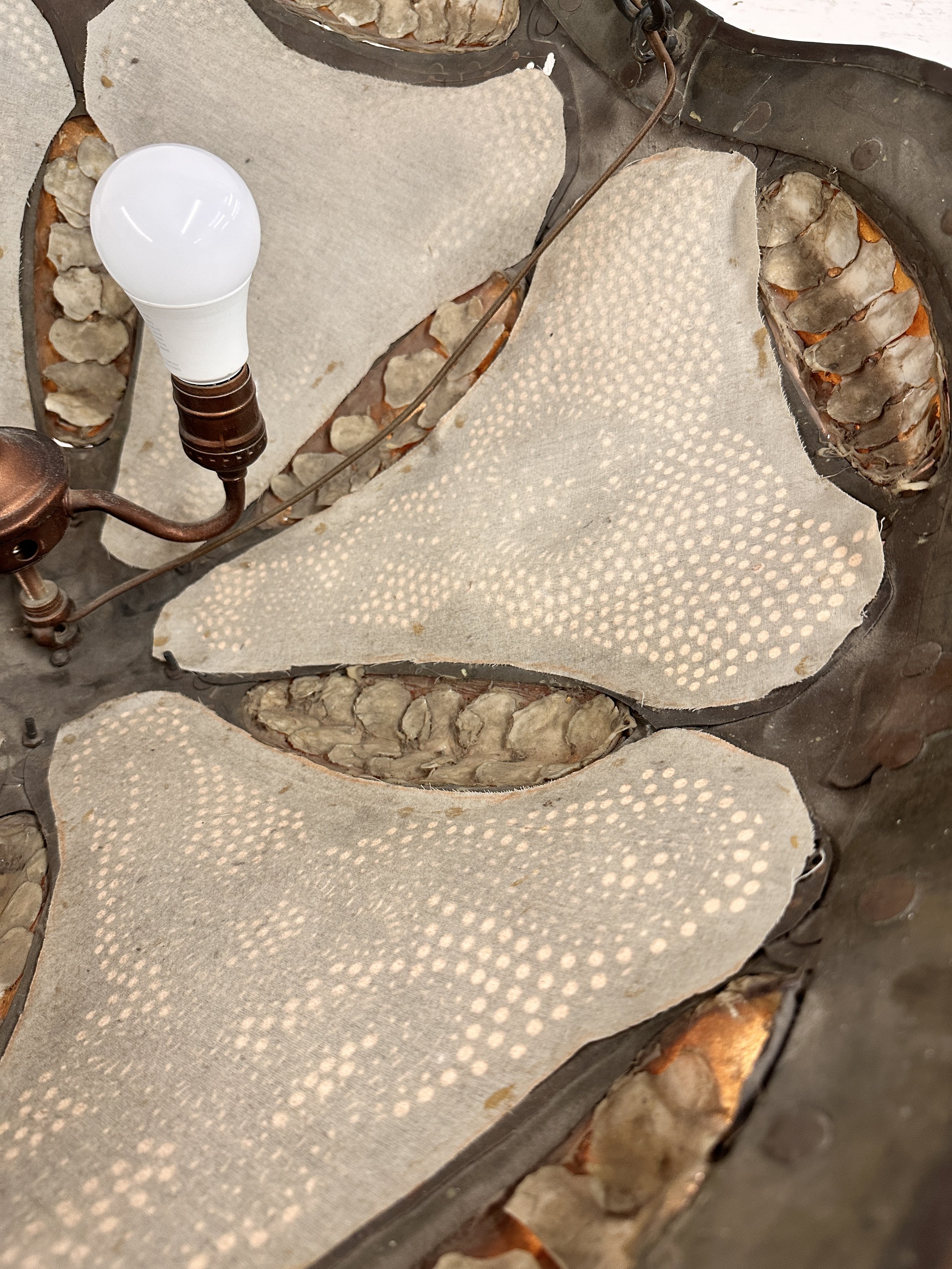
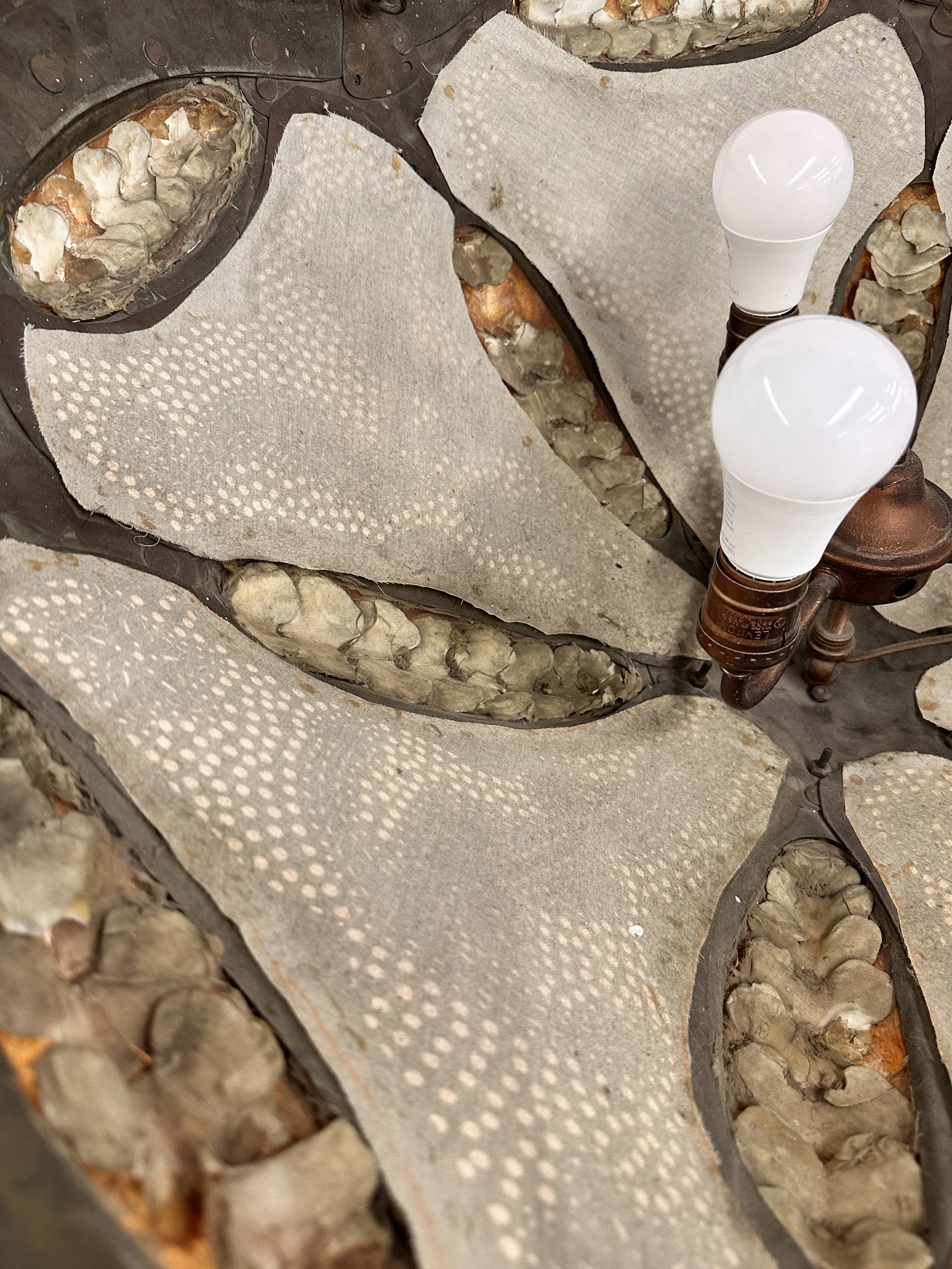
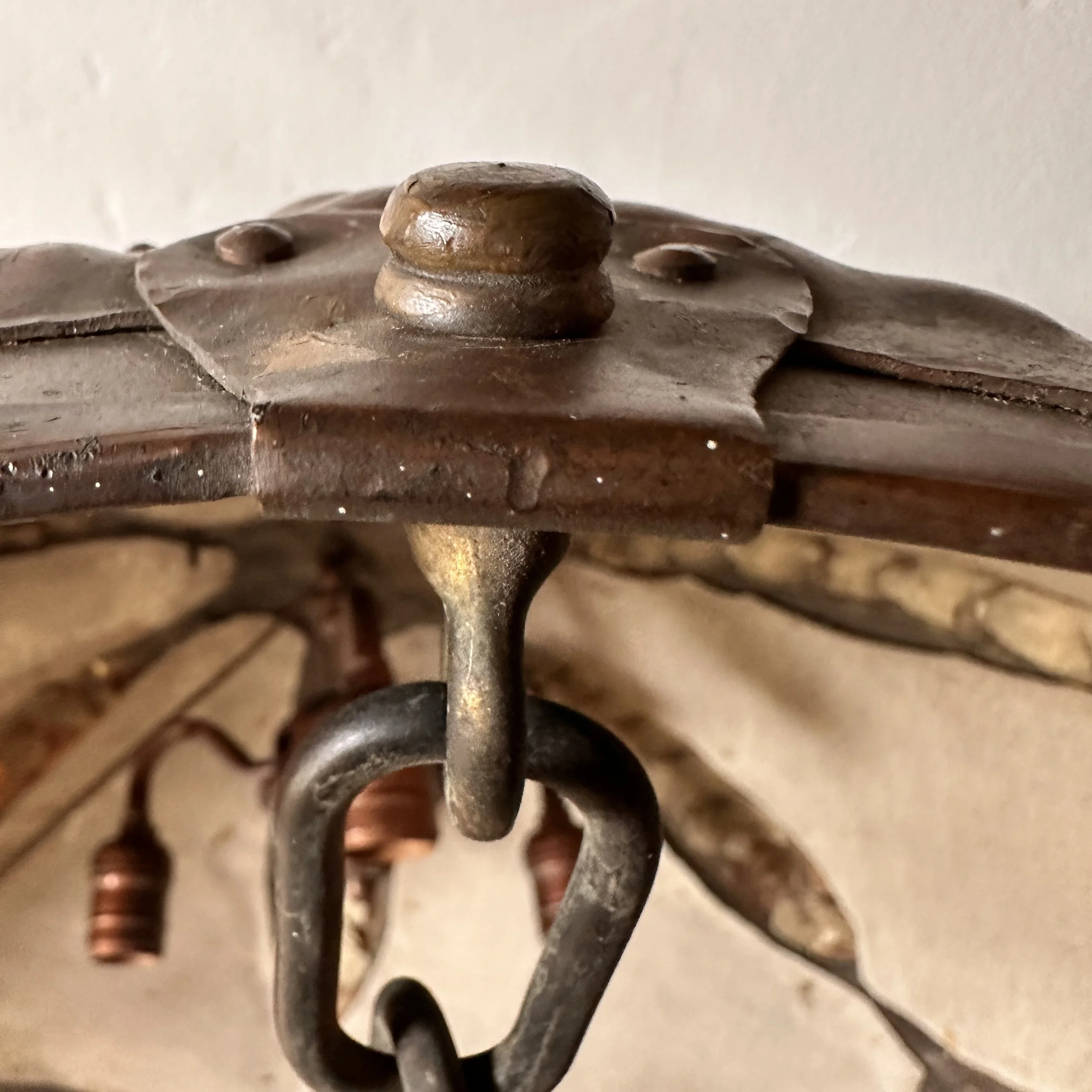
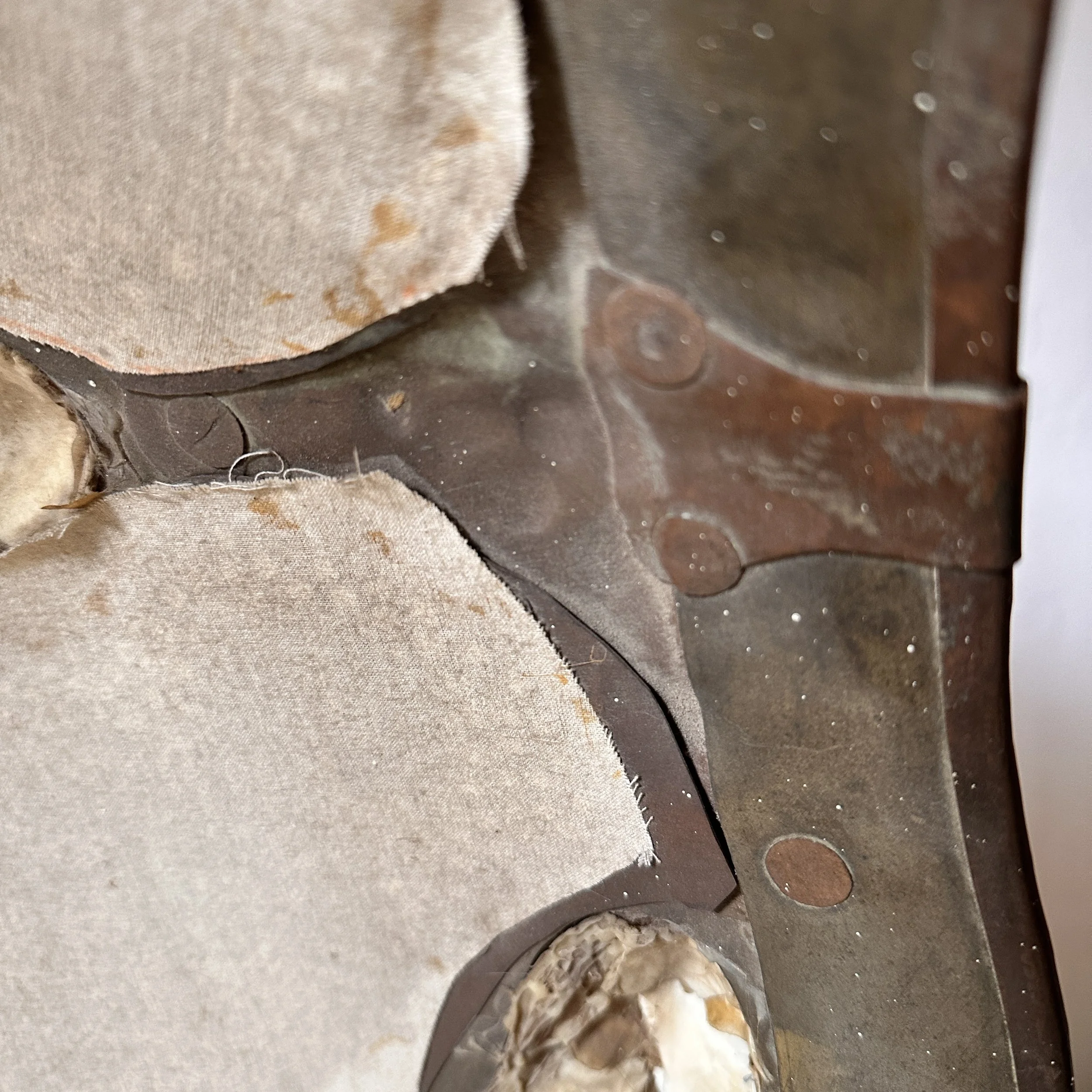
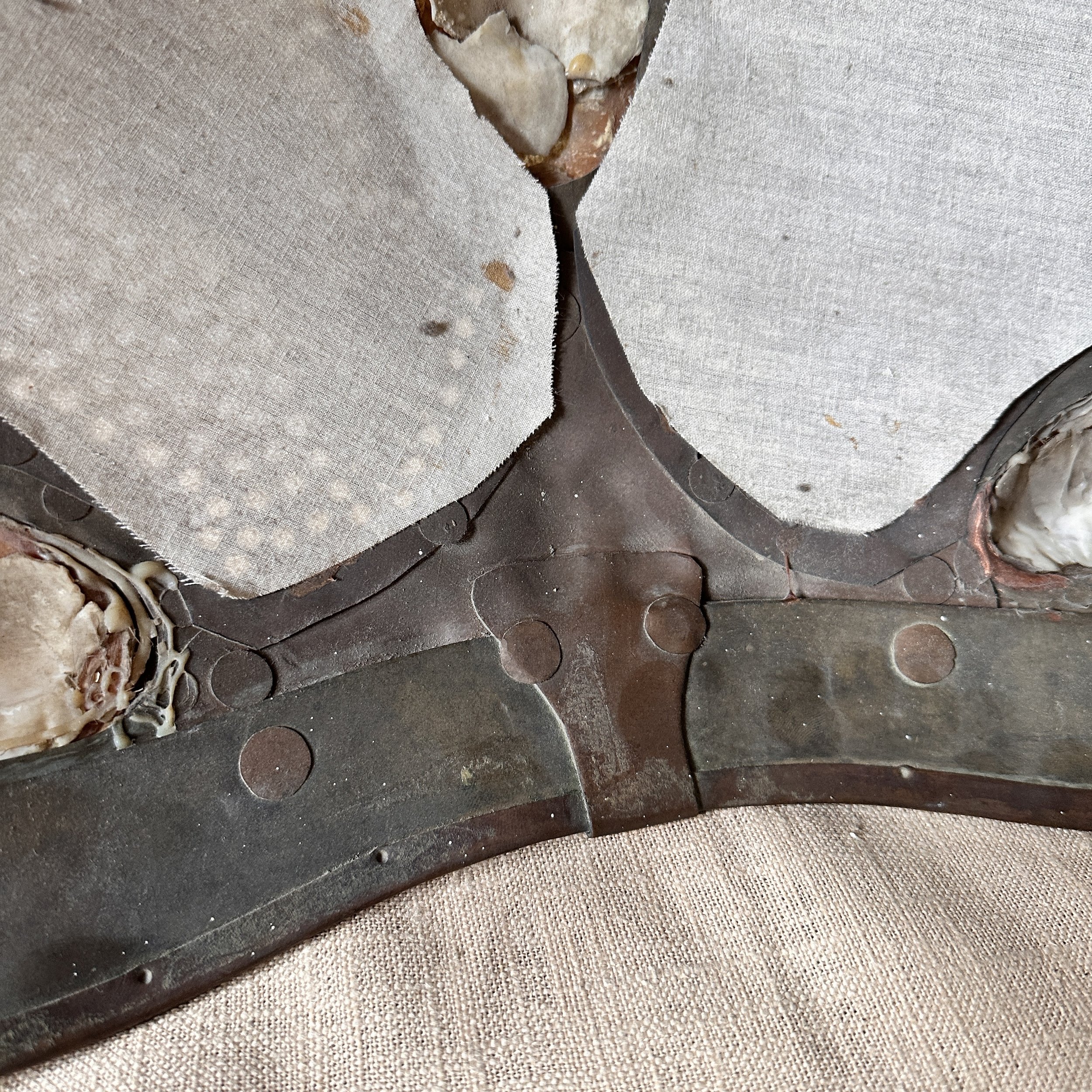
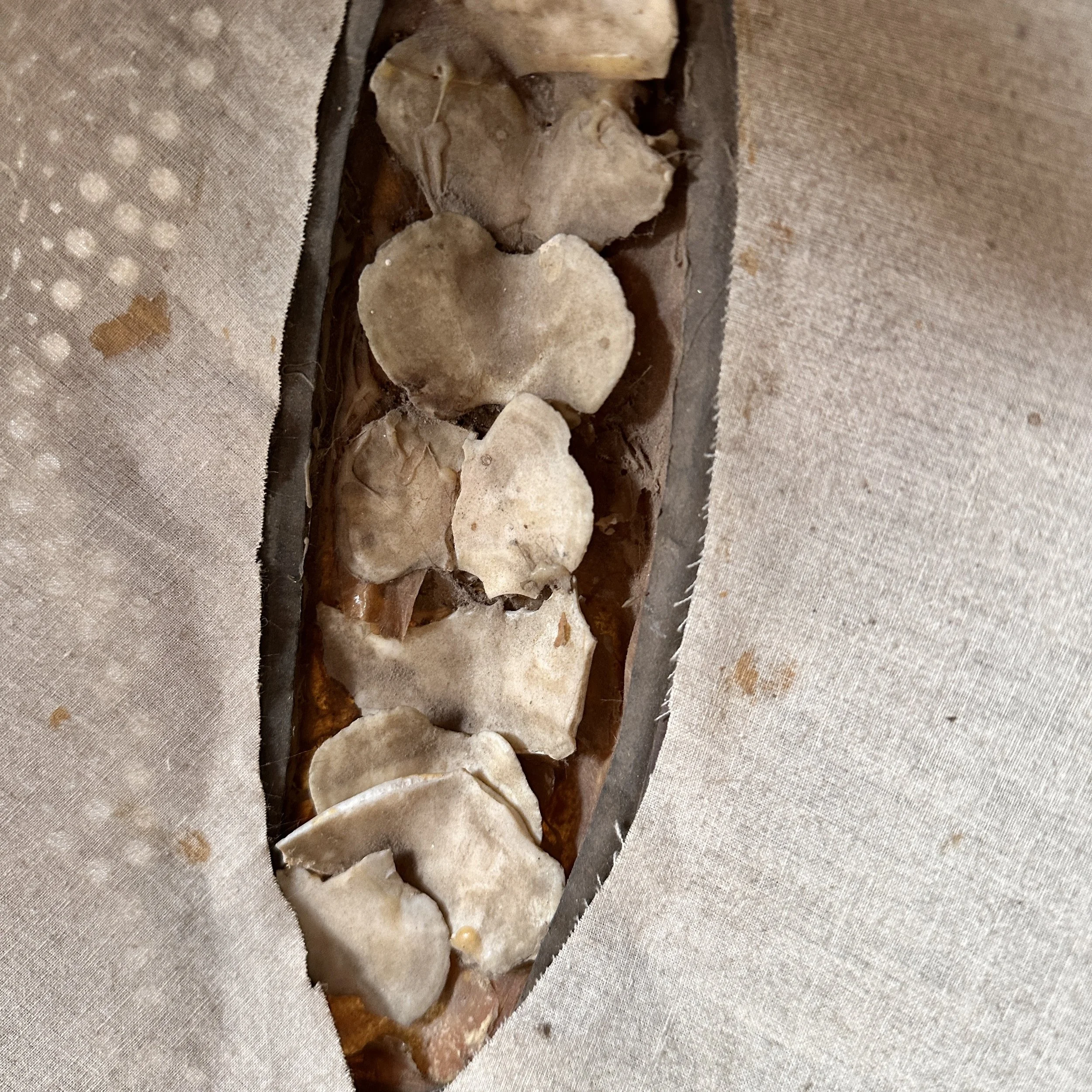
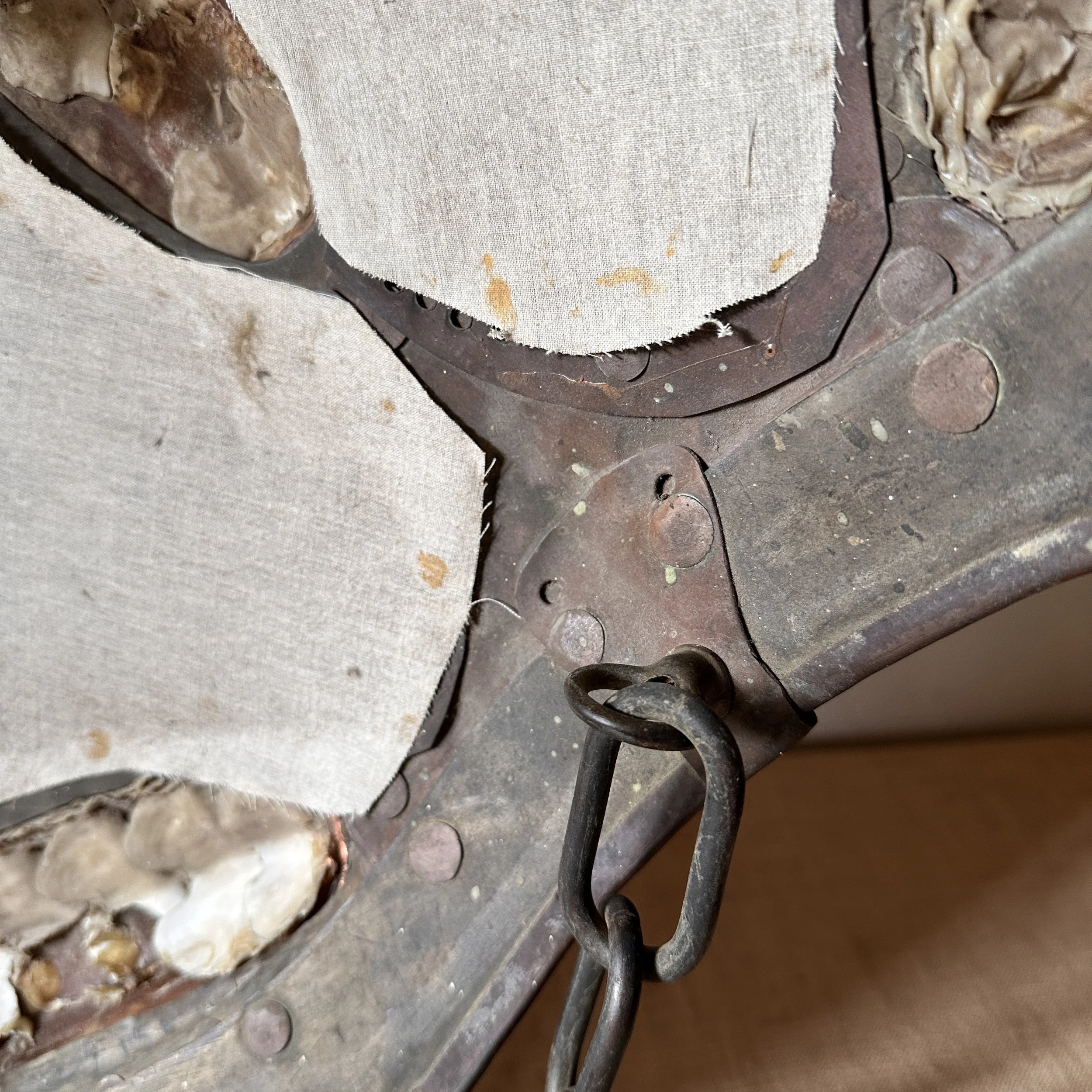
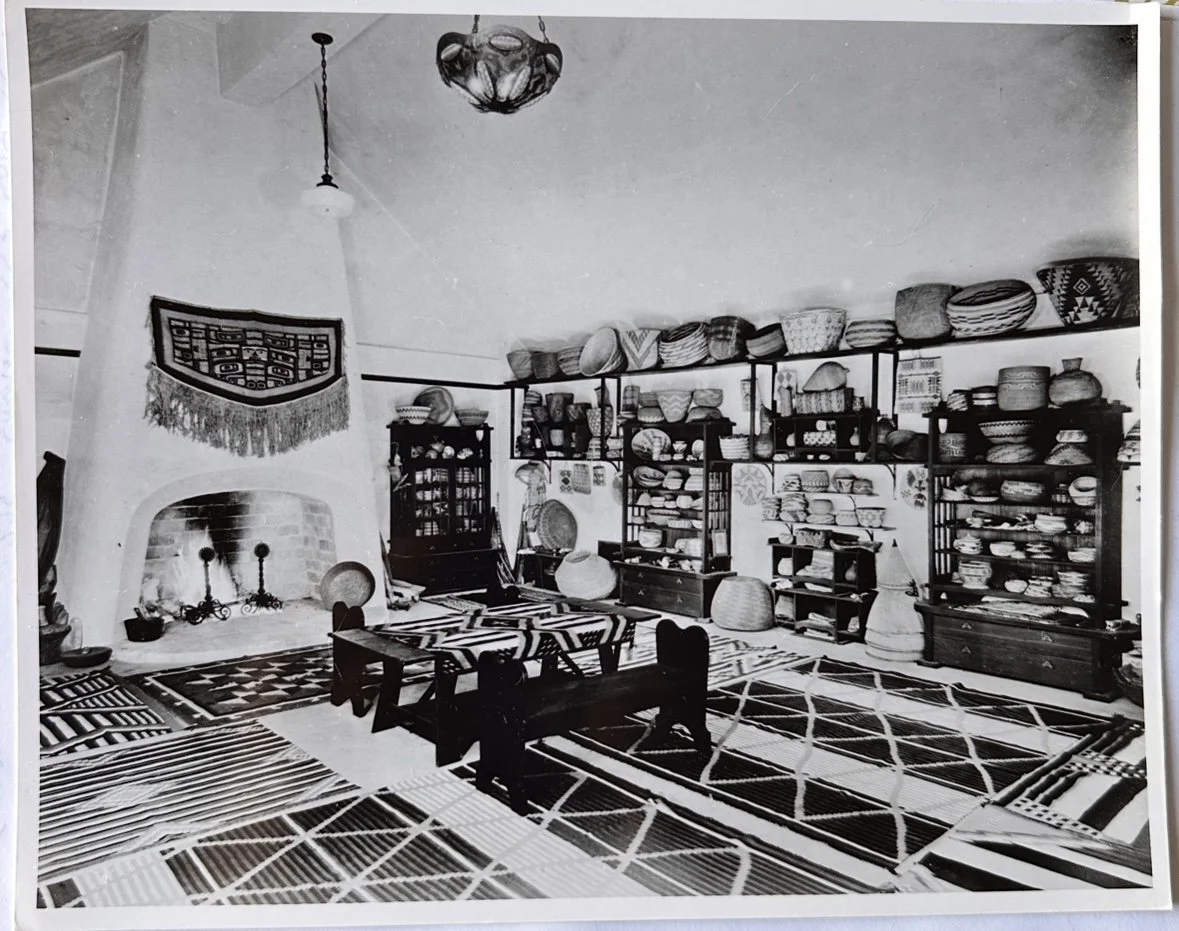
Unique hammered copper uplighter chandelier, constructed of various copper panels riveted together to form the overall structure. The fixture features twelve large chiton sea shells; six around the perimeter and six set vertically around the body, each held in with copper panels. Between the shells are six large hand-pierced copper panels; delicately outlined dot work showcasing various nautical themes and sea creatures, including a serpent-wrapped anchor flanked by sea stars, another anchor above sea turtles, a stingray, three eels, three fish, and three seahorses. Each panel is backed with the original silk cloth covering. The fixture has three hooks with attached chain rising to a period canopy. All copper elements retain the original warm brown patina in remarkable original condition.
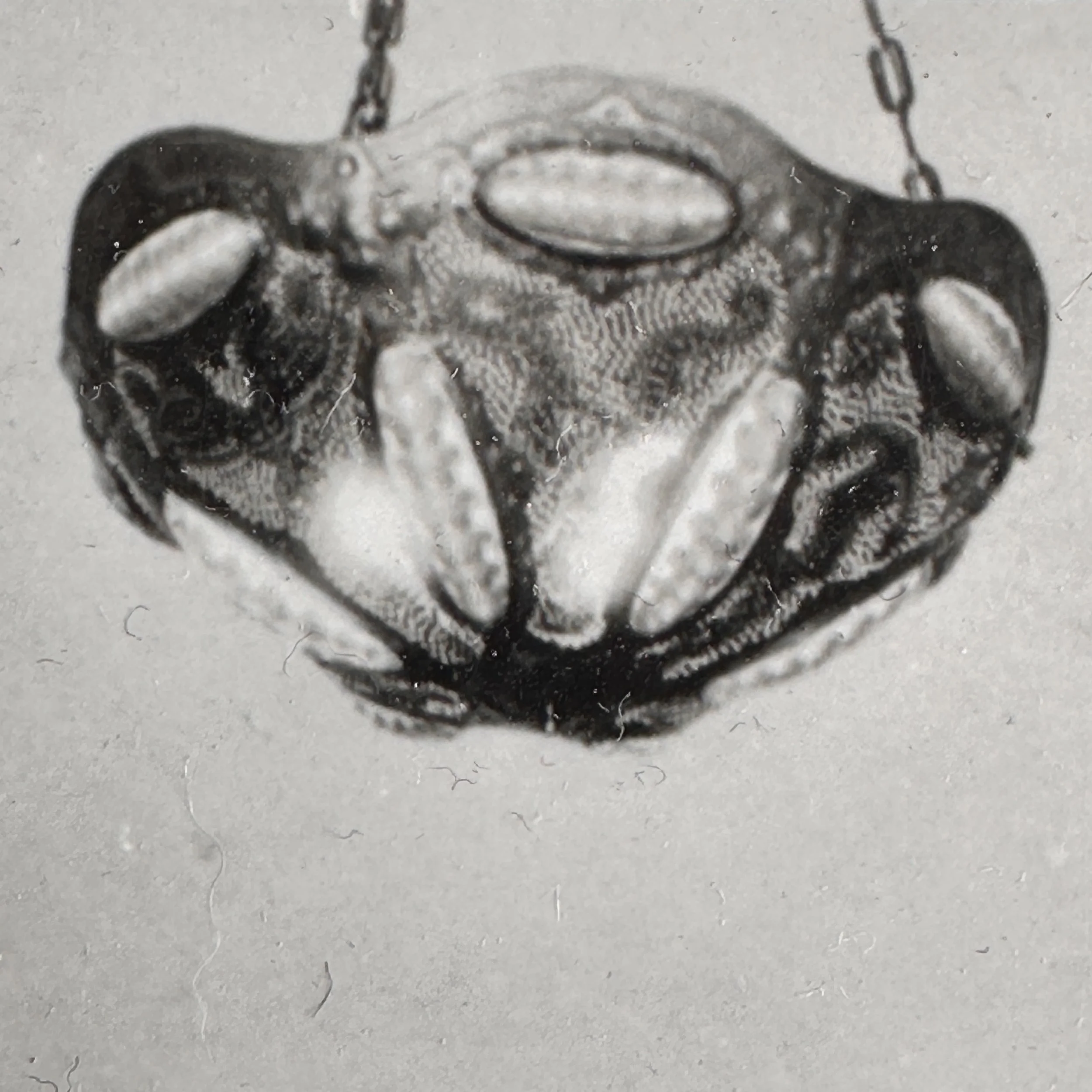
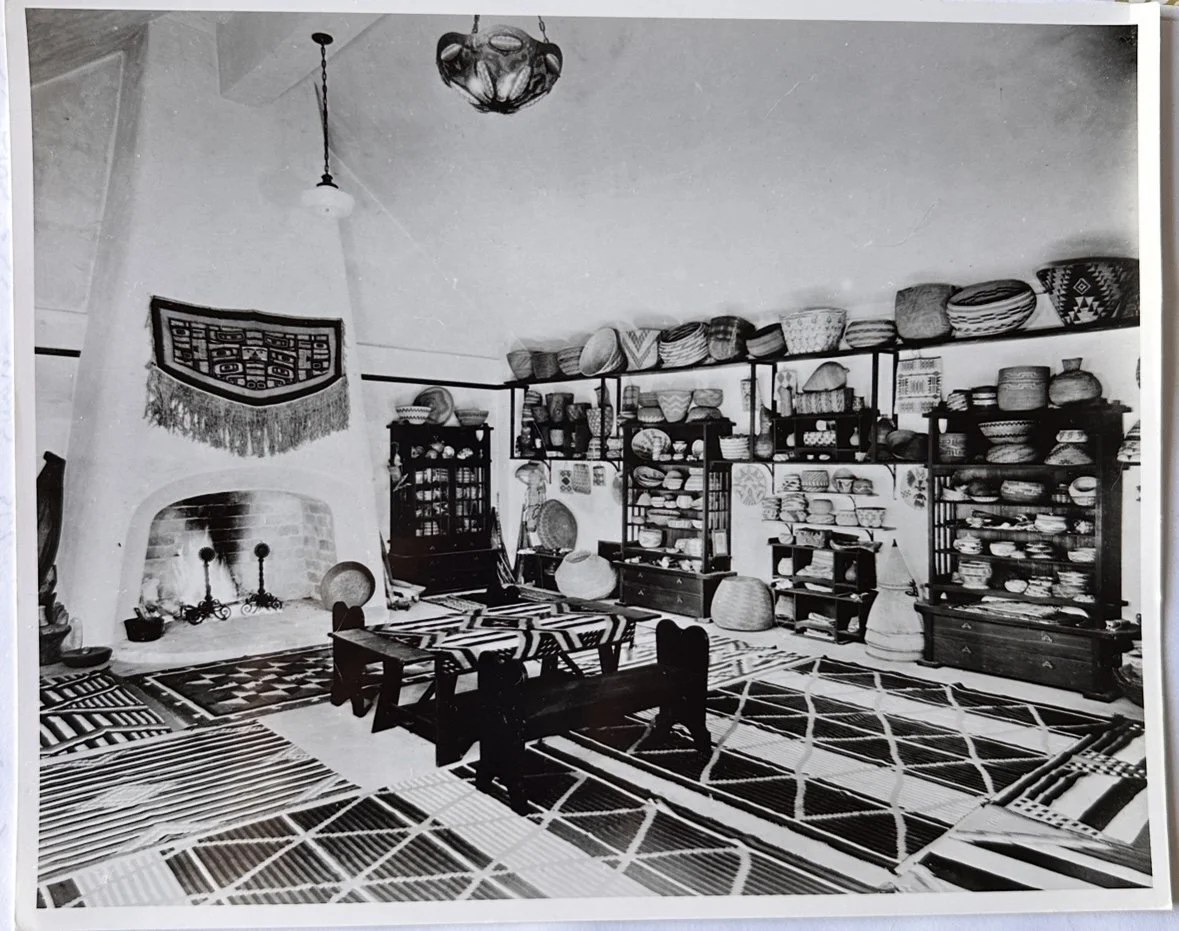
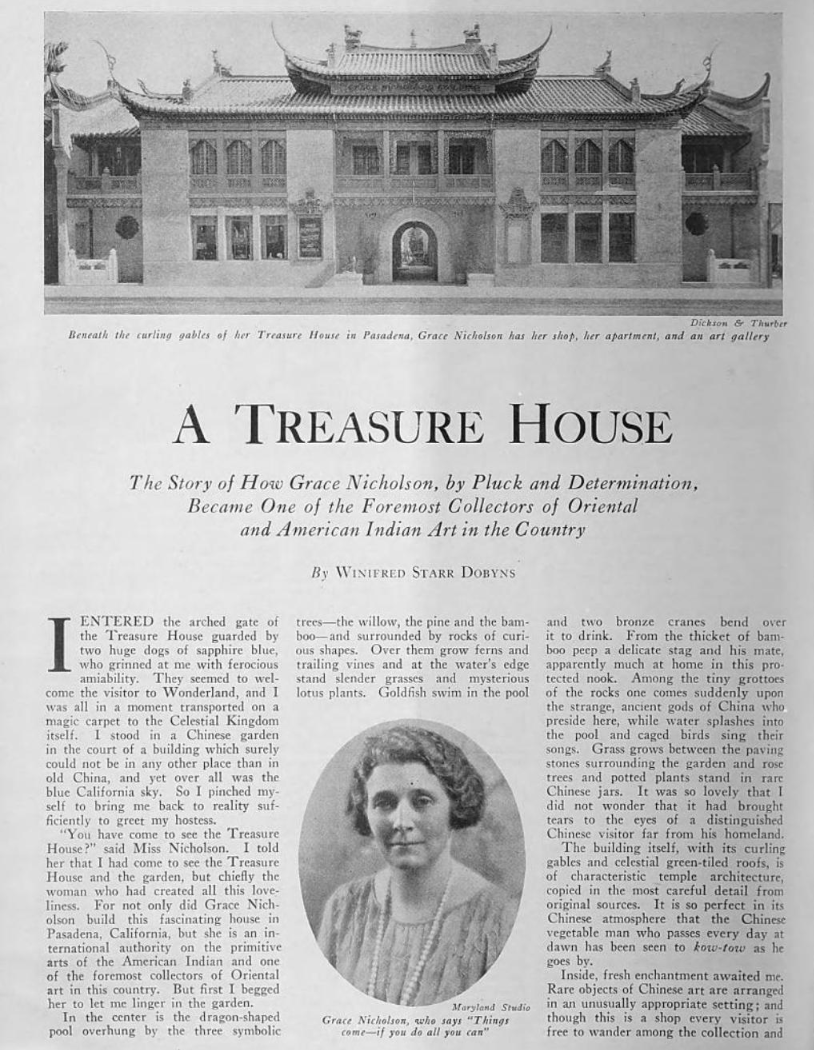
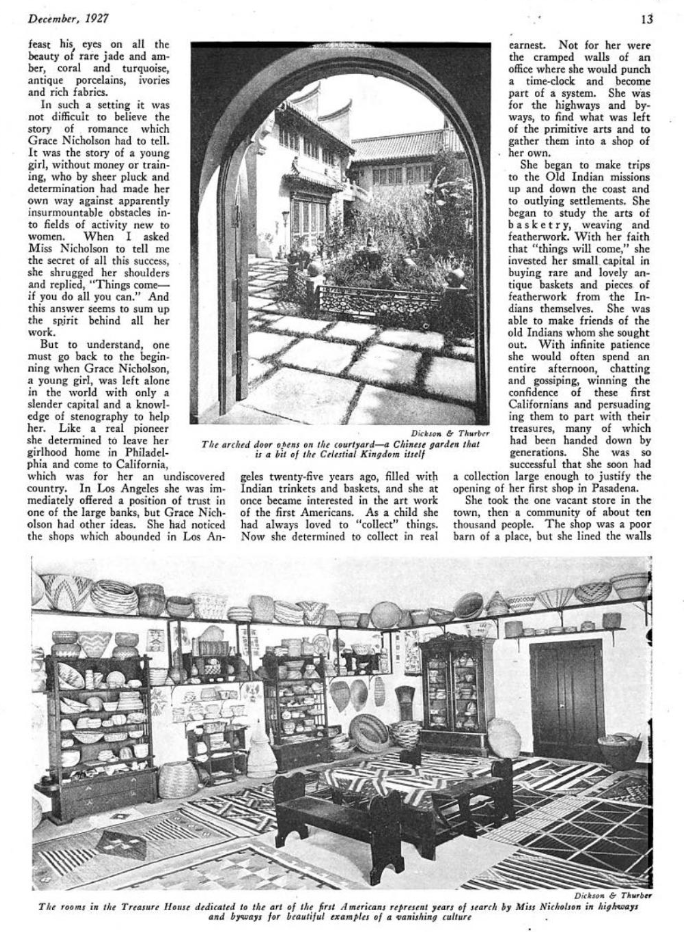
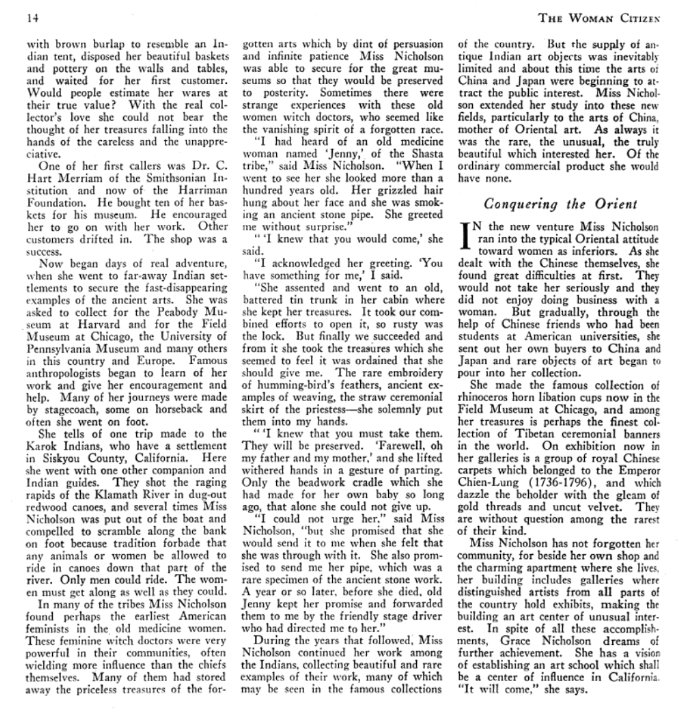
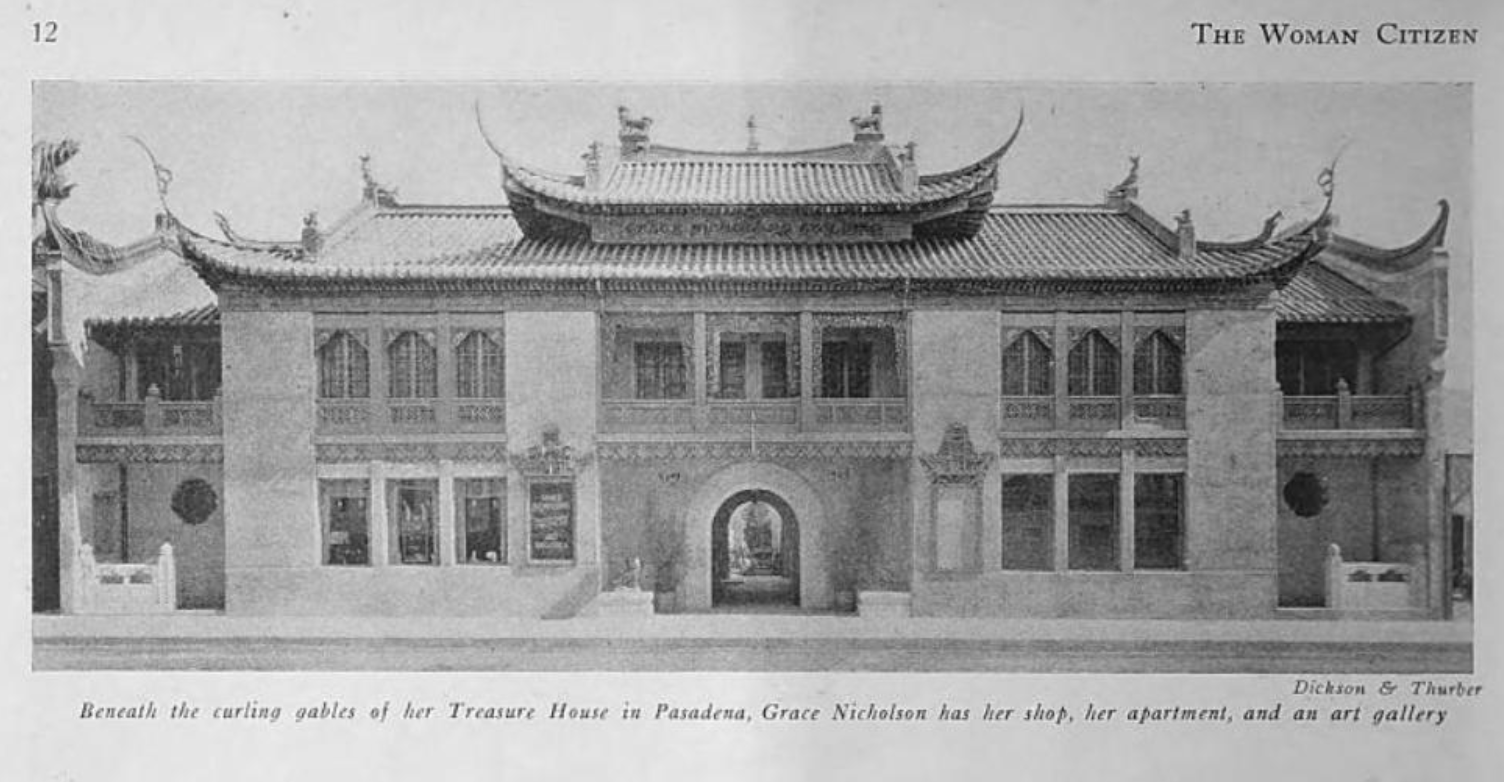
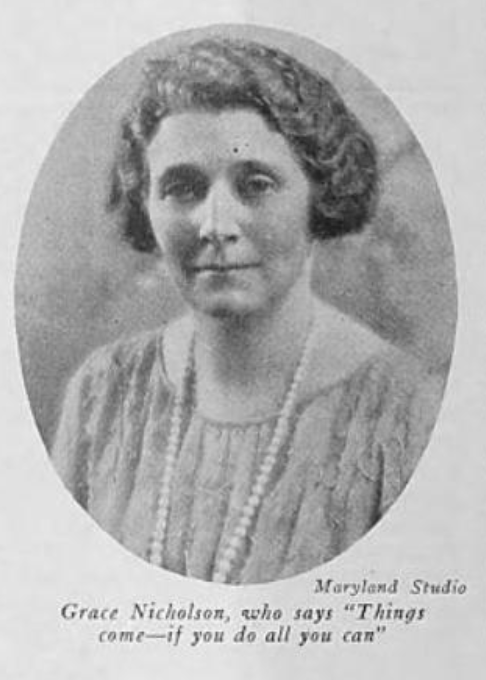
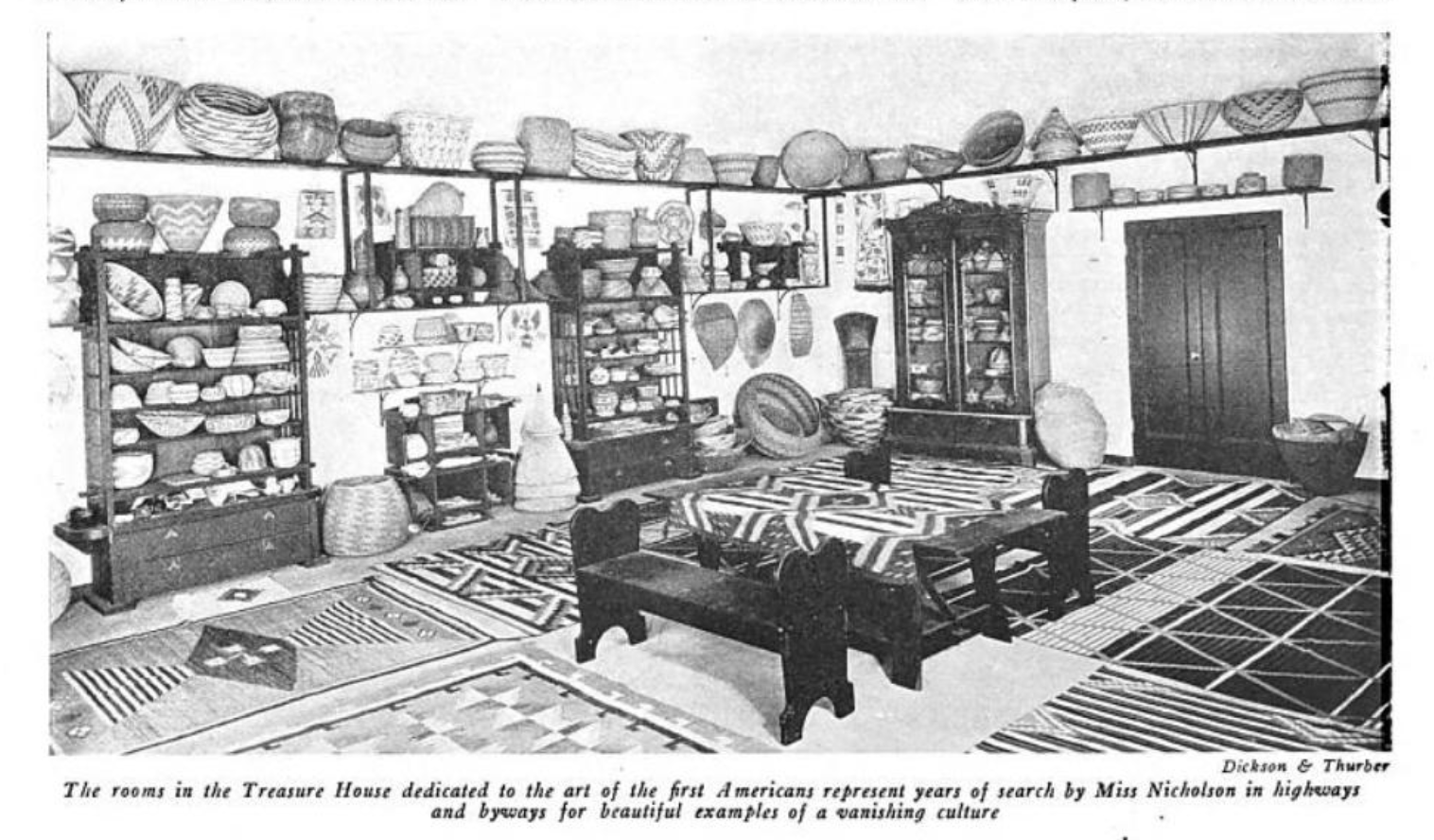
Grace Nicholson (1877-1948) moved to Pasadena in 1901 and opened “The Old Curiosity Shop” in a Greene & Greene house, where she began selling Native American baskets and socializing with the growing Arts & Crafts community. She spent decades traveling the West meeting with tribes and collecting objects for her collection and shop. She documented her travels with hundreds of photographs and journals, all of which now reside at the Huntington Library. She expanded her interests into Asian artifacts and in 1924, constructed the Treasure House, a masterful Chinese “Forbidden City” structure built by noted local architects Martson, Van Pelt & Maybury. The Treasure House was a museum, gallery, public library, event space, and garden, as well as Nicholson’s private office and apartment. Nicholson was a huge advocate for women artists, using the house as a meeting space which would have likely included Burton among them. One of the main galleries was the “Basket Room”, which housed her prized collection of Native American baskets and rugs, this fixture was likely purchased by Nicholson to hang in the original shop and was moved into the Basket Room where it was documented in a period photograph. In 1943, the Treasure House became the Pasadena Art Institute, and in 1971, the Pacific Asia Art Museum as it is today. Inscribed by Nicholson at the entrance in Chinese as it translates, “May your life be like the Eastern Sea - a sea which begins and ends with time, and brings only happiness” - much like this chandelier.